




Every Computex has its headline-grabbing announcements. There’s always a faster processor, a shinier graphics card, or a laptop that’s somehow even thinner than last year’s model. But after spending several days wandering the halls of Computex 2026, talking to engineers, trying products, and occasionally getting lost between exhibition booths, I came away with a very different takeaway. That said, this year’s show wasn’t really about individual products. Rather, it was about the direction the industry is heading. Instead of chasing flashy specifications for the sake of marketing slides, manufacturers finally seem focused on solving real problems.
The MacBook Neo effect is impossible to ignore
Whether companies admit it or not, Apple’s MacBook Neo shook up the PC industry by proving that a thin, silent, and premium-looking laptop doesn’t have to come with an eye-watering price tag. Its blend of impressive performance, excellent battery life, and aggressive pricing has clearly forced Windows manufacturers to rethink their priorities.
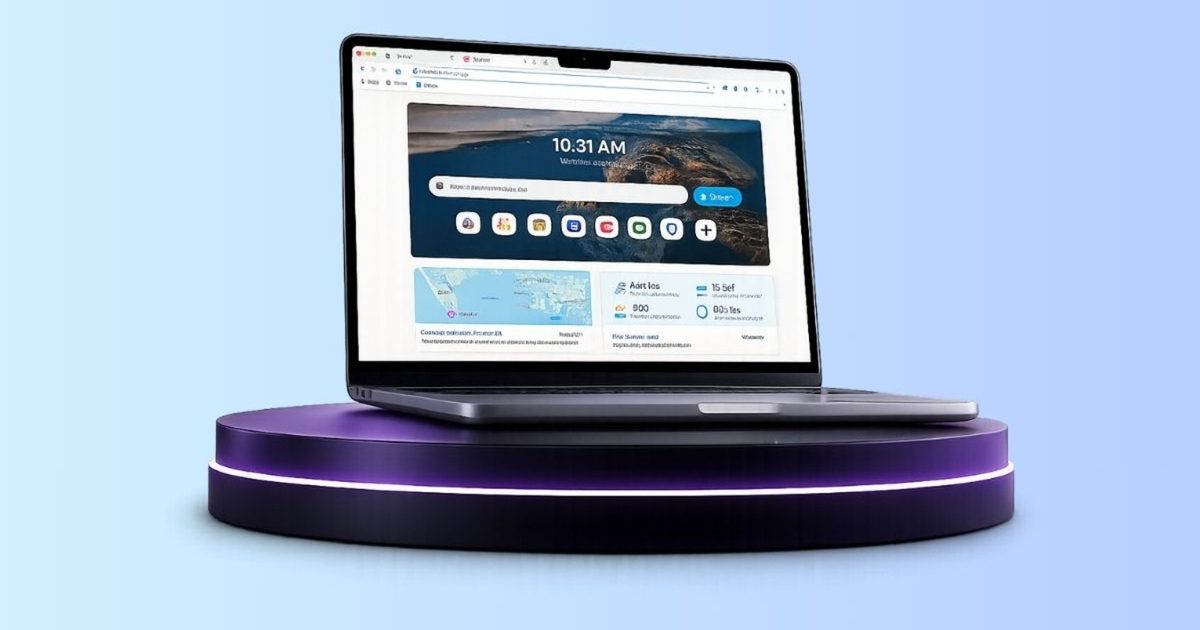
Products like the refreshed Dell XPS 13 (2026) and Acer Swift 14 AI are no longer trying to outmuscle bulky gaming notebooks. Instead, they’re focused on delivering premium build quality, all-day battery life, cooler thermals, dedicated NPUs, and hardware-level AI acceleration in sleek, highly portable designs while also pushing to make those experiences more accessible to mainstream buyers rather than luxury-only purchases.

Perhaps the clearest example of this shift is Intel’s Project Firefly, a design initiative centered around building ultra-lightweight AI PCs that maximize day-to-day efficiency instead of brute-force horsepower. The conversation has evolved from asking how much raw performance manufacturers can cram into a chassis to how much performance users actually need before portability, battery life, near-silent acoustics, and affordability become the bigger selling points. As someone who reviews laptops regularly, I genuinely welcome this change. Raw performance still matters, but carrying a power brick the size of a paperback novel everywhere I go doesn’t.
AI is finally becoming useful
If there was one buzzword impossible to escape at Computex, it was AI. Thankfully, this year it felt less like marketing jargon and more like something that can genuinely improve everyday workflows.

The best example was the NVIDIA RTX Spark platform, driven by the flagship NVIDIA N1X superchip. Built around a 20-core Grace CPU co-developed with MediaTek, this ARM-powered platform is designed to execute demanding AI workloads locally instead of constantly reaching for cloud servers. Watching Adobe Photoshop intelligently generate assets from simple visual instructions using directional arrows, or seeing Premiere Pro perform near-instant scene edit detection and one-click asset rotoscoping, demonstrated what happens when software developers and hardware manufacturers actually work together.

Companies aren’t just shipping raw NPUs anymore; they’re partnering with application developers to integrate AI directly into creative workflows, productivity tools, and editing software where it can quietly remove repetitive tasks instead of getting in the way. Even discussions around agentic AI workloads reflected that shift. Rather than treating AI as another simple chatbot box, manufacturers increasingly see it as an always-available assistant capable of handling routine work autonomously in the background while users focus on more meaningful tasks.
ARM is taking the fight straight to x86
For years, ARM-powered Windows laptops have felt like promising experiments searching for the right audience. Computex 2026 made me feel like that phase might finally be ending. Qualcomm continued pushing its vision forward with the Qualcomm Snapdragon C platform, aggressively targeting affordable AI PCs that combine impressive battery life with dedicated local AI capabilities. At the other end of the spectrum sat NVIDIA RTX Spark, proving that ARM systems can also deliver serious enthusiast-grade creative performance while comfortably handling gaming and AI workloads on the same platform.

Perhaps the biggest surprise wasn’t just how natural these systems felt during hands-on demos, but how NVIDIA has completely changed the conversation around ARM itself. Rather than positioning it as a low-power alternative to x86, RTX Spark presents ARM as the foundation for a scalable AI ecosystem. Built around a 20-core Grace CPU paired with Blackwell RTX graphics and up to 128GB of unified memory, the same architectural philosophy extends beyond laptops into NVIDIA’s broader Grace Blackwell portfolio, including powerful DGX systems designed for AI development and enterprise workloads. It sends a clear message that efficient ARM designs no longer have to stop at thin-and-light notebooks.

Technologies like DLSS 4.5 Ray Reconstruction, Microsoft’s Prism compatibility layer, and NVIDIA’s work with developers on anti-cheat support also made gaming feel surprisingly polished during the demos I experienced. Will ARM replace x86 overnight? Almost certainly not. But for the first time, it genuinely feels less like a compromise and more like a platform capable of scaling from ultraportable laptops all the way to AI workstations, making it a far more formidable competitor than ever before.
Current generation hardware isn’t going anywhere
One of the most unexpected trends from Computex wasn’t brand-new hardware. It was companies refusing to abandon existing platforms. AMD reaffirmed its commitment to the AM5 desktop socket through at least 2029, giving enthusiasts a much longer, consumer-friendly upgrade path than many expected. To combat rising component costs, the company also expanded its mainstream graphics lineup with the new AMD Radeon RX 9070 GRE, reinforcing the idea that existing architectures still have meaningful room to evolve instead of immediately becoming obsolete.

That philosophy extended well beyond processors and graphics cards. Cooling specialist Noctua showcased the NT-CP1 carbon nanotube thermal pad, a maintenance-free, solid-state alternative to traditional thermal paste that promises consistent long-term performance without drying out over time. The company also previewed its first all-in-one liquid coolers, built around Asetek’s mature platform but enhanced with Noctua’s own acoustic engineering to reduce pump noise and vibrations, highlighting how refinement is becoming just as important as raw performance. GPU manufacturers echoed the same sentiment with increasingly optimized thermal designs and factory tuning aimed at extracting more efficiency from familiar architectures.

For consumers, that’s excellent news. The message coming out of Computex wasn’t “throw everything away and start over.” It was “make what you already own even better.” Considering how expensive PC components have become lately, that might just be the most consumer-friendly trend of the entire show.
Gaming monitors are growing up
Gaming monitors spent years competing in a never-ending numbers race. More hertz. More brightness. More HDR certifications. This year felt refreshingly different. Displays like the Alienware AW3926QW introduced RGB-stripe Tandem OLED technology on a gorgeous 39-inch 5K curved panel, allowing users to switch between pristine 5K clarity at 165Hz for creative work and a lightning-fast 1080p mode at 330Hz, significantly improving brightness and text subpixel clarity along the way. Meanwhile, the MSI MPG OLED 322URDX36 triple-mode monitor demonstrated just how far refresh rates have come, offering a fifth-generation QD-OLED panel with Penta Tandem technology that can scale dynamically across multiple resolution profiles depending on the game genre.

Even esports displays continued evolution into absolute precision instruments. The ASUS ROG Strix OLED XG259QWPG Ace pushed tournament refresh rates to a blistering 540Hz while retaining TrueBlack Glossy Tandem WOLED image quality. On the hybrid front, the Acer Nitro XV345CKR P showcased how a 5K WUHD resolution, a 1,344-zone Mini-LED backlight, and Dynamic Frequency and Resolution (DFR) modes can seamlessly serve professional creators who also happen to be hardcore gamers. It feels like the era of buying separate displays for work and play may finally be starting to fade.
Handheld gaming PCs are finally growing up
Just a couple of years ago, handheld gaming PCs still felt like ambitious experiments trying to squeeze desktop hardware into portable shells. Computex 2026 made them feel much more mature. The biggest story was undoubtedly the Intel Arc G3 Extreme processor, a graphics-first platform based on the Panther Lake architecture and manufactured using the cutting-edge Intel 18A process node. Packing a 14-core CPU configuration alongside 12 next-gen Xe3 Celestial graphics cores, complete with hardware ray tracing and Intel XeSS 3 with Multi Frame Generation, Intel finally looks ready to challenge AMD’s long-standing dominance in the premium handheld market.

Devices like the MSI Claw 8 EX AI+, the Acer Predator Atlas 8 (PA08-I51), and the ASUS ROG Xbox Ally X20 (20th Anniversary Edition) all reinforced the same message. Better ergonomics, smarter cooling systems (like Acer’s 89-blade metal AeroBlade technology), massive 80Wh batteries, refined full-screen Windows 11 Xbox Mode software experiences, and highly efficient silicon mean manufacturers are no longer trying to prove handheld PCs are viable. They’re competing to build the absolute best one. As someone who’s spent years using devices like the Steam Deck and the original ROG Ally, that’s perhaps the most exciting trend of them all.
The next big thing is… Practicality?
Looking back at Computex 2026, I don’t think I’ll remember the show for a single processor, graphics card, or laptop. I’ll remember it for the industry’s changing mindset. For the first time in a while, it felt like companies were exploring how to make PCs better to live with. AI is quietly taking over repetitive tasks instead of demanding attention, ARM is growing into a serious challenger rather than an interesting experiment, gaming monitors are becoming versatile enough to replace multiple displays, and handhelds are finally maturing into products I’d happily recommend without a long list of caveats. If these trends continue, the next generation of PCs won’t just be faster. They’ll be quieter, more efficient, more affordable to upgrade, and a whole lot smarter about how they use their performance.