




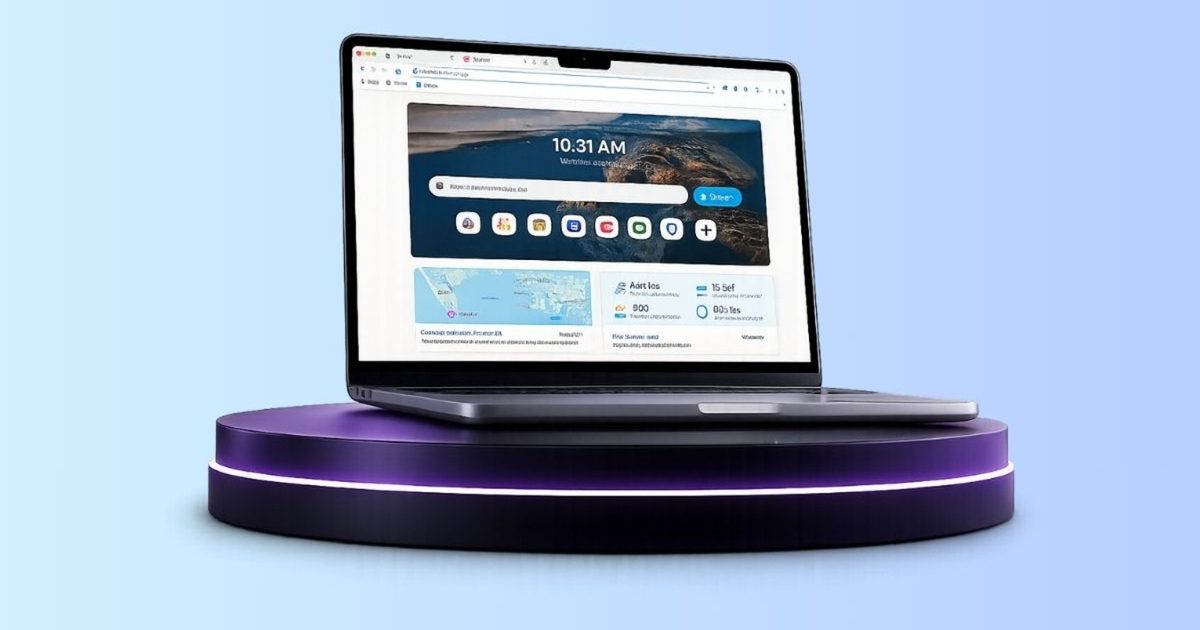
Most people choose a web browser for practical reasons: speed, familiarity, compatibility and convenience. Environmental impact is less commonly part of the decision. Wave Browser, however, is attempting to make it one of the factors consumers consider.
Developed by Eightpoint, Wave is a Chromium-based browser that combines standard browsing functionality with features intended to help users stay organized and work efficiently online. Its most distinctive element is not a technical specification, but an environmental initiative: a Certified Cleanup Partnership with 4ocean that supports the removal of plastic and other waste from our ocean, rivers, and coastlines.
That positioning raises two questions for prospective users. How does the environmental model work, and is it enough to distinguish Wave from the browsers they already use?
What is Wave Browser?
Wave is built on Chromium, the open-source browser project that also underpins several widely used browsers. This gives users a broadly familiar browsing environment while allowing Wave to add its own features, protections, and environmental positioning.
The browser is intended for everyday activities such as searching, visiting websites, and organizing online tasks. Eightpoint describes it as a product designed to support safer, more organized browsing rather than as a tool that requires users to change how they use the internet.
“A browser still has to be useful,” says Matthew Martinez, Director of Product on Eightpoint’s Desktop team. “The environmental work is part of what we are building, but it sits alongside features designed to help people stay organized and work more efficiently online.”
For consumers, that distinction matters. An environmental mission may attract initial attention, but users are still likely to judge a browser according to its performance, compatibility, privacy and security provisions, and overall ease of use.
How the 4ocean Partnership Works
Wave’s primary point of differentiation is its Certified Cleanup Partnership with 4ocean, an organization that conducts and funds cleanup operations involving our ocean, rivers, and coastlines.
The model does not claim that a particular search, click, or browsing session directly removes an individual piece of plastic. Instead, Wave supports an ongoing cleanup program through the 4ocean partnership while users browse normally. This separates the company’s funding commitment from claims that attempt to assign a precise environmental result to every user action.
“The idea behind Wave is straightforward,” says Eightpoint CEO Deniz Gezgin. “People are already browsing the web. We wanted to connect that everyday activity with an environmental initiative that produces measurable results, without asking people to take on another task.”
In practical terms, users are not required to complete environmental challenges, accumulate points, or alter their browsing habits. The cleanup work is carried out through the partnership rather than by users themselves. Wave’s role is therefore better understood as funding an environmental initiative alongside its browser product, not converting individual browsing actions into direct cleanup events.
What Results Have Been Reported?
According to Eightpoint, the Wave and 4ocean partnership has supported the removal of more than 100,000 pounds of plastic and other waste. The company has also announced a target of 300,000 pounds by 2028.
This degree of specificity gives consumers more information than a general statement that using a product “helps the ocean.” It identifies the organization performing the work, describes the type of cleanup being funded, and establishes a measurable target and timeframe.
Why Precise Environmental Language Matters
Environmental claims attached to digital products can easily imply a closer relationship between individual actions and real-world outcomes than actually exists. A statement such as “every click removes plastic,” for example, sounds concrete but may leave the funding mechanism unexplained.
Wave avoids making its environmental program dependent on a one-click-for-one-item formula. Its stated model is broader: the browser is connected to an ongoing partnership that supports cleanup work regardless of the precise number or type of actions an individual user completes.
That may be less immediately catchy, but it provides a more accurate basis for understanding the relationship between browsing and cleanup. The user’s activity does not itself remove waste. Instead, the company behind the browser funds work performed through a third-party environmental organization.
Consumers researching Wave may therefore want clear answers to several questions: What work is being funded? Who performs it? How are the results measured? Can progress be tracked? What target has been established, and by when?
Wave and 4ocean provide answers to several of these questions through their partnership materials. Making all of the information available in a concise, regularly updated fact sheet or FAQ could further help users evaluate the program on its own terms.
Does the Environmental Model Justify Switching Browsers?
For some consumers, Wave’s environmental program may provide an additional reason to try the browser. It connects a routine digital activity with a defined cleanup partnership without asking users to pay for a separate membership or perform additional tasks.
That distinction alone, however, may not be enough to persuade someone to replace an established browser. Before switching, users are likely to consider how Wave performs in daily use, whether it supports the websites and tools they rely on, and how its privacy, security, and organizational features compare with those of competing browsers.
Wave’s environmental positioning is therefore best viewed as a differentiator rather than a substitute for browser functionality. It may appeal particularly to consumers who are already considering alternatives and want environmental commitments to form part of their decision. Those satisfied with their current browser will still need to determine whether Wave offers enough practical value to justify changing an established habit.
Eightpoint’s broader role is relevant mainly because it develops the product and funds the initiative. The consumer-facing proposition belongs to Wave itself: a Chromium-based browser that aims to combine everyday online functionality with measurable support for third-party cleanup work.
“We started with a simple premise that the products people use every day can contribute to meaningful real-world outcomes,” Gezgin says.
A Different Kind of Browser Choice
Wave Browser offers an example of how a familiar digital product can incorporate an environmental program without claiming that each user action produces an immediate physical result. Its 4ocean partnership, reported cleanup total, and 2028 target give consumers concrete points to investigate rather than relying solely on broad sustainability language.
Whether that makes Wave the right alternative will depend on more than its environmental story. Consumers still need to assess the browser as a browser, including its usability, compatibility, privacy, and built-in protections. But for users who want their technology choices to reflect environmental priorities, Wave introduces an additional consideration into a category usually defined almost entirely by function and familiarity.
Digital Trends partners with external contributors. All contributor content is reviewed by the Digital Trends editorial staff.


