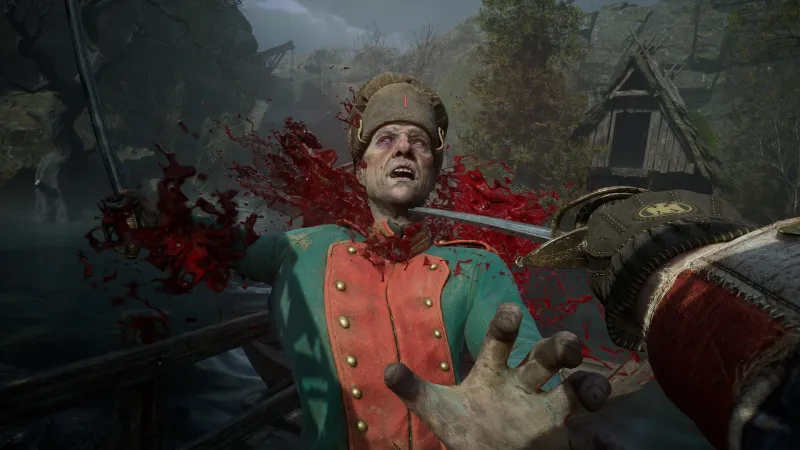


Valor Mortis is the next game from One More Level, the studio behind the Ghostrunner series. As a massive fan of those two cyberpunk parkour-action games, I’ve had my eye on Valor Mortis, the team’s first-person take on the Soulslike formula, since its reveal last August. When I played it last year, I was shocked by how well OML’s trademark first-person action translates into a slower, more deliberate Soulslike, given that the best action games in this sub-genre are typically played from a third-person perspective. Now, I’ve put more than 15 hours into a preview build of Valor Mortis, playing through its first four chapters, dying a lot, defeating bosses, meeting new characters, and learning more about why the deceased Napoleon Bonaparte is in my head talking to me while I acquire more and more supernatural powers.
I’ve enjoyed most of what I’ve played, but – and this is unfortunately a big but – the difficulty balance in Valor Mortis is incredibly uneven, and key moments, like chapter-ending boss fights, are spoiling what should otherwise be fun climactic bouts. There’s no rhyme or reason to the balance of Valor Mortis, and it made for an often-frustrating experience in a game I can tell has the Soulslike juice.
This boss killed me probably 30 times
After dying in the game’s opening, protagonist William wakes up, unsure of what’s going on or why Napoleon is talking to him, seemingly telepathically. He marches forward, looking for answers amongst the decrepit trenches, battlefields, abandoned buildings, and torched villages as to what’s going on, and along the way, he sucks up mysterious powers that imbue him with flames, time-freeze abilities, and more in his right hand. These powers are especially helpful because many enemies are weak to fire, and you can easily stun them by filling up their burn gauge; the same can be said for William’s time-freezing power, which allows him to hit an enemy for massive damage when all their freeze gauges are filled. It’s an enjoyable BioShock-esque set of powers that complements his ranged guns and various swords. I like that the saber is great for general damage and blocking, while the rapier uses stabs to target weak points with heightened parry stagger (at the cost of not being able to block), and I’m excited to see what other weapons will fill the weapon wheel that teases me with multiple unused spots.
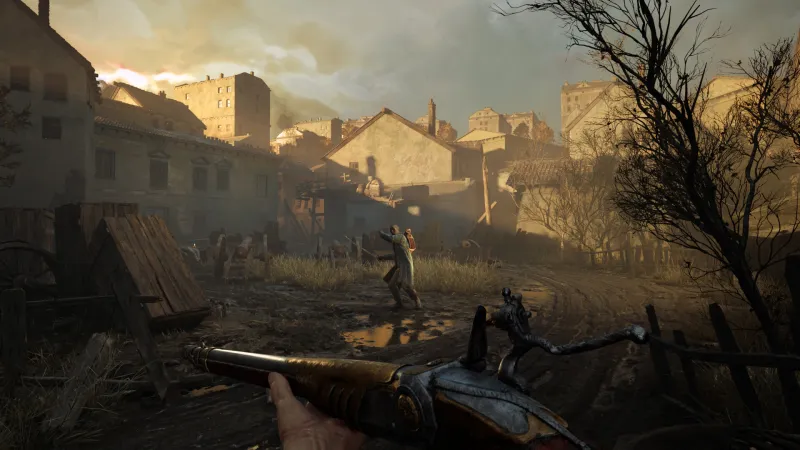
The environmental design is smart and beautiful, with just enough explorable side passages to keep moving through these large spaces enjoyable – quick puzzles along the way keep my brain engaged outside of Valor Mortis extra-difficult combat. While the French countryside and post-battle battlefields aren’t anything unique in video games, One More Level has painted these otherwise unremarkable settings with otherworldly growths, formations, and more. The result is a Remedy Entertainment-esque spin on 18th-Century France that remained a delight throughout this demo’s 15-hour runtime. And, given the preview demo ran me roughly 15 hours, I suspect there’s a lot more game left in the final build of Valor Mortis.
Despite loving what I was playing, the spectre of uneven balance hung heavy over everything, perhaps a testament to the bones of Valor Mortis. I recognize this is a Soulslike, but the difficulty seems way off. I’m no Soulslike scrub, either; I quite enjoy the genre (and if we’re talking credentials, I have the Platinum trophy in Sekiro: Shadows Die Twice, and trophy hunters know that is no easy feat). But when a boss can wipe out basically 60 percent of my HP, even after upgrading my health as much as possible at this point in the game, what should be fun tests of combat prowess become a demand for perfection, and that’s a problem. Soulslike fights are about learning the enemy, recognizing patterns, and countering with your own moves – but these bosses often hit so hard that actually surviving long enough to learn how they move, react, and counter felt impossible. I probably died more than 100 times to bosses in this 15-hour demo alone.
That difficulty imbalance extends to some mob enemies in the game, too, and I dreaded seeing certain enemies in my path because, despite being a nameless regular ol’ enemy, I knew I had what was basically a mini-boss ahead of me. I like mini-bosses, but I don’t like seven of them in one chapter.
Still, though, even when getting absolutely walloped by enemies, I kept pressing continue at the You Have Died screen. Valor Mortis is shaping up to be a great game thanks to its strong foundation and mechanical bones, One More Level’s unique visual design, and an interesting narrative-forward adventure atypical for the Soulslike genre. However, I worry that without some last-minute touch-ups to the game’s difficulty balance, Valor Mortis could prove to be more annoying and frustrating to play than anything else, marring what might be a genuinely great action game. Valor Mortis launches October 13, so there’s still time for tuning, and I hope it happens.