



A good puzzle is one of the best things in life. Some are relaxing time-killers, while others test our skills in critical problem solving or quick mental gymnastics; both can be incredibly satisfying. Video games can elevate these head-scratching problems to new heights and complexities by immersing you in a setting, messing with concepts like the tenants of time and space, or by simply giving you endless access to your favorite brainteasers. Here are some of our favorite modern puzzle games listed in no particular order, that you can play right now that will pleasantly twist your brain into knots.
Animal Well
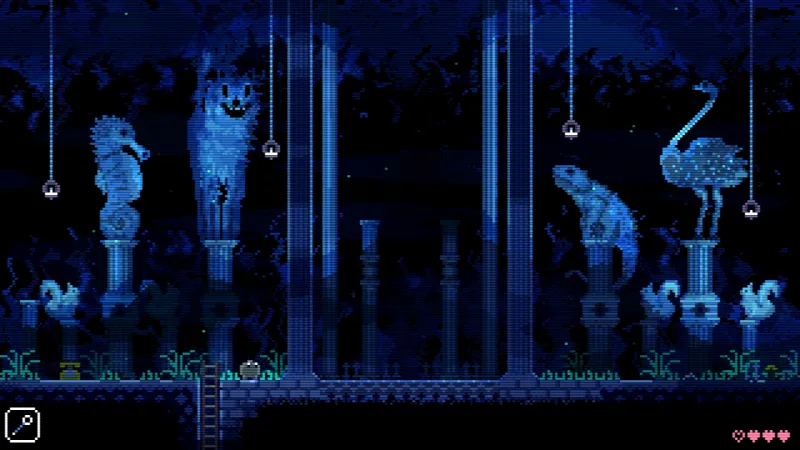
Animal Well is a platformer, but its design philosophy is rooted in puzzle mechanics that require more lateral thinking than dexterity. Exploring the game’s surreal yet beautiful world, which teems with animals, of course, as a diminutive blob yields strange but deceptively useful items. The trick is knowing how to use them. Animal Well obscures the full breadth of capabilities for tools such as a slinky, bubble wand, or yo-yo, letting you discover what’s truly possible on your own. Fully uncovering the labyrinthine map requires examining your inventory and trying out-of-the-box ideas to see if an item lets you reach a higher ledge or bypass a deadly creature. Some items perform logical alternative functions, while others are a bit wackier (but still make sense). Overcoming obstacles is often more an exercise in problem-solving than jumping prowess, and the rich world is brimming with fascinating secrets for those clever enough to find them. | Our Review

Blue Prince
Plenty of genres have spilled over into the roguelite realm, but Dogubomb’s ever-shifting rogue-puzzler Blue Prince feels one-of-a-kind. Your player-character, Simon, is tasked with solving the constantly shifting Mt. Holly estate and exhuming its secrets to claim their inheritance. Every day, Mt. Holly resets, and each morning you must approach the front door and draft rooms with different effects, puzzling your way through dwindling resources as you try to venture further into this impossibly massive house. Uncovering the truth about Mt. Holly and its denizens is a spectacularly rewarding treasure box that’s certain to inspire more than a few hastily scribbled notes and feverish theories. It’s a big, big house worth getting lost in. | Our Review

Chants of Sennaar
The people in Chants of Sennaar speak a language you do not, and to figure out what’s going on in the world, you need to become fluent. Armed with an in-game notebook and a sense of curiosity, you make your way through several cultures and learn their respective tongues using context clues. Each language has its own writing styles, grammatical rules, and key words, and it’s always satisfying to piece them together. We especially appreciate that it combines word puzzles, pattern recognition, and traditional adventure mechanics to create a truly unique gameplay loop. Even when you’re fluent in one language, you have to start fresh once you get to the next area.

Lorelei and the Laser Eyes
Calling developer Simogo’s 2024 puzzle game “weird” doesn’t do the bizarre adventure justice, but the word “brilliant” certainly does. Lorelei and the Laser Eyes centers on a woman who visits a mysterious hotel to collaborate with its eccentric owner on a surreal art project. From there, you fall down a captivating rabbit hole of solving mind-bending riddles to unlock rooms and reach new areas of the hotel while learning more about your eager, enigmatic host. A notepad and calculator are your best friends in this complex adventure, and the epiphanies they help uncover routinely bowled us over. Lorelei’s reality-bending puzzles are superbly crafted, and the dopamine high of cracking a seemingly inscrutable problem is incredible. Lorelei’s immaculate vibes are another highlight, boasting a presentation and atmosphere as stylish as they are profoundly unsettling. | Our Review
Lumines Arise
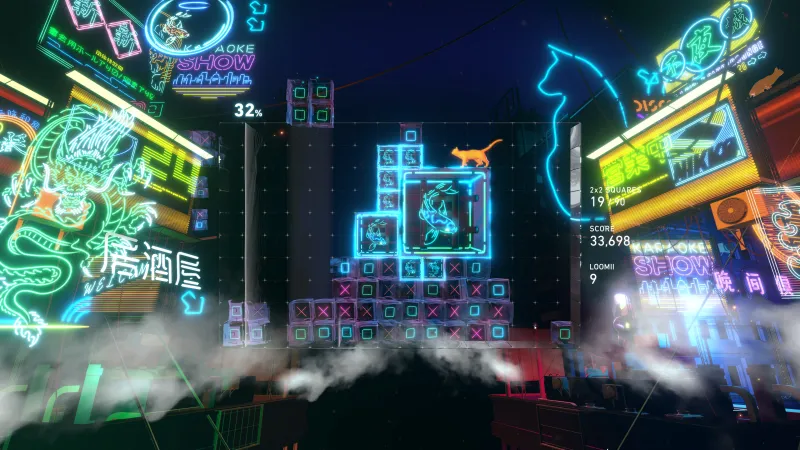
Tetsuya Mizuguchi wowed us all with 2018’s Tetris Effect (a game no longer on this list as it’s eight years old, but still absolutely worth your time today). Seven years later, he returned to his original puzzle creation, Lumines, and infused it with the humanity and impactful score of Tetris Effect, using the formula to create a dazzling new must-play block game. The puzzles of Lumines Arise are theoretically simple – rotate and use falling blocks to create larger matching blocks – but, like the best games of this genre, what begins as uncomplicated soon becomes an intricate, complex dance of rhythm, combos, and reflexes. Backed by trance-inducing visuals and a vibrant (sometimes corny), heartfelt soundtrack that work in harmony to create various stages full of falling blocks, Lumines Arise is yet another showcase of Mizuguchi and developer Enhance Games’ inspired understanding of the puzzle space. | Our Review

The Rise of the Golden Idol
The Rise of the Golden Idol is the sequel to 2022’s excellent The Case of the Golden Idol, and it picks up hundreds of years later, with the whereabouts of the titular Golden Idol unknown and various parties searching for it. Unlike its predecessor, which takes place in the 18th Century and is still absolutely worth your time, Rise puts players in the 1970s to solve the mystery behind several connected crimes and deaths. To do so, you must observe various disco-fueled scenes, corporate offices, and more to piece together a sequence of events, objects, and people involved in a scene that has already happened. The more you learn, the stranger things get, and the closer you come to solving the mystery of the dastardly Golden Idol once more.

The Roottrees Are Dead
While other puzzle games might have you find solutions to ancient mechanisms or match colored blocks, The Roottrees Are Dead uses a problem-solving skill set many of us use every day: searching in a web browser. Someone has hired you to piece together the Roottree family tree to nail down everyone’s identities, how they’re related, and reveal a hidden truth about the family, including a secret it’s spent decades hiding. The Roottrees Are Dead gamifies the act of going down a weird internet rabbit hole: by searching for key terms in a web browser, a periodical database, or even a library website, you’ll draw conclusions from the subtlest hints. It’s amazing how effective the game is at sucking you in to just search for one more term or follow one more lead, and having a wild guess confirmed as correct is supremely satisfying. | Our Review
The Séance of Blake Manor
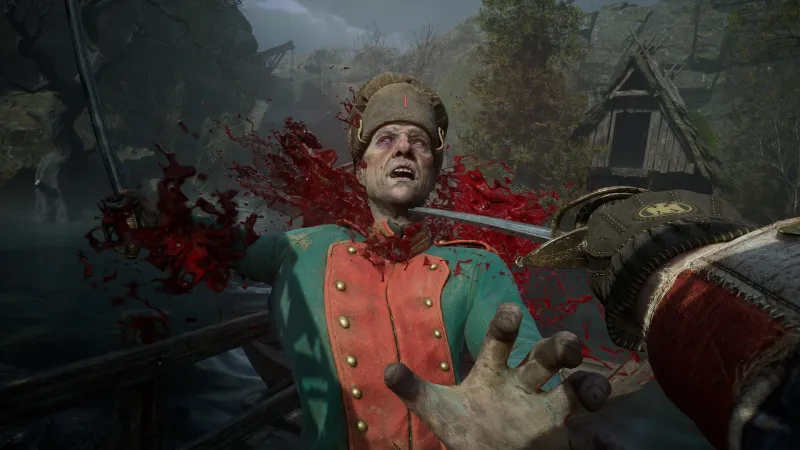
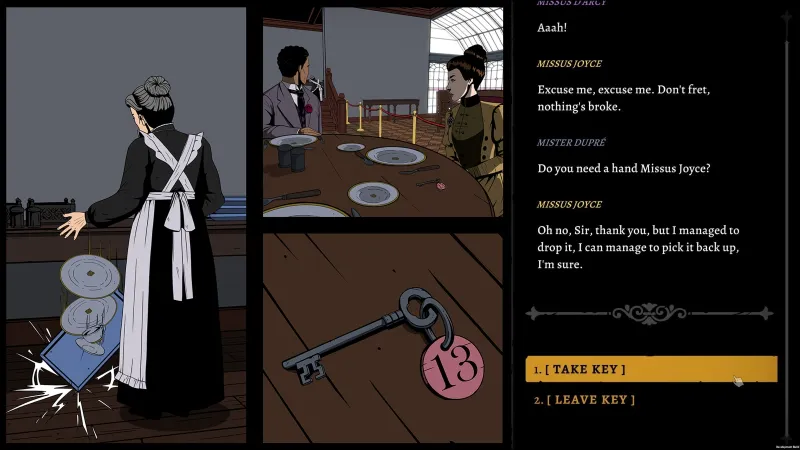
It’s 1897 in Ireland, and private investigator Declan Ward has been summoned to solve the disappearance of one Ms. Evelyn Deane from Blake Manor. That alone might make for an interesting premise, but the mystery unfolds during the gathering of an international group of occultists, scientists, and skeptics alike, as a massive séance is due to take place; one which, you fear, no one will survive. Steeped in regional folklore and layers of religious and occult influence, The Séance of Blake Manor sets a ticking clock for the player’s investigation, as they must uncover Deane’s disappearance, the motives and mysteries surrounding the other attendees, and ultimately try to stop the approaching horrors. Perfect if you want a little horror story mixed in with your Hercule Poirot.

The Talos Principle II
The Talos Principle II builds upon and expands its predecessor’s signature puzzle mechanic of guiding beams of light across obstacle courses in exciting ways. You can manipulate gravity, invert light colors, and create portals to divert beams through objects, to name a few, and the game cleverly layers these mechanics across hundreds of fantastically designed challenges. Roaming multiple large islands yields many environmental riddles, secrets, and philosophical questions for the sentient robotic protagonists to ponder as they embark on a captivating quest to learn the origins of a mysterious megastructure. Boasting a narrative that stimulates the mind as effectively as its gameplay, The Talos Principle II is the complete package for an experienced or aspiring smarty pants. | Our Review

Void Stranger
Most are probably familiar with the “sokoban” style of box-pushing puzzle games. In its earliest floors, Void Stranger might seem like just another one of those. After a gorgeous opening, you descend deeper and deeper into a massive pit-dungeon, pushing blocks and solving puzzles along the way. But its mechanics run deeper. The little details – everything from a number or block position to the screen itself – start to take on deeper meanings. Solving Void Stranger’s deeper puzzles isn’t just about learning to play sokoban well, though it certainly helps. It’s about seeing the puzzles within the puzzle and finding ways to break the rules of a world that never really established too many of them to begin with. This is one for the meta-theory, red-string thinkers who love to stare at a screen and think, “Where have I seen this before?” And then, suddenly, blissfully, figuring it out.
For more genre-based lists of games to play right now, click on the banner below. There you’ll find our List of Lists with all kinds of rankings and recommendations for different topics in video games!