

Close Menu
Tech Savvyed
  • Home
  • News
  • Artificial Intelligence
  • Gadgets
  • Apps
  • Mobile
  • Gaming
  • Accessories
  • More
    • Web Stories
    • Spotlight
    • Press Release

Subscribe to Updates

Get the latest tech news and updates directly to your inbox.

What's On
America’s 250th anniversary time capsule includes an iPhone 17 Pro Max

America’s 250th anniversary time capsule includes an iPhone 17 Pro Max

6 July 2026
Google executive ports Command & Conquer Generals: Zero Hour to iPhone and Mac using Claude

Google executive ports Command & Conquer Generals: Zero Hour to iPhone and Mac using Claude

6 July 2026
EV batteries are lasting much longer than the industry expected

EV batteries are lasting much longer than the industry expected

6 July 2026
Facebook X (Twitter) Instagram
Tech Savvyed
SUBSCRIBE
  • Home
  • News
  • Artificial Intelligence
  • Gadgets
  • Apps
  • Mobile
  • Gaming
  • Accessories
  • More
    • Web Stories
    • Spotlight
    • Press Release
Tech Savvyed
Home»News»The Washington Post predicted how tech will advance 50 years ago and the success rate is humbling
News

The Washington Post predicted how tech will advance 50 years ago and the success rate is humbling

News RoomBy News Room6 July 20263 Mins Read
The Washington Post predicted how tech will advance 50 years ago and the success rate is humbling
Share
Facebook Twitter Reddit Telegram Pinterest Email

Fifty years ago, when floppy disks were cutting-edge and the personal computer revolution had barely begun, The Washington Post attempted a remarkably ambitious exercise: predict what life in 2026 would look like. Some of those predictions now read like science fiction. Others feel surprisingly ordinary because they have become part of everyday life.

In a retrospective published for America’s 250th anniversary, the newspaper revisited science editor Thomas O’Toole’s 1976 article Inventing the Future, comparing its forecasts with today’s technological reality. The results reveal that while predicting exact timelines is nearly impossible, identifying long-term scientific trends can be remarkably accurate.

Fifty years later, some predictions look astonishingly accurate

O’Toole expected solar power to become a major energy source while believing commercial fusion power remained decades away. That prediction largely holds today. Solar energy now accounts for a significant share of new electricity generation in the United States, while fusion continues to attract billions in investment without reaching commercial deployment.

He also anticipated the rise of mobile communications, imagining phone calls travelling through optical fibre instead of traditional copper cables. While he could not have predicted smartphones, social media, or mobile apps, his broader vision of a connected world proved remarkably prescient. Today’s smartphones have become the primary gateway to communication, commerce, entertainment, and information for billions of people worldwide.

Several medical forecasts also landed surprisingly close to reality. O’Toole wrote about genetic engineering transforming healthcare long before technologies such as CRISPR existed. Today, gene editing is already being used in research and experimental treatments, although editing human embryos remains highly controversial following the widely condemned case of a Chinese scientist in 2018.

His prediction that Americans would live longer also proved accurate. Average life expectancy reached a record high in recent years, helped by medical advances, better treatments, and improved disease prevention, even as new public health challenges continue to emerge.

Not every prediction landed, but the broader vision did

Some forecasts were more optimistic than reality. O’Toole imagined nuclear-powered artificial hearts becoming commonplace, but modern medicine instead focused on improving heart health through drugs, minimally invasive procedures, and experimental organ transplants, including genetically modified pig organs. Artificial hearts remain rare rather than routine.

He also predicted deep-sea mining decades before it became a global policy debate. While companies now possess the technology to mine the ocean floor, environmental concerns continue to slow widespread adoption as scientists warn of potentially irreversible damage to marine ecosystems.

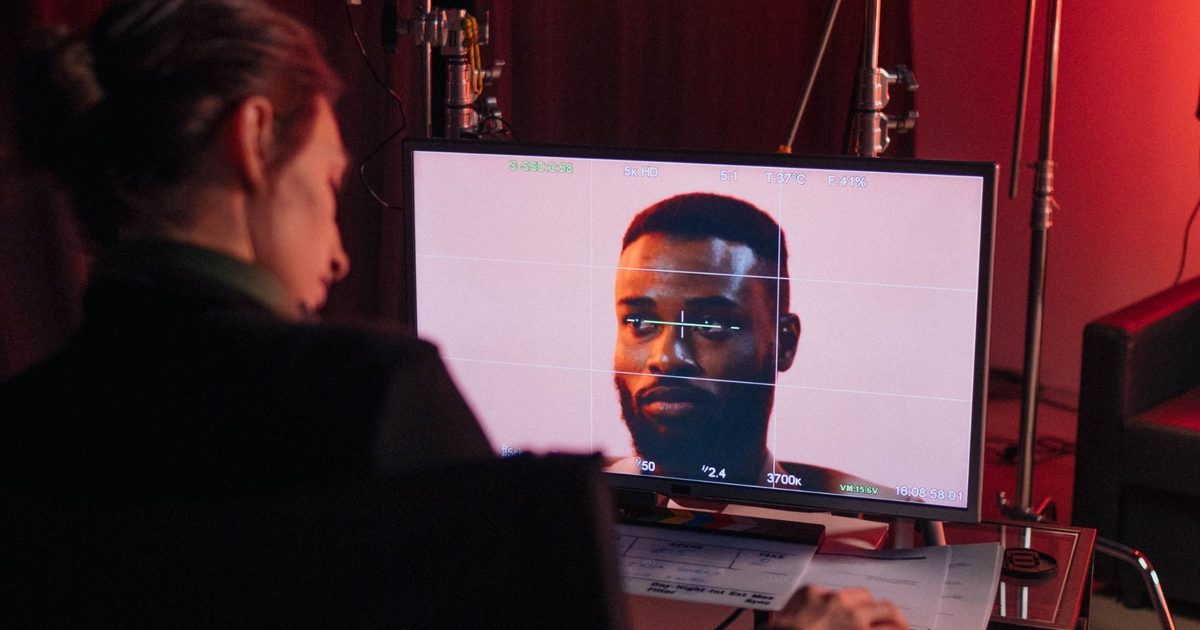
Representative Image

Perhaps the boldest prediction involved permanent human settlements beyond Earth. While humanity has yet to establish colonies on the Moon or Mars, companies such as SpaceX continue pursuing that goal through long-term exploration and settlement plans.

The retrospective serves as a reminder that technological forecasting is rarely about predicting specific products. O’Toole didn’t foresee the iPhone, ChatGPT, or cloud computing. Instead, he identified the scientific directions that would shape the following half-century.

Looking back from 2026, the biggest surprise isn’t that some predictions missed the mark. It’s that so many of them came remarkably close, despite being written half a century before artificial intelligence, the internet, and smartphones transformed everyday life.


Share. Facebook Twitter Pinterest LinkedIn Telegram Reddit Email
Previous ArticleI spend hours on YouTube Shorts, and these are the features I now can’t live without
Next Article AI’s energy tax was already concerning. Research says AI agents are over hundred times worse

Related Articles

America’s 250th anniversary time capsule includes an iPhone 17 Pro Max

America’s 250th anniversary time capsule includes an iPhone 17 Pro Max

6 July 2026
Google executive ports Command & Conquer Generals: Zero Hour to iPhone and Mac using Claude

Google executive ports Command & Conquer Generals: Zero Hour to iPhone and Mac using Claude

6 July 2026
EV batteries are lasting much longer than the industry expected

EV batteries are lasting much longer than the industry expected

6 July 2026
AI’s energy tax was already concerning. Research says AI agents are over hundred times worse

AI’s energy tax was already concerning. Research says AI agents are over hundred times worse

6 July 2026
I spend hours on YouTube Shorts, and these are the features I now can’t live without

I spend hours on YouTube Shorts, and these are the features I now can’t live without

5 July 2026
Apple’s foldable iPhone may arrive this fall, but good luck getting your hands on one

Apple’s foldable iPhone may arrive this fall, but good luck getting your hands on one

5 July 2026
Demo
Stay In Touch
  • Facebook
  • Twitter
  • Pinterest
  • Instagram
  • YouTube
  • Vimeo
Don't Miss
Google executive ports Command & Conquer Generals: Zero Hour to iPhone and Mac using Claude

Google executive ports Command & Conquer Generals: Zero Hour to iPhone and Mac using Claude

By News Room6 July 2026

AI-powered game development has recently been blamed for flooding app stores with low-effort mobile games,…

EV batteries are lasting much longer than the industry expected

EV batteries are lasting much longer than the industry expected

6 July 2026
AI’s energy tax was already concerning. Research says AI agents are over hundred times worse

AI’s energy tax was already concerning. Research says AI agents are over hundred times worse

6 July 2026
The Washington Post predicted how tech will advance 50 years ago and the success rate is humbling

The Washington Post predicted how tech will advance 50 years ago and the success rate is humbling

6 July 2026
Tech Savvyed
Facebook X (Twitter) Instagram Pinterest
  • Privacy Policy
  • Terms of use
  • Advertise
  • Contact
© 2026 Tech Savvyed. All Rights Reserved.

Type above and press Enter to search. Press Esc to cancel.