


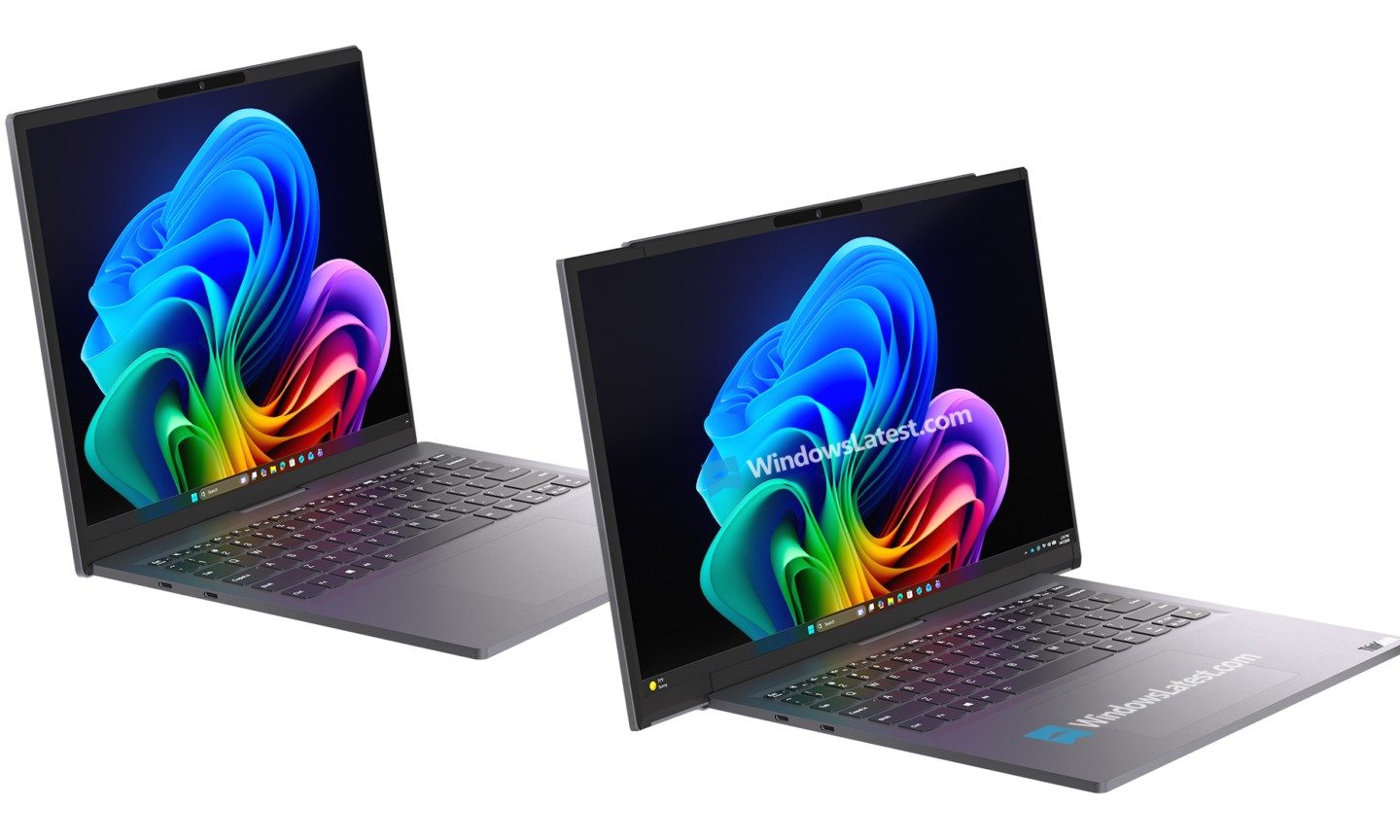
Lenovo apparently hasn’t finished asking how much screen it can squeeze into a laptop bag. A new report from WindowsLatest points to a Lenovo ThinkBook design with a display capable of expanding horizontally, potentially giving users considerably more desktop space without making the laptop permanently enormous.
The design appears connected to a Lenovo patent covering a laptop computer shown in multiple configurations. The patent was filed in August 2024 and granted in the US on March 10, 2026, with Lenovo Beijing listed as the assignee.
This filing illustrates the machine in second and third usage configurations, suggesting a chassis designed to change shape rather than remain at one fixed screen size. There is plenty we still don’t know, so we don’t have any official details like its panel specifications, pricing, or hardware details.
Lenovo has already proven this idea can work
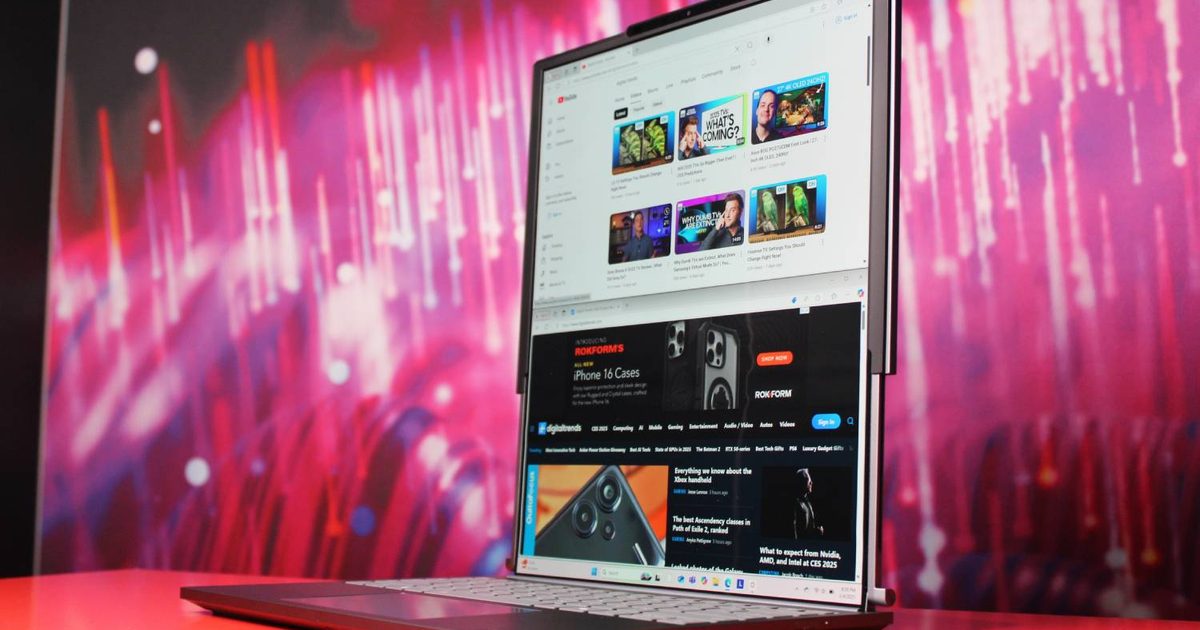
A horizontally growing ThinkBook would be a natural next step for a company that has spent the last few years redefining laptop screens. The ThinkBook Plus Gen 6 Rollable became an actual product after beginning life as an experiment. Its 14-inch OLED mechanically extends upward to 16.7 inches, adding roughly 50% more display area for webpages, spreadsheets, coding, and vertically stacked windows.
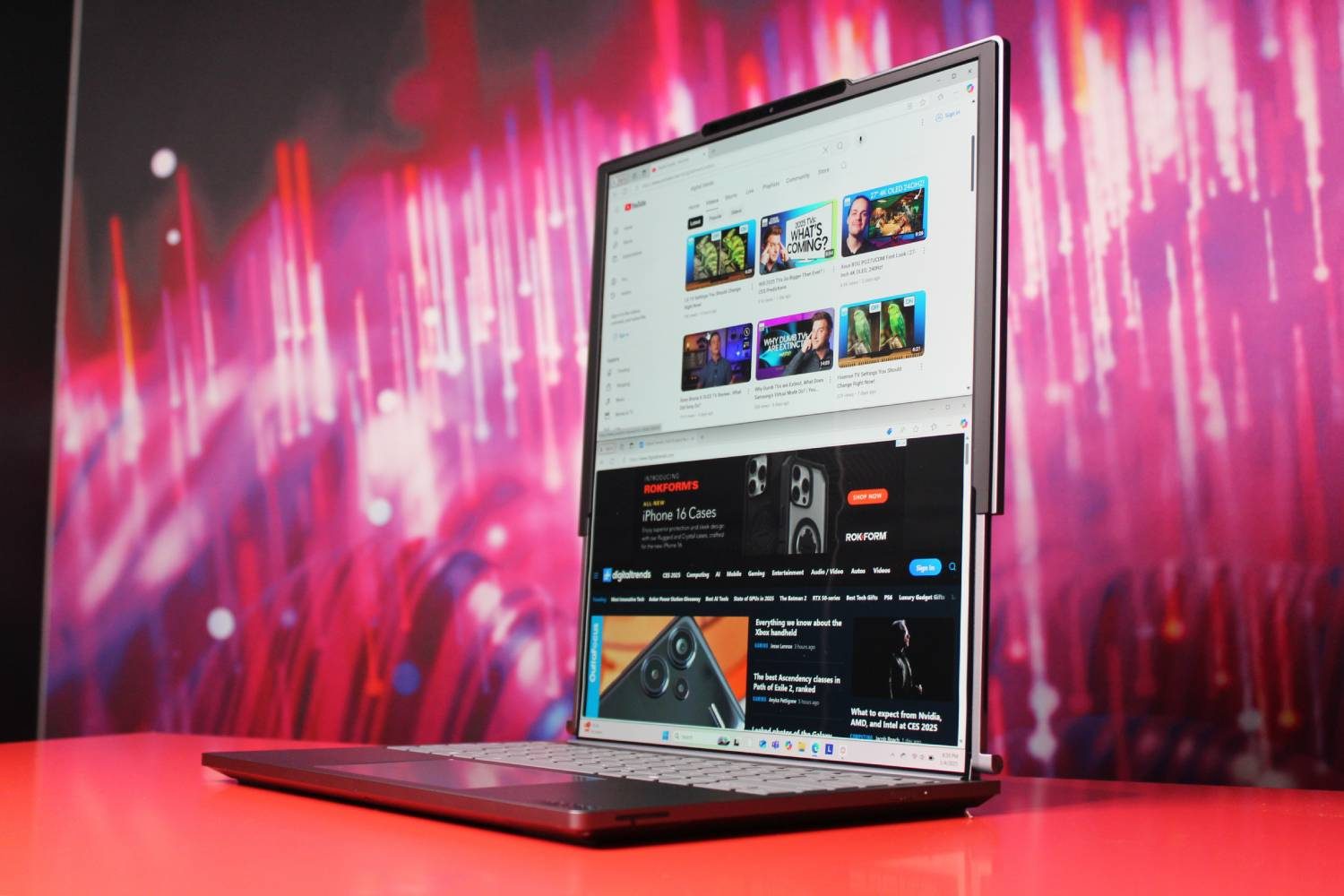
Lenovo’s own documentation confirms that users can extend the screen with a keyboard shortcut or an upward hand gesture. Horizontal expansion would solve a different problem. More width could give you room for two or three windows side by side, longer video-editing timelines, or an ultrawide workspace without carrying a portable monitor.
Lenovo has already built the crazier version
At CES 2026, Lenovo demonstrated the Legion Pro Rollable, whose 16-inch OLED physically expands sideways to 21.5 inches and eventually 24 inches. Lenovo describes it as a proof of concept, using the additional width primarily for ultrawide gaming.
The prototype still has rough edges. Lenovo has engineering work left before a horizontal rollable becomes an ordinary production laptop. A ThinkBook version could give that technology a much “broader” purpose. Lenovo already sells a vertically expanding productivity laptop and has demonstrated a horizontally expanding gaming one. Turning the latter idea into a productivity-focused ThinkBook suddenly doesn’t sound quite so wild.