




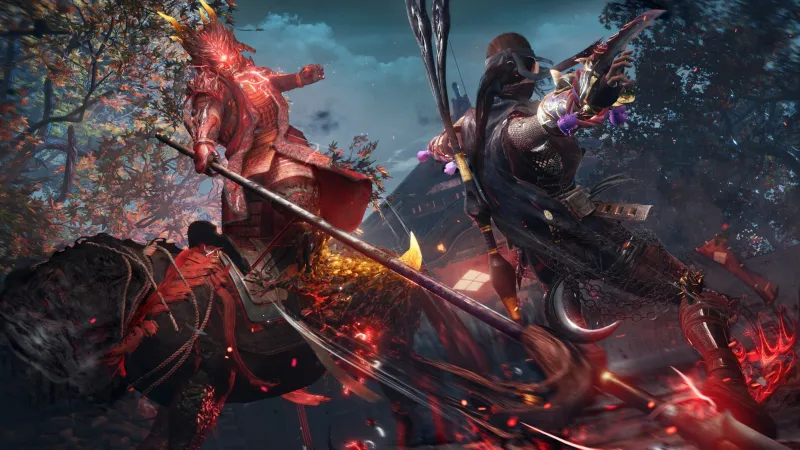
Just as the original Nioh was one of the first games to emulate Dark Souls to great success, Nioh 3 is among the first major Soulslikes to use an open-world blueprint post-Elden Ring. However, Team Ninja has always excelled at applying its own sensibilities to a now well-worn blueprint, and Nioh 3’s rewarding approach to open-world design is a shining example. Tack on a thrilling new Ninja gameplay style, and this third entry asserts itself as the pinnacle of its series.
The newcomer-friendly plot sees the customizable 17th-century hero Tokugawa Takechiyo on the verge of being christened Japan’s next Shogun. Your ascension enrages your jealous older brother, who reasonably responds by surrendering his soul to evil yokai and plunging the land into demonic chaos. This darkness transcends time and space, so stopping him means time-hopping across historical eras, from early antiquity to the 19th century, to remove its influence on corrupted historical figures all vying for the same power. Though the plot becomes repetitive – visit an era, cleanse the corrupted soul of someone who really wants to be shogun, repeat – it is ridiculous fun (as all the best time-travel stories are) with a nice bit of emotional weight in the theme of discovering what it truly means to be a leader.
Nioh 3 doubles the series’ intense and mechanically dense action with the new style shift mechanic. A button press instantly swaps between two gameplay styles: Samurai, the traditional Nioh gameplay experience of stance-switches and the Ki Pulse timing mechanic to restore stamina mid-attack, and the entertaining new Ninja. This shinobi-focused class trades defense for speedy evasion and sword stances for a plethora of cool ninja tools and magic. I love the Ninja as someone who generally favors maneuverability over power, and it became my default style. It adds a fresh Ninja Gaiden-inspired twist to Nioh’s action and is a blast to play.
Great combat balancing means both styles are equally viable; you can theoretically beat Nioh 3 using only one of them. However, the game provides good incentives to switch things up. I loved mastering Burst Break, a powerful timed counter executed by switching styles right before certain attacks land. More broadly, regularly switching between what’s essentially two completely different characters kept the action feeling fresh throughout the 70+ hours I spent playing. Samurai duels can be combat chess matches defined by precise blocking and parrying while carefully using Ki Pulse to extend more deliberate weapon strikes. Ninja gameplay is a frenetic treat of keeping adversaries off balance with constant movement, chipping at them from afar using tools, while unleashing flurries of acrobatic, combo-heavy strikes. Boasting separate loadouts and flexible progression, including free skill point respec for the dense weapons skill trees, there’s plenty of freedom and incentive to experiment and change things up if gameplay becomes routine.
In true Nioh fashion, there’s an overabundance of options for customizing and improving your character. From summoning powerful creatures to aid in battle, like Guardian Spirits and Soul Cores, to unlocking helpful class abilities for each Style, plus multiple methods of improving/recycling the endless amount of loot, there’s a ton of useful systems to dig into. It unfortunately means a lot of time is spent poring over various menus, but the game introduces new features at a good pace. Some major tools don’t unlock until a dozen or so hours into the adventure. I appreciated having plenty of time to grow accustomed before learning yet another mechanic, while still giving me something new to sink my teeth into deep in the adventure.
Nioh 3 wisely ditches the previous entries’ linear zones and dated mission selection for various expansive maps that players can freely explore. As proven with Elden Ring, this structure makes coping with Nioh 3’s steep difficulty much more palatable; hit a wall, and simply explore elsewhere to sharpen your skills or find better gear. I found Nioh 3 to be the most approachable entry because of this structure, especially since everything you find – along with the act of wandering itself – improves your character in some way. Killing an optional boss you confront while trekking may reward a new class ability for the Samurai or Ninja styles. Opening a random chest could unlock a new crafting recipe for a powerful weapon. Finding collectibles like hidden Kodama spirits or Jizo statues rewards skill points and permanent passive perks, such as raising the drop rate and effectiveness of healing elixirs.
Additionally, tiers of exploration rewards provide small but crucial stat bumps simply for uncovering the world, and fill the initially blank maps with icons revealing goodies you missed while in an area. Passively gaining strength while making it easier to do clean-up later compelled me to turn over every stone like few games of this ilk. This speaks to how impressively each of Nioh 3’s boatload of systems feeds into a gratifying escalation of power. The open worlds may lack the mind-boggling emergent moments, but they regularly satisfy my power-hungry and completionist desires to make the numbers go up. Crucibles, challenging corrupted zones that reward powerful yet risky weapons that can hurt you almost as much as the opponent, are great destinations to gain strength. These hellish areas offer nice breaks from the overworld while often acting as a deliciously challenging final test of a region before moving on to the next one.
Nioh 3 is a fantastic leap forward for Team Ninja’s generally great but increasingly stagnant take on Soulslikes. I had to stop myself from seeking out the next awesome hidden boss or from learning a cool new weapon to see credits to write this review, and the experience largely manages to maintain its excitement throughout its lengthy runtime. Nioh 3’s hardships are many, and failure is plentiful, but its thrills are bigger and more impressive than ever before.


