

For the better part of a year, Microsoft has been telling us that the future of AI on Windows belongs to Copilot+ PCs. If you wanted Microsoft’s most advanced local AI features, you needed a machine with a dedicated Neural Processing Unit (NPU). That was the deal. Now, Microsoft appears to be rewriting the rules.
According to updated documentation, Windows 11’s local Language Model APIs can now run on non-Copilot+ PCs, provided they have an Nvidia GeForce RTX 30-series GPU (or newer) with at least 6GB of VRAM. On the surface, this sounds like a developer-focused update. In reality, it could be one of the most significant shifts in Microsoft’s AI PC strategy since Copilot+ PCs launched last year. More importantly, it raises a question that has been lingering ever since the AI PC era began: Did we really need NPUs for all of this in the first place?
The CoPilot+ exclusivity era was always a little awkward
When Copilot+ PCs debuted in June 2024, Microsoft positioned them as the gateway to local AI experiences on Windows. To qualify, a device needed 16GB of RAM, SSD storage, and an NPU capable of delivering at least 40 TOPS of AI performance. The messaging suggested that these specialized chips were essential for running AI workloads locally. While that’s true in terms of efficiency, it never told the full story.
Anyone familiar with AI hardware already knew that GPUs were more than capable of handling these workloads. In fact, modern graphics cards are often significantly more powerful than NPUs for running language models and generative AI applications. That’s why most enthusiasts experimenting with local AI tools, from small language models to image generators, have been relying on GPUs for years. Yet Windows’ native AI experiences remained locked behind the Copilot+ badge.
That created an odd situation. A gaming PC with an RTX 4070 had more than enough horsepower to run AI models locally, but it couldn’t access Microsoft’s native AI framework because it lacked an NPU. Meanwhile, a thinner laptop with a qualifying NPU could. This latest change doesn’t completely erase that divide, but it certainly makes it look thinner than ever.
Microsoft may be laying the groundwork for AI beyond NPUs
The newly expanded Language Model APIs allow developers to tap into local AI capabilities on supported Nvidia hardware. Microsoft says these APIs can now run on non-Copilot+ systems equipped with RTX 30-series GPUs or newer, provided they have at least 6GB of VRAM. These APIs are powered by Phi Silica, Microsoft’s compact on-device language model. Applications can use it for tasks such as summarizing text, rewriting content, converting text into tables, formatting information, and generating responses from prompts.

Think of it as a lightweight, local version of the AI features people typically associate with services like ChatGPT. The difference is that everything runs directly on the device rather than in the cloud. That’s important for two reasons. First, privacy — if AI processing stays on your PC, sensitive documents, notes, emails, and drafts don’t have to leave the machine. Second, performance — local AI features can run instantly without waiting for cloud servers, subscriptions, or an internet connection.
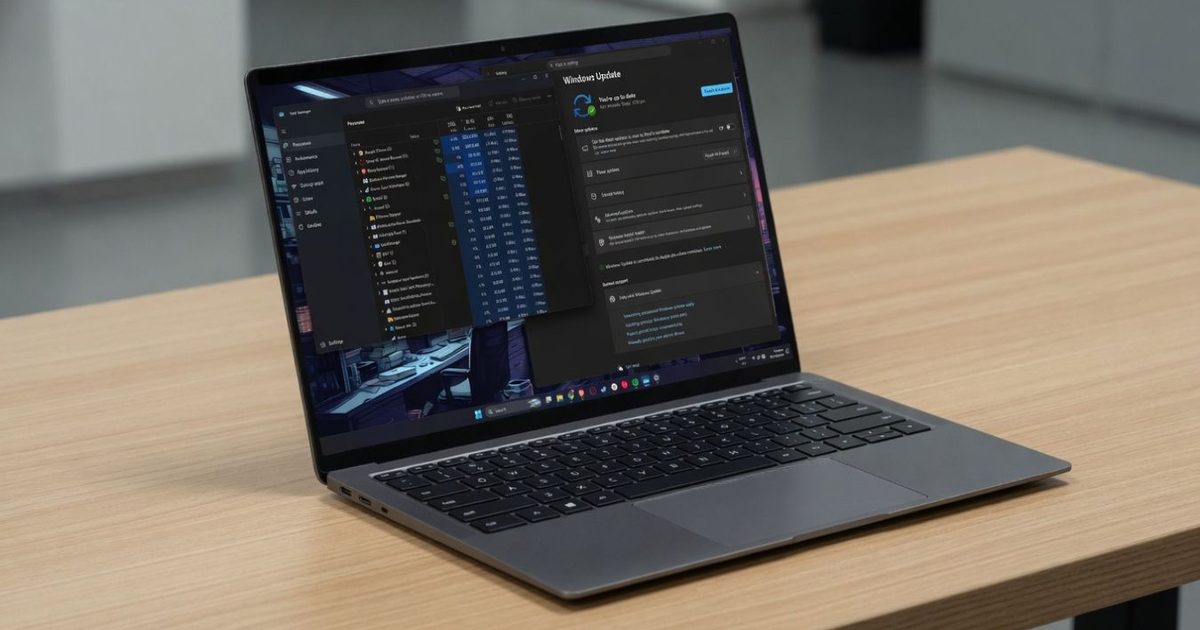
The interesting part is how Microsoft plans to distribute these capabilities. If an app needs Phi Silica, Windows can download the required model through Windows Update and run it locally using supported hardware. So, the operating system is beginning to treat AI models like another Windows component rather than a premium feature reserved for a specific class of PCs. That’s a notable philosophical shift.
The beginning of the end for CoPilot+ exclusives?
Before you get too excited, this doesn’t mean every AI feature is suddenly coming to older Windows machines. Features such as Recall, Click to Do, and some of Microsoft’s AI-powered creative tools still appear tied to systems with NPUs. The newly expanded support currently applies to Language Model APIs, which are primarily focused on text-based AI experiences.

Still, history suggests these walls rarely stay up forever. Once Microsoft demonstrates that local AI can run effectively on mainstream RTX hardware, it becomes harder to justify why certain AI experiences must remain exclusive to NPUs. Developers won’t care whether the AI workload is running on an NPU or a GPU as long as the experience works well. Consumers certainly won’t. That’s why this update feels more significant than the documentation change might suggest.
For now, it’s just one API. But it also represents Microsoft’s first meaningful step toward acknowledging something many PC enthusiasts have been saying all along: capable GPUs were never the problem. And if local AI can run perfectly well on millions of existing RTX-powered PCs, the distinction between a “Copilot+ PC” and a regular Windows PC may start to matter a lot less than Microsoft originally hoped.