


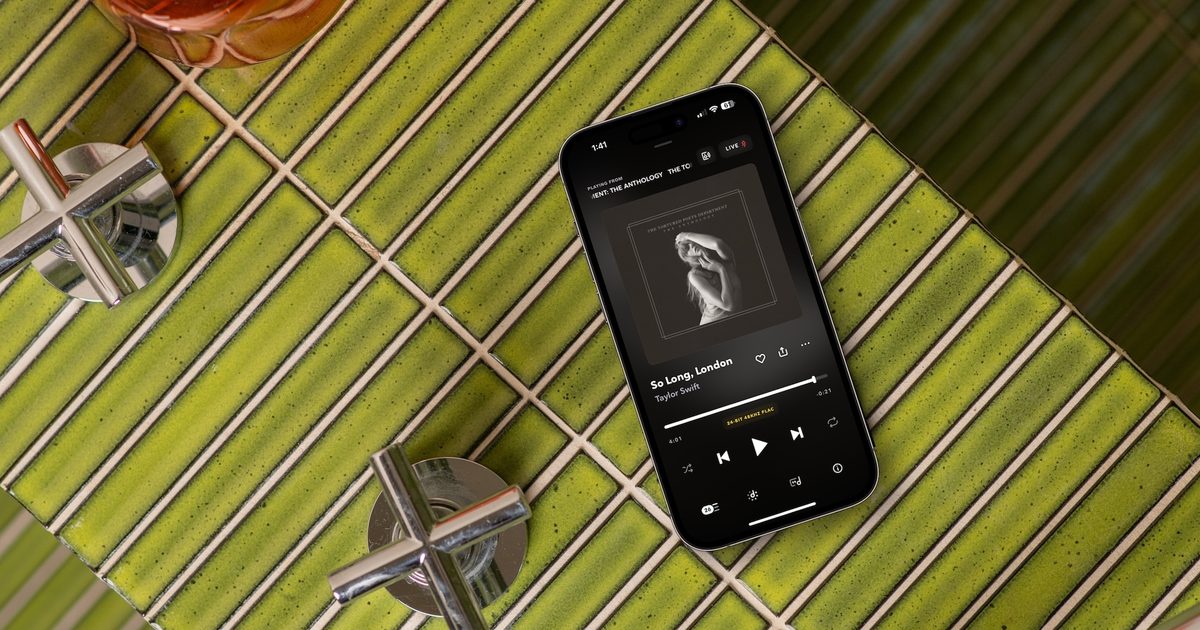
Every week, the AI music problem is getting increasingly hard to ignore, especially for streaming platforms. Deezer reported that 44% of all new music uploaded to its platform daily is now AI-generated; that’s almost half the songs.
Spotify relabeled and tightened its AI policies last September, while Apple Music announced a tagging approach in March. However, the subscription-based artist-first music platform Tidal has done something none of them did.
So what exactly is Tidal’s new policy?
Starting July 15, 2026, Tidal’s new AI policy will prevent fully AI-generated music from collecting revenue, earning royalties, or being eligible for direct-to-fan sales.
All 100% AI-generated songs will get a visible “AI” badge, so that listeners are well aware of the source. Further, if listeners don’t want to listen to AI-generated content, they’ll be able to filter out such content entirely.
Among the strictest policies is the removal of music that uses AI to impersonate a real artist. The policy also applies to Tidal Uploads, the platform’s direct-to-fan feature.
Why does this actually matter more than what other platforms are doing?
Tidal is cutting off the financial incentive for AI-generated content; that’s different and more radical than what we’ve seen from other platforms so far. Both Spotify and Apple Music simply tag AI-generated songs, but Tidal ensures it can’t earn money on the platform.
That distinction matters, as it encourages real artists and their work. As Tidal EVP Tony Gervino put it, “AI’s takeover of the music industry isn’t inevitable if we take even greater steps now to monitor and control it.”
Tidal is careful to say this is not about rejecting new technology at all; AI-assisted music by human artists is still welcome. The line it’s drawing is between human creativity supported by tools and wholly AI-generated music.