


Valve’s decision to officially support SteamOS 3.8 on standard gaming PCs has opened the door to an entirely new class of Steam Machines – without requiring gamers to buy Valve’s own hardware. Now, a new benchmark from YouTuber ETA Prime suggests that a high-end AMD-powered mini PC can outperform Valve’s upcoming Steam Machine by a comfortable margin. The only problem? It also costs several times more.
The testing highlights both the flexibility of SteamOS and the growing appeal of AMD’s latest integrated graphics, but it also raises an important question: how much extra performance is actually worth paying for?
SteamOS proves it isn’t limited to Valve’s hardware
With the release of SteamOS 3.8, Valve has made its Linux-based gaming operating system available for compatible desktop PCs, particularly those powered by AMD hardware. While Nvidia support is still evolving, SteamOS now allows users to build their own console-like gaming PC without relying on Valve’s official hardware.
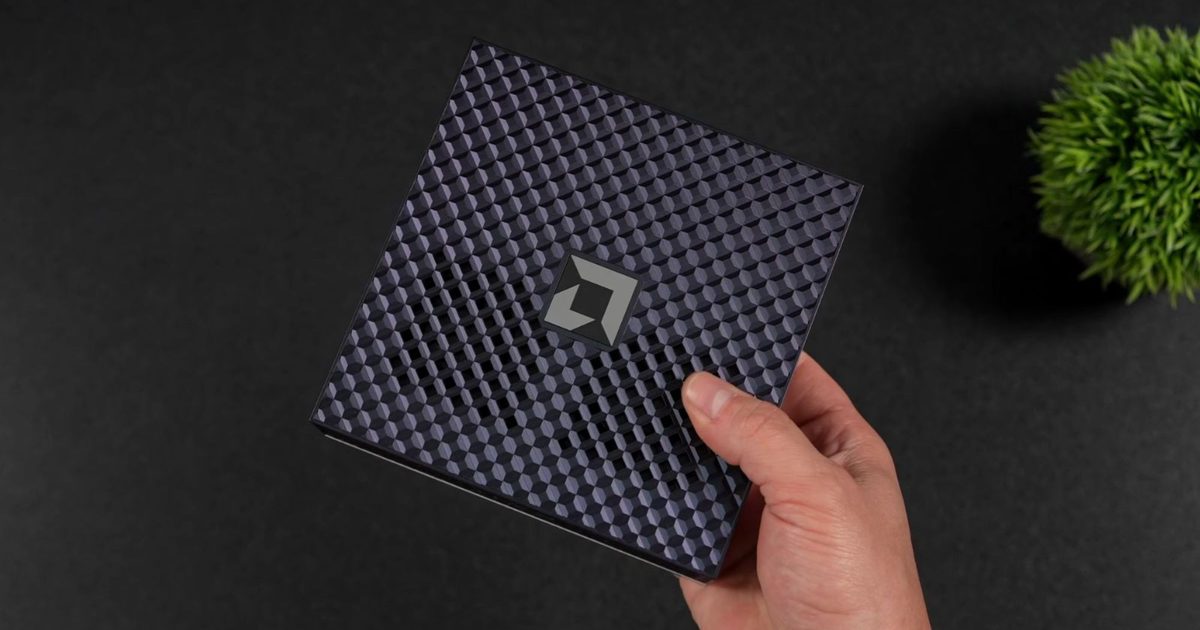
ETA Prime recently demonstrated that potential by installing SteamOS 3.8.14 on a mini PC powered by AMD’s Ryzen AI Max+ 395 processor. The chip combines 16 Zen 5 CPU cores, 32 threads, and an integrated Radeon 8060S GPU with 40 RDNA 3.5 compute units, making it substantially more powerful than the semi-custom AMD processor inside Valve’s Steam Machine, which reportedly uses a 6-core Zen 4 CPU and an RDNA 3 GPU with 28 compute units.
To maximise graphics performance, ETA Prime allocated 96GB of the system’s shared memory as VRAM, leaving 31GB available for system memory. The performance gains were evident across multiple titles tested using native rendering with no upscaling. In Shadow of the Tomb Raider, the Ryzen-powered system averaged 138 FPS at 1080p versus 118 FPS on the Steam Machine. At 1440p, it achieved 103 FPS compared to 86 FPS, while at 4K it reached 62 FPS, outperforming Valve’s hardware by 41 percent.
The trend continued in Cyberpunk 2077, where the mini PC averaged 84 FPS at 1080p, 52 FPS at 1440p, and 27 FPS at 4K, compared with 74 FPS, 45 FPS, and 18 FPS on the Steam Machine, respectively. Similar improvements were recorded in Horizon Zero Dawn Remastered, with the AMD system delivering 72 FPS at 1080p, 56 FPS at 1440p, and 32 FPS at 4K, maintaining a consistent lead over Valve’s hardware.
However, those performance gains come at a steep price
The configuration used in the demonstration costs roughly $3,999, compared to the Steam Machine’s starting price of $1,049. Spending nearly $3,000 more for frame-rate improvements of 15 to 50 percent will be difficult to justify for most buyers.
There is a more practical alternative. Systems such as the GMKtec EVO-X2 AI Mini PC, which also uses the Ryzen AI Max+ 395, are available for around $1,999. While that model includes 64GB of LPDDR5X memory, preventing users from allocating the same 96GB of VRAM used in ETA Prime’s test, the limitation is unlikely to have a major impact on gaming. Even the most powerful consumer graphics cards today rarely require more than 32GB of VRAM.
The benchmark ultimately highlights the broader significance of SteamOS 3.8. Valve is no longer asking gamers to buy a Steam Machine—they simply need compatible hardware. As SteamOS matures and hardware support expands, particularly for Nvidia GPUs, gamers may have far more choice in building their own console-like gaming PCs without being tied to a single manufacturer.