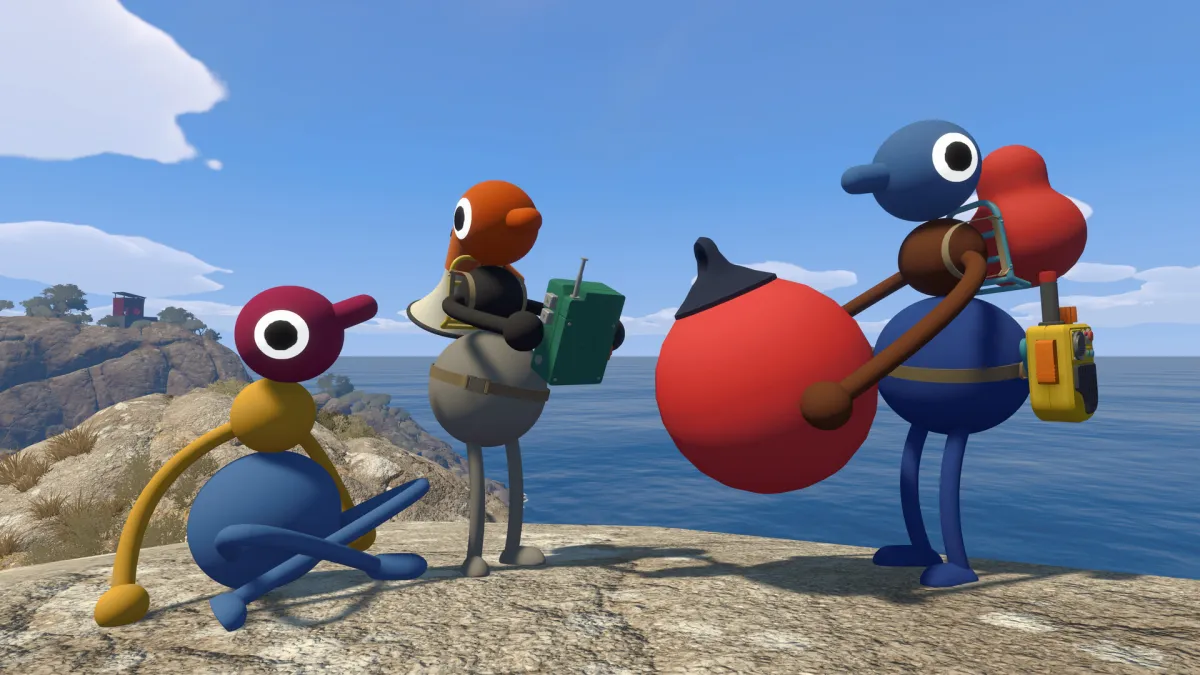




Though known primarily for its competitive multiplayer gameplay, Splatoon’s single-player content has been engaging and creative since the 2015 debut entry. This side of the series offers obstacle courses, shooting galleries, puzzles, and boss battles with continually novel gimmicks. Splatoon Raiders amps up the combat part of that equation, delivering a multitude of intense encounters. The result is a more focused PvE, looter-shooter-inspired Splatoon game that sunk its hooks into me until long after the credits rolled.
Even though the competitive multiplayer element is absent from this package, Splatoon Raiders maintains the vibrant visuals and excellent gameplay feel that popularized the mainline titles. Gliding through a colorfully inked surface while you reload remains smooth and responsive, and the weapons and abilities – of which there are a ton – allow you to blast your way through each bite-sized encounter however you’d like. Though I struggled to find the same balance of weapon utility I typically discover in the multiplayer titles, I loved experimenting with how different character loadouts interact with the various challenges Splatoon Raiders threw my way.
Tinkering with my build quickly became a favorite activity between missions. Splatoon Raiders gives you upgradeable tanks, which serve as character classes. The Speed tank offers mobility options and ranged attacks, while the Power tank grants abilities centered on aggression. My personal favorite, the Tactical tank, lets me place turrets, ink vortexes, and trip-mines to help me even the odds. Each of these ability gadgets is upgradeable and customizable, and when you combine the vast number of modifications with the huge arsenal of weapons, not to mention the three selectable Ultimate abilities, I’m still tweaking my loadouts even hours after rolling credits. Thankfully, a rewarding post-game campaign ensures Raiders will remain in my rotation for the next several weeks.
The story is a silly and forgettable treasure-hunting tale, but it serves as an appropriate catalyst for the quick-hit raids you take on in rapid succession. Whether in single-player or cooperative play, you embark on missions involving multiple levels of timed battles, linear stages full of baddies, or open areas built for free-form traversal; though I appreciate the assortment of map layouts, by the end of the campaign, the repetition began to set in, both with the mission types and the disappointing soundtrack. But whether you’re talking Power Eggs to charge your Ultimate meter, enemy parts for crafting, Spirhalite Shards for currency, or new weapons and gadget parts to customize your loadout, you are constantly gathering items to boost your chances at success.
Crucially, the item collection process is smooth and doesn’t disrupt the intuitive weapon-use/reload-swim rhythm Splatoon has always delivered. And that’s a good thing, because the intense battles against the wide array of combatant creatures keep you on your toes. Whether you’re blasting Smallfry and Chum minions or one of the more than 10 unique Salmonid types that pop up, each raid combines similar ingredients to deliver unique experiences. And since each powered-up Salmonid poses unique threats and possesses distinct weaknesses, the enemy spawns help alleviate some of the mission-type fatigue.
Though I miss the more puzzle- and platforming-based excursions of other Splatoon PvE content (here, those are mostly relegated to side-mission tutorials involving specific gadgets), I can’t deny the tightening of my grip and leaning in my posture each time the Salmonids flooded the map and forced me to adjust my approach on the fly. That’s even more true for the more powerful variant enemies and the impressive set-piece boss battles. Splatoon 3’s bosses lacked the originality of other Splatoon PvE content, but Splatoon Raiders proves that was merely a minor hiccup.
If your firepower doesn’t prove to be enough to take on the Salmonids, you can invite other players to help your cause. Testing the multiplayer features on pre-release servers, I had a smooth experience partying up and taking on Splatoon Raiders’ missions alongside other players. The levels all feel appropriately designed and scaled for single-player play, but if you need any extra help, you can also send out a beacon for a random player to join your session for one mission, with special loot awarded upon completion.
Splatoon Raiders is the kind of game I struggle to put down. Most raids only take minutes to complete, and the steady feeling of upgrading your abilities constantly tempted me to play “just one more” to test out the latest tweaks I made. Though Splatoon’s single-player content has always been underappreciated, Splatoon Raiders makes it difficult to ignore, shining a bright light on the series’ oft-slept-on side.