



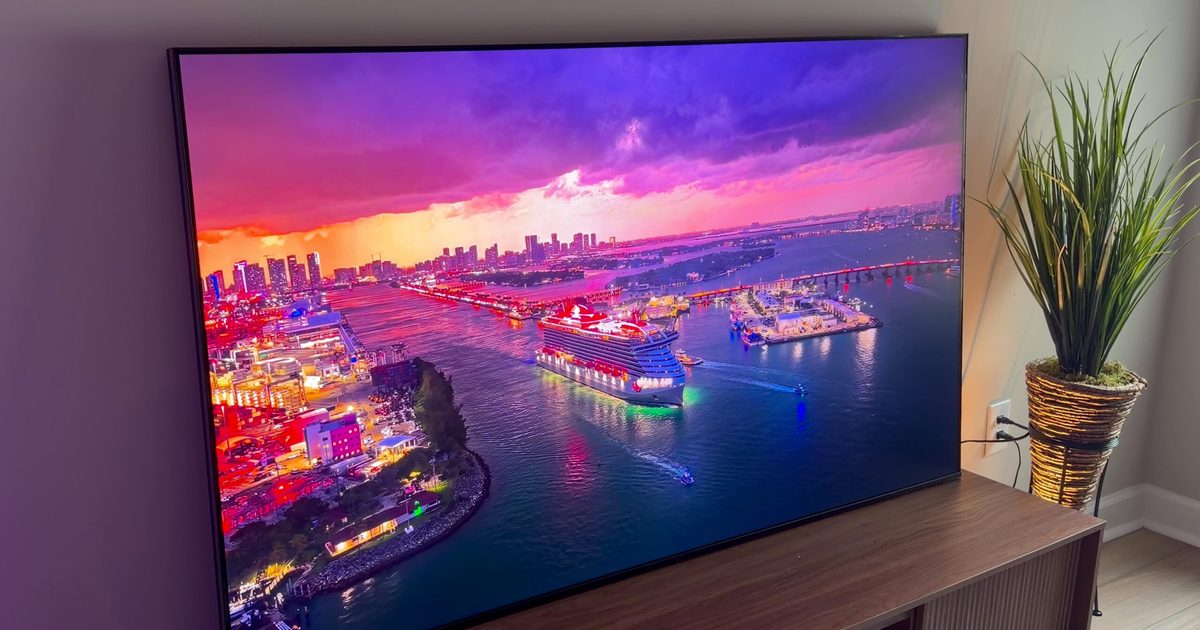
“The BRAVIA 9 II doesn’t replace OLED. It gives OLED its toughest competition yet.”
Pros
- Exceptional 4,000-nit HDR brightness
- Outstanding color accuracy
- Excellent local dimming
- Refined Sony image processing
- Excellent bright-room performance
- Versatile all-around picture quality
Cons
- Expensive flagship pricing
- OLED delivers deeper blacks
- Some blooming remains visible
- Limited off-axis viewing
- Fewer gaming-focused features
Instant Insight
The Sony BRAVIA 9 II might be one of the most ambitious LCD televisions Sony has ever created. Sony isn’t just trying to make another brighter Mini LED TV. It’s trying to solve one of Mini LED’s biggest challenges: how do you deliver incredible brightness without sacrificing accurate, beautiful colors?
The answer is Sony’s new True RGB Mini LED technology, which uses dedicated red, green, and blue Mini LEDs instead of a traditional backlight system. The idea is to get closer to OLED-like color precision while keeping the brightness and HDR impact that make LCD TVs so appealing.
After spending time with the BRAVIA 9 II, it’s clear Sony has made an exceptional TV. The bigger question is whether it has finally created an LCD that can genuinely challenge OLED, or whether OLED still makes more sense for most buyers.
Sony BRAVIA 9 II specs:
| Model Year | 2026 |
| Screen Size | 75-inch / 189 cm (Also available in 85″ and 115″) |
| Display Resolution | 4K Ultra HD ($3840 times 2160$) |
| Panel Type & Backlight | LCD with RGB LED Local Dimming (RGB Backlight Master Drive Pro) |
| Refresh Rate | 120 Hz |
| Processor | XR Processor with AI |
| HDR Support | Dolby Vision, HDR10, HLG |
| Picture Enhancements | RGB TRILUMINOS Max™, XR Contrast Booster 40, XR Clear Image |
| Audio Output | 80W (8-unit setup: 2x Subwoofer, 2x Full Range, 2x Tweeter, 2x Beam Tweeter) |
| Sound Technologies | Acoustic Multi-Audio+, Dolby Atmos, DTS:X, Voice Zoom 3 |
| Gaming Features | 4K/120Hz, VRR, ALLM, SBTM, Auto HDR Tone Mapping (PS5) |
| HDMI Inputs | 4 ports (HDMI 2.1 support on ports 3 & 4; eARC/ARC) |
| Wireless Connectivity | Wi-Fi 6 (802.11ax), Bluetooth 5.3, Apple AirPlay, Apple HomeKit, Chromecast built-in |
| Operating System | Google TV™ (Android TV™) |
| Dimensions (with Stand) | Approx. 1,669 $times$ 1,033 $times$ 386 mm |
| Weight | Approx. 38.1 kg (Without Stand) / 43.5 kg (With Stand) |
| Price (MRP) | ₹8,39,900 (incl. of all taxes) |
Design and Build Quality
Starting with the design, the BRAVIA 9 II immediately feels like a flagship television. Sony has always taken a more minimalist approach, and this TV continues that tradition. The bezels are extremely thin, the build quality feels premium, and the overall design allows the display itself to be the focus.
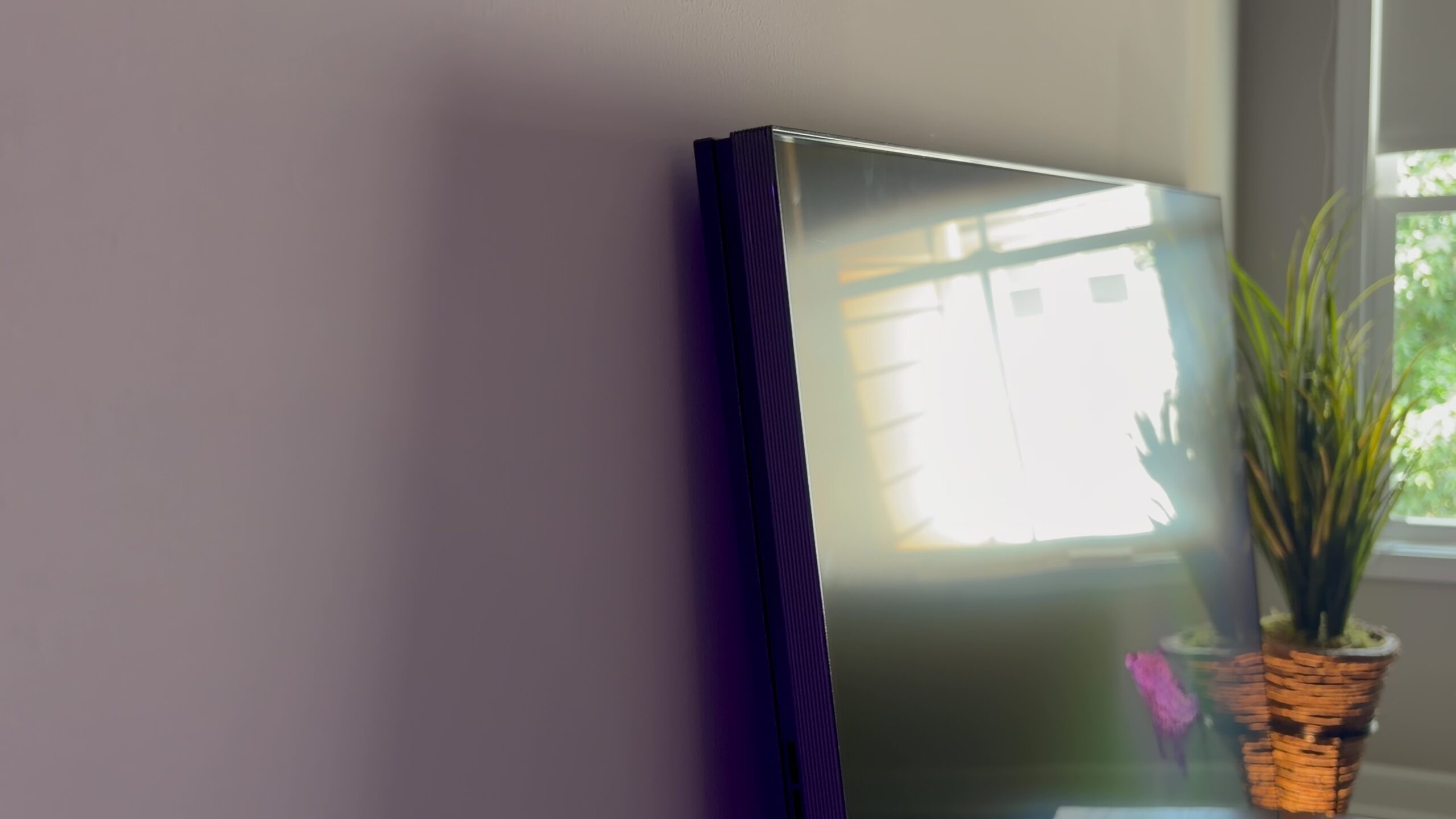
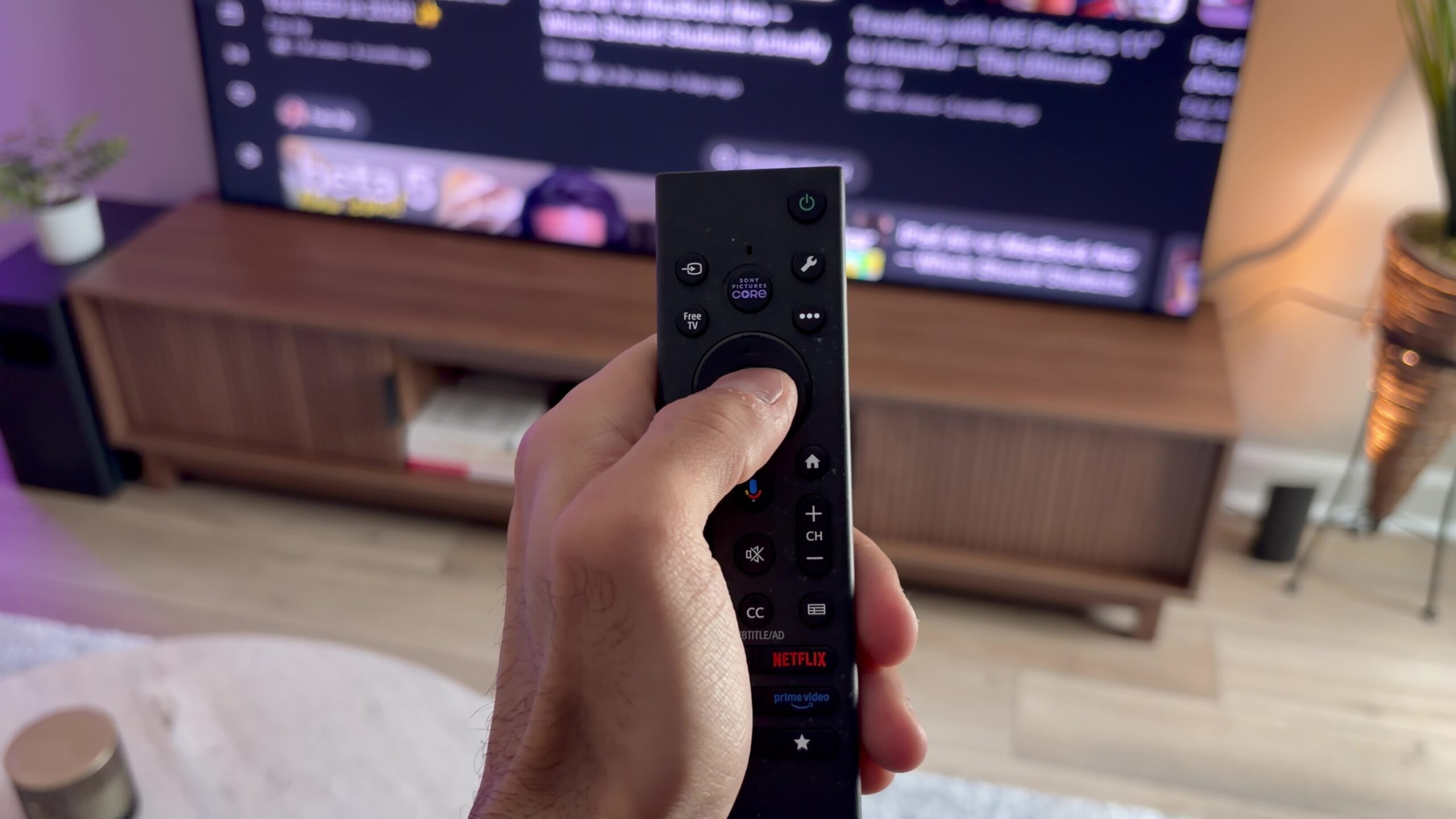
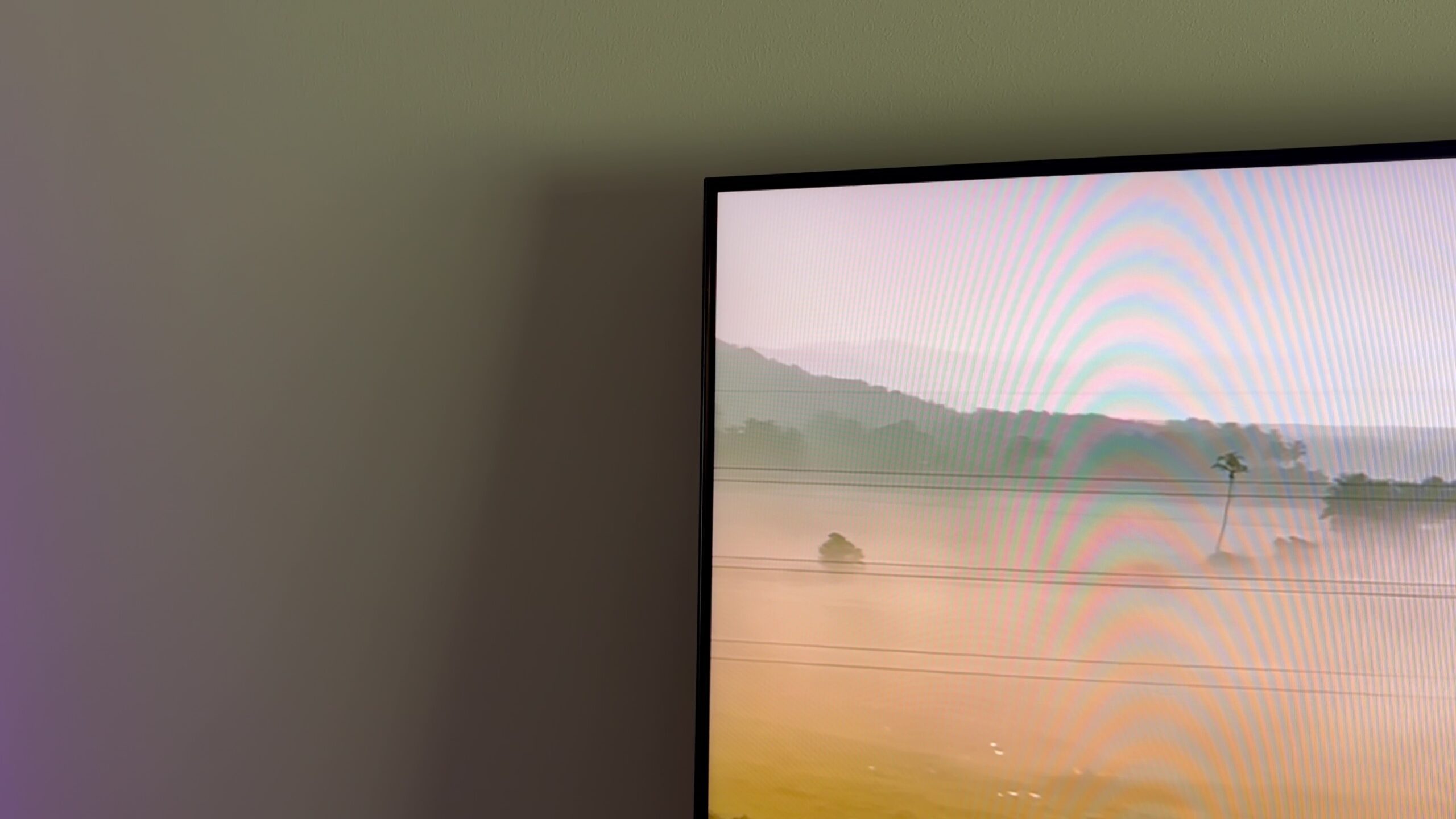
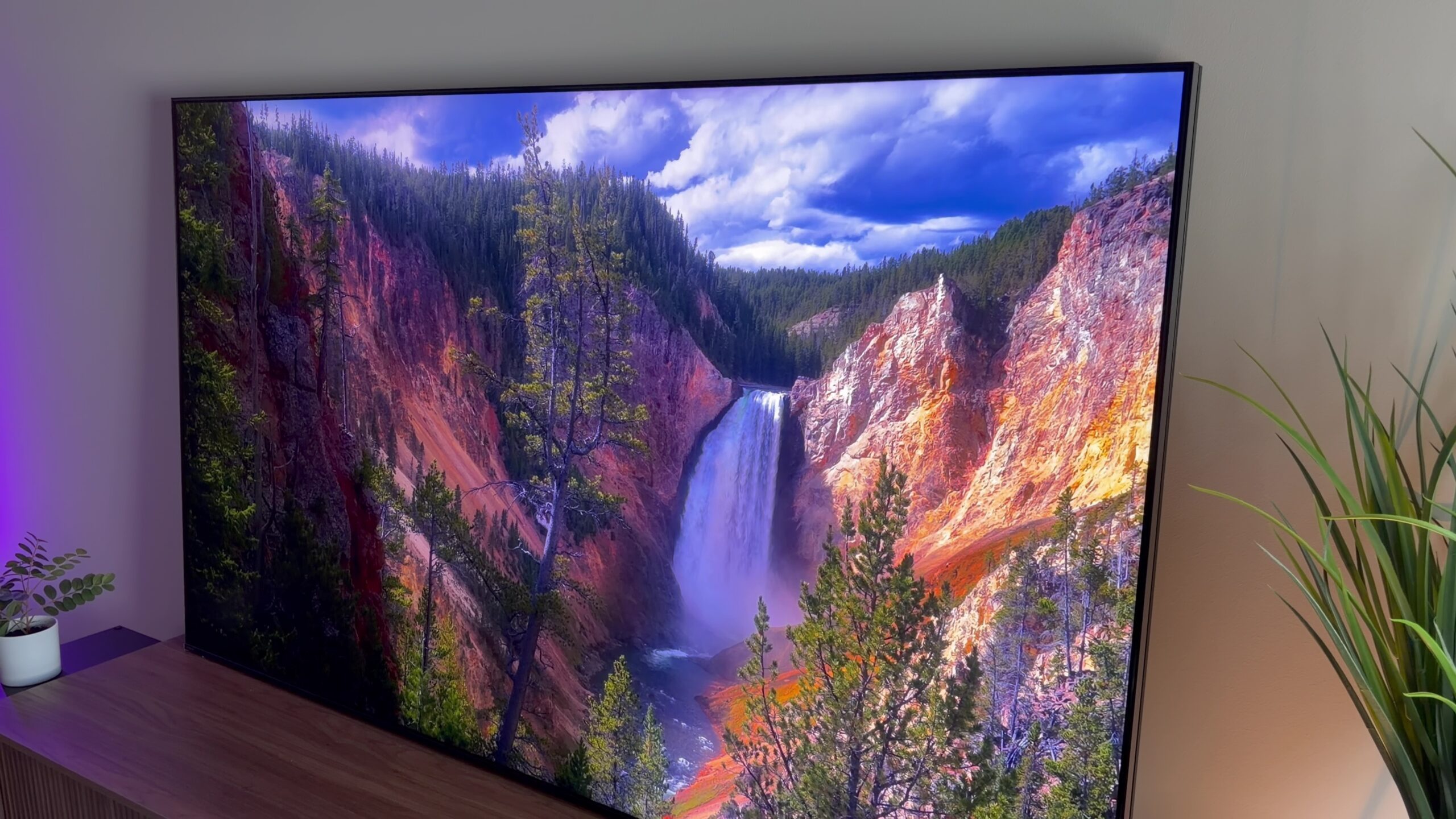
The stand system is also very practical, giving you multiple placement options depending on your setup. You can position it lower for a cleaner look or raise it slightly if you want to pair it with a soundbar underneath. With a TV like this, the design is almost secondary, because the real story is happening behind the panel.
Picture quality
Mini LED televisions have come a long way. Companies like Sony, Samsung, TCL, and Hisense have pushed LCD technology further than many people thought possible. Traditional Mini LED has always had the same challenge, though. The TV uses a backlight to create brightness, then relies on color filters to create the colors you see. When you push brightness extremely high, colors can sometimes lose intensity.
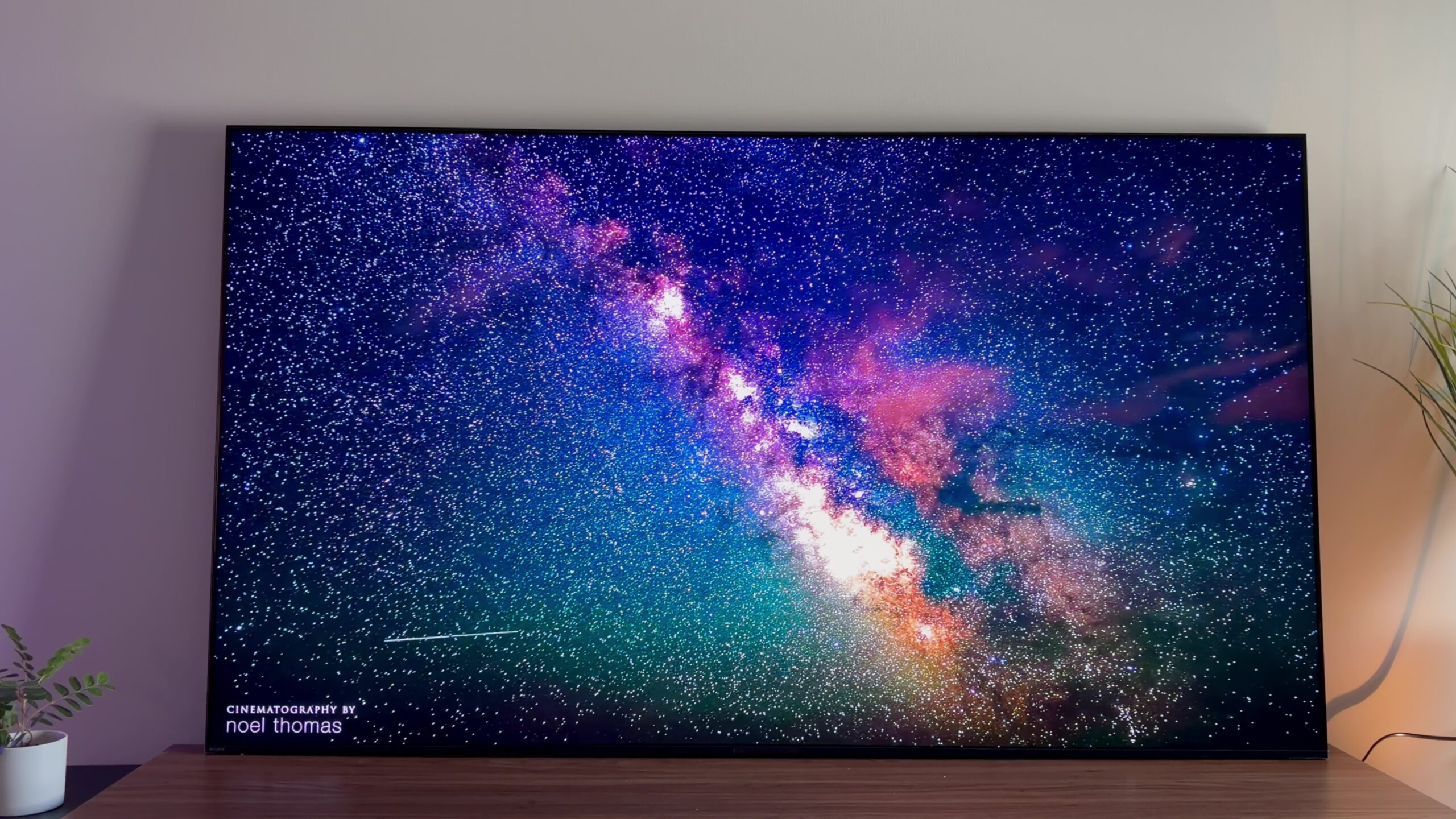
Sony’s True RGB Mini LED approach takes a different route. Instead of creating white light and filtering it into colors, the BRAVIA 9 II uses dedicated red, green, and blue Mini LEDs. That gives Sony much more control over how colors are produced, resulting in higher color volume, more accurate colors, and better saturation when displaying extremely bright HDR highlights.
HDR isn’t just about brightness. It’s about creating realistic contrast between the brightest highlights and darkest shadows while maintaining accurate color.
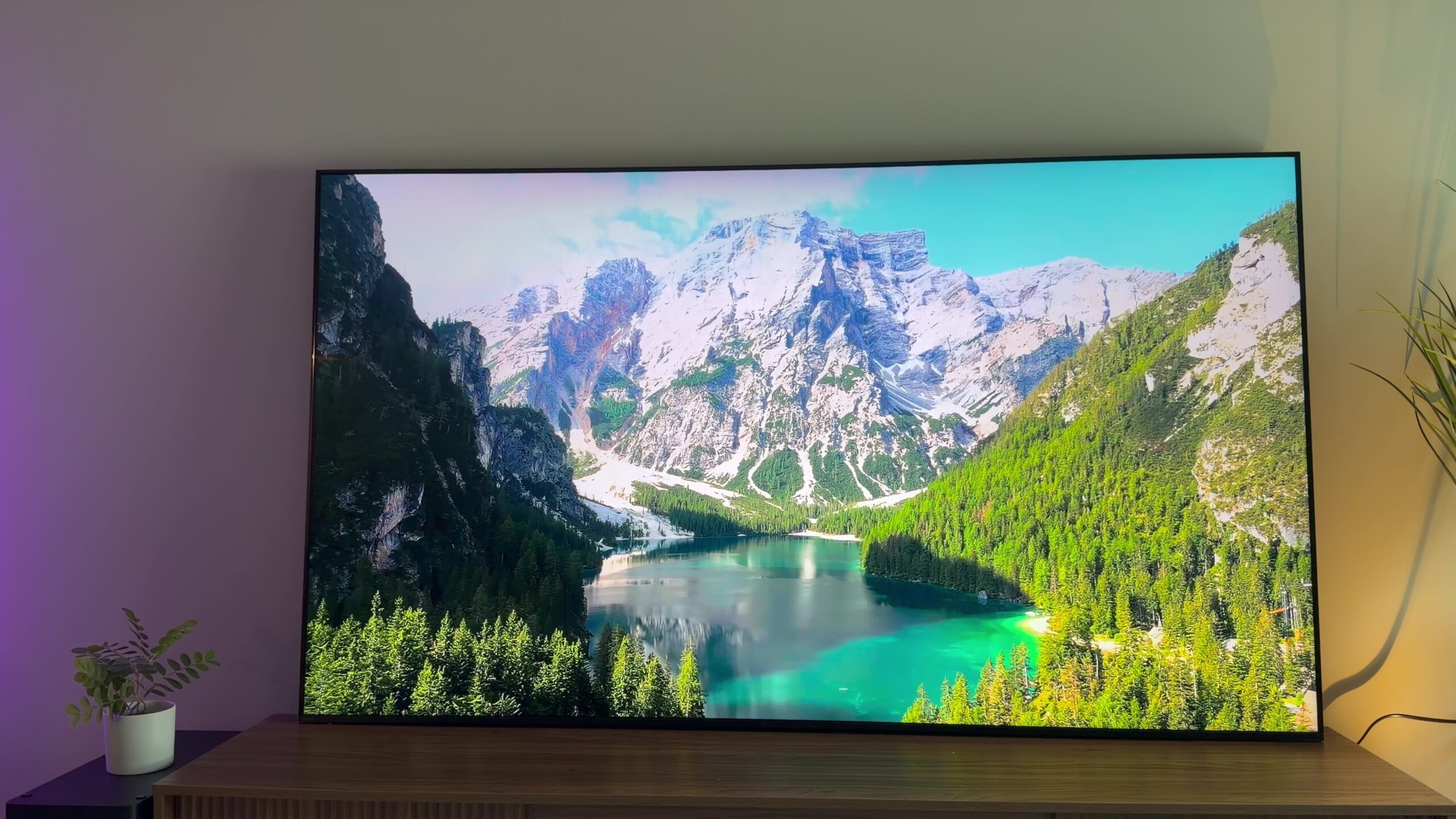
The first thing you notice with the BRAVIA 9 II is brightness. This TV can reach around 4,000 nits of peak HDR brightness, putting it among the brightest consumer televisions available. Scenes with sunlight, reflections, explosions, neon signs, and bright outdoor environments have incredible impact. There is a sense of realism and intensity that very few televisions can replicate.
Brightness alone doesn’t make a great TV. The challenge is controlling it, and this is where Sony’s processing becomes extremely important. Sony uses its XR Backlight Master Drive technology to control the Mini LED system. The goal isn’t just having thousands of LEDs. It’s making sure the TV knows exactly when to brighten, when to dim, and how to maintain contrast.
Sony’s XR Processor analyzes the image in real time and adjusts brightness, contrast, and local dimming performance. Bright objects stay bright, dark scenes maintain detail, and blooming is significantly reduced compared to older Mini LED televisions.
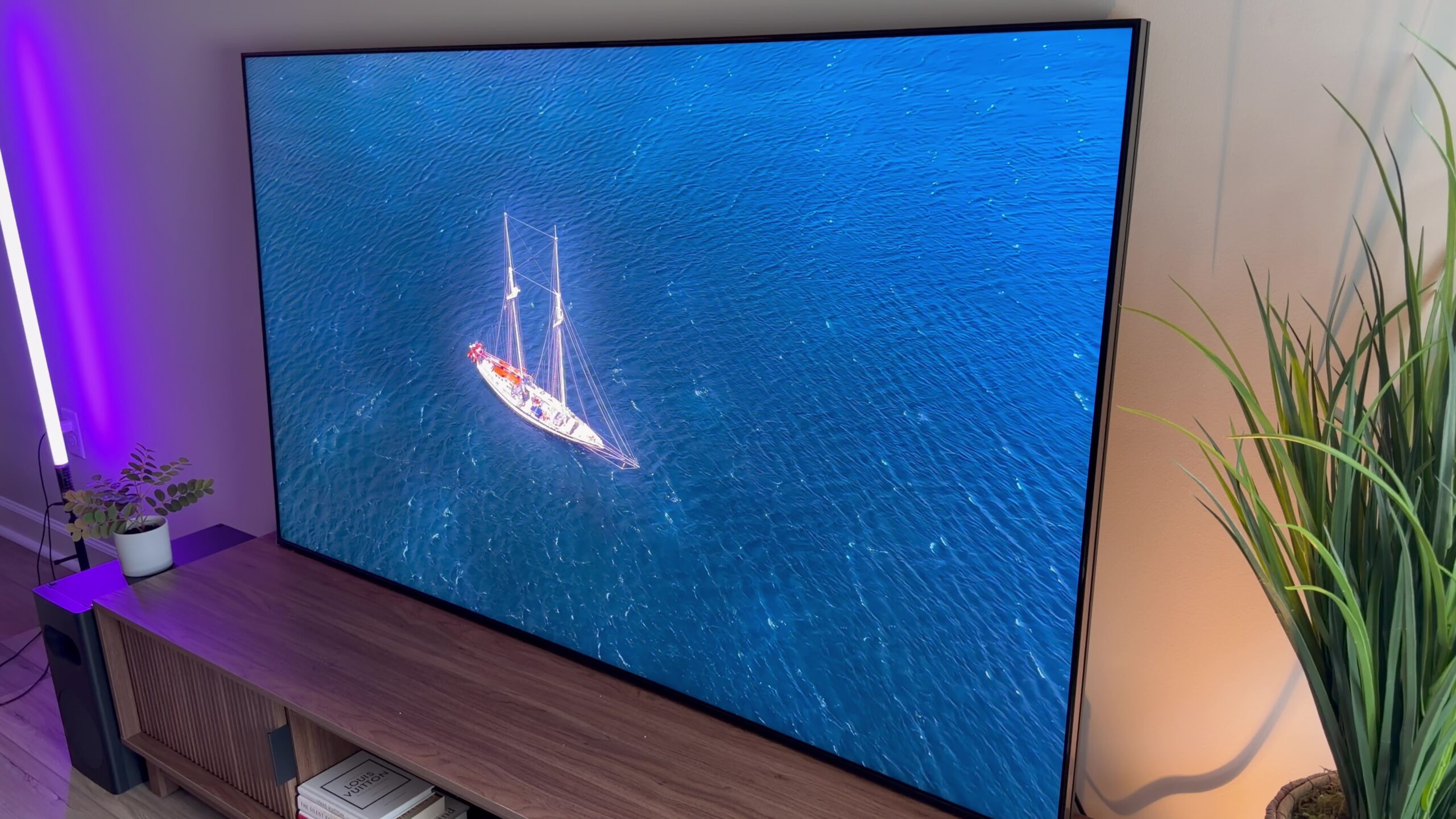
However, this is still an LCD television. OLED has one fundamental advantage that Mini LED cannot fully overcome. Every pixel on an OLED can turn completely off. The BRAVIA 9 II gets incredibly close, but it cannot completely eliminate blooming in every situation.
Color accuracy is another major strength. The BRAVIA 9 II covers approximately 99% of the DCI-P3 color space and around 82–83% of BT.2020. More importantly, it maintains excellent accuracy. SDR performance is extremely close to reference quality, with Delta E measurements around 1 or below after calibration. HDR accuracy is also impressive, staying very close to the creator’s intended image.
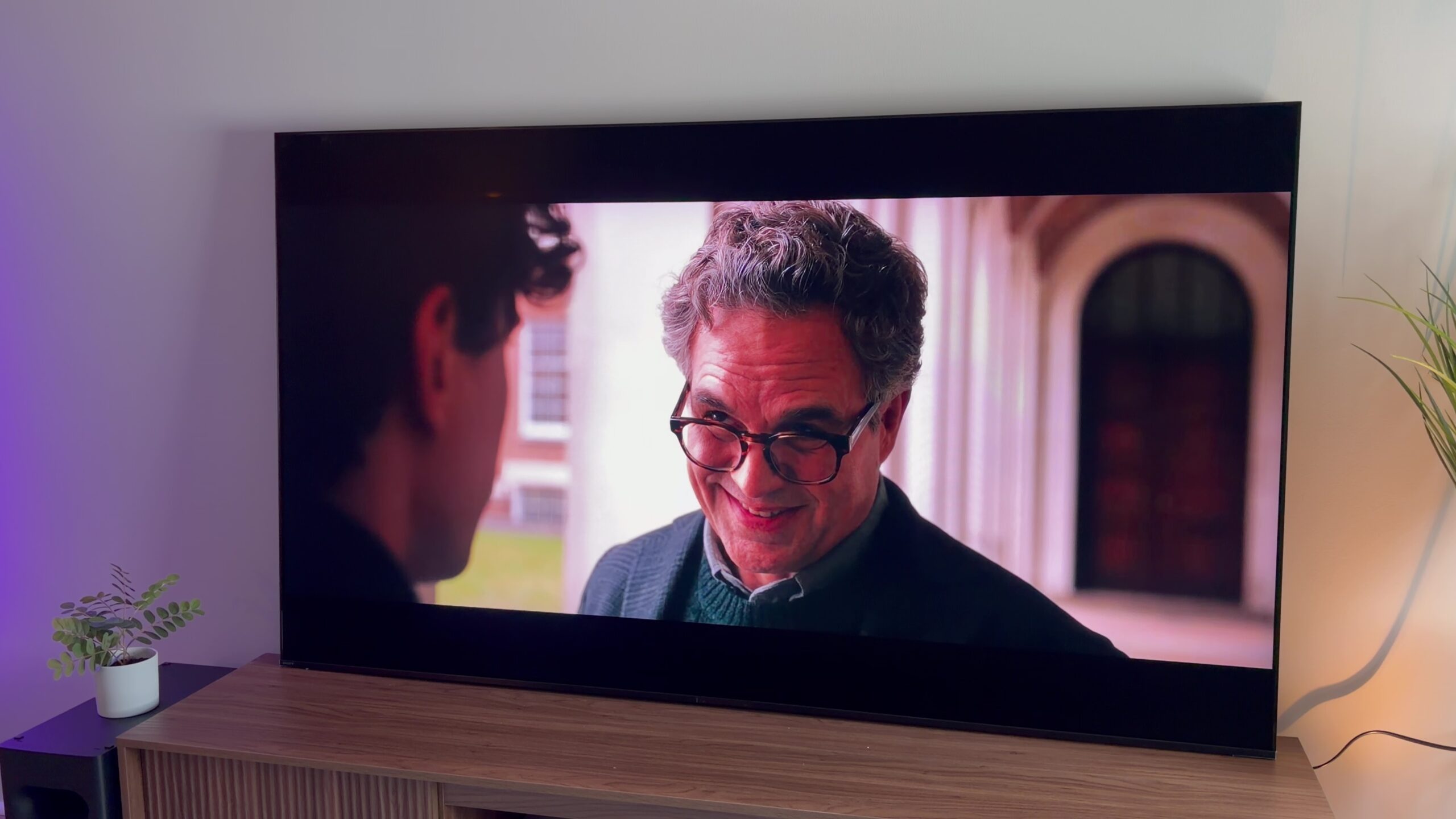
Looking at EOTF tracking, which measures how accurately the TV follows the HDR brightness curve, Sony has done an excellent job. The TV delivers incredible brightness without simply exaggerating the image. A lot of TVs can look impressive because they are overly bright and colorful. The BRAVIA 9 II looks impressive because it is both powerful and accurate.
Sony has always focused on preserving the creator’s intent, and that philosophy is obvious here. Movies look incredible. Skin tones are natural. Motion handling is excellent. The image has a level of refinement that feels very “Sony.” The BRAVIA 9 II is the kind of TV where you can watch a movie and immediately appreciate the processing decisions happening behind the scenes. It doesn’t just look flashy. It looks realistic.
Gaming Performance
For gaming, the BRAVIA 9 II is excellent, but it is not necessarily the ultimate gaming TV. The picture quality is incredible, HDR games look amazing, and input latency is low. You also get HDMI 2.1, 4K 120Hz gaming, Variable Refresh Rate, and Auto HDR Tone Mapping.
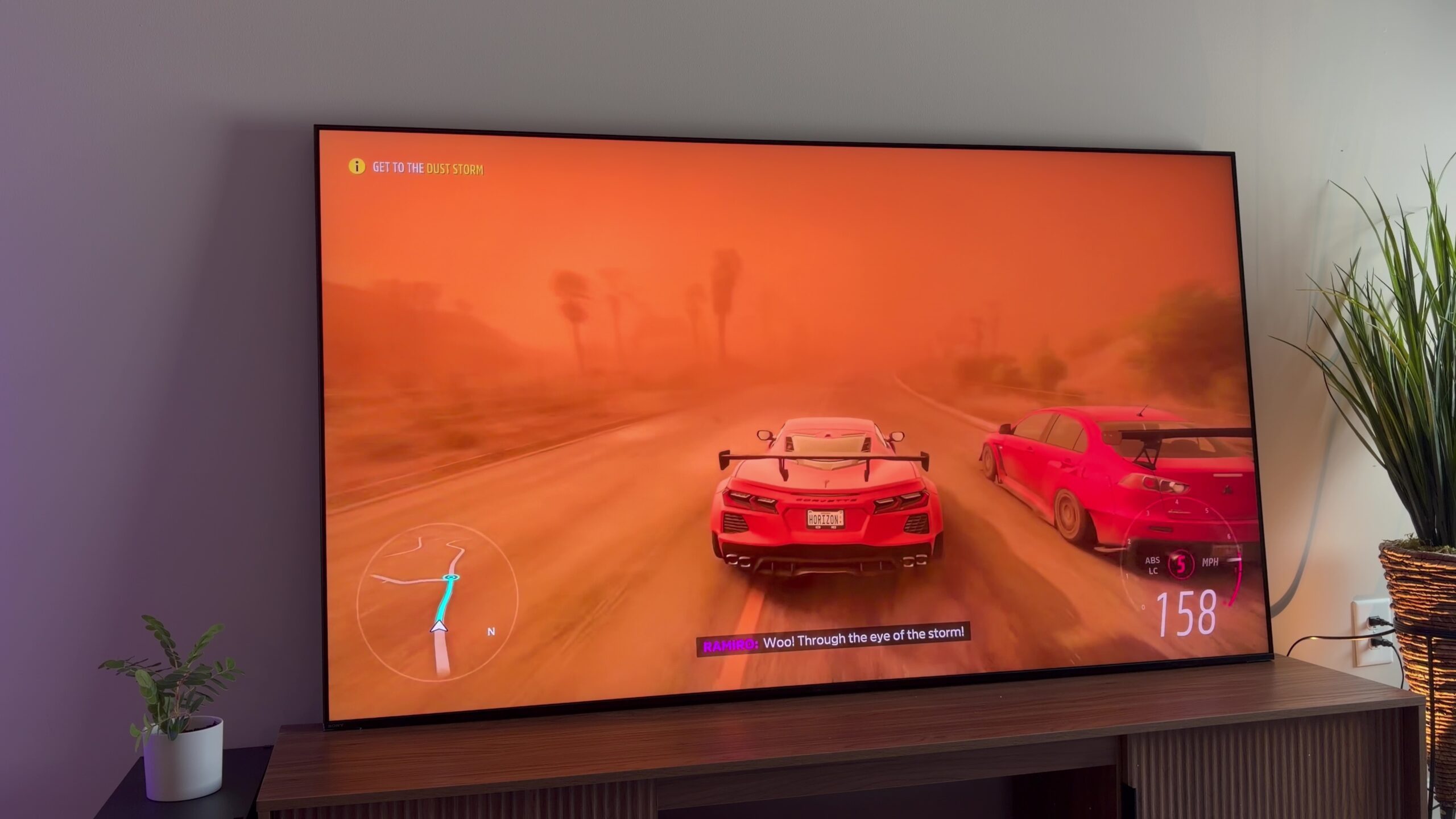
Competitors like LG and Samsung often push gaming features more aggressively, so depending on your priorities, you may find other TVs offer more gaming-focused options. Sony’s priority is clear: picture quality first, gaming features second.
Price and Competition
The BRAVIA 9 II is a premium flagship television, and it is priced accordingly. It starts at $3,600 for the 65-inch model, putting it directly against some of the best OLED televisions available. The question isn’t whether this TV is good, because it absolutely is. The question is whether it is the right TV for your room and your viewing habits.
OLED still has a few areas where it wins, with black level being the biggest one. Because every OLED pixel controls itself individually, dark scenes look incredible. Whether you’re watching a star field, a dark movie scene, or white subtitles on a black background, OLED simply has an advantage. The BRAVIA 9 II’s local dimming is excellent, but blooming can still appear in challenging scenes. Most viewers probably won’t notice it often, but if you’re a home theater enthusiast watching in a completely dark room, OLED still has the edge.
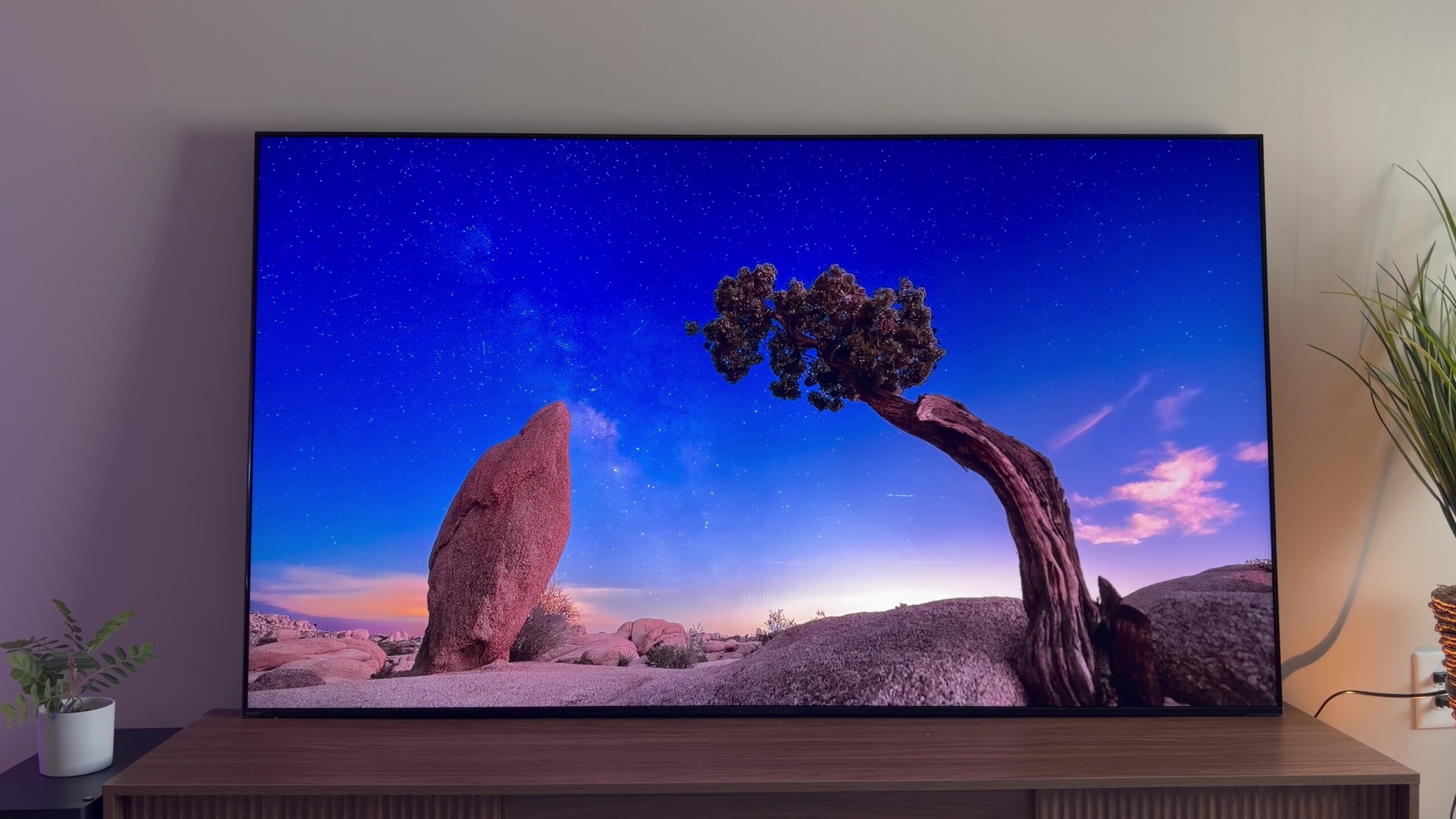
Viewing angles are another limitation. From straight ahead, the BRAVIA 9 II looks amazing, but like most LCD televisions, contrast and color can shift when you move farther off-axis. If you have a large room where people watch from different angles, OLED generally performs better.
There’s also the question of whether you actually need 4,000 nits. More brightness isn’t always better. If you mostly watch movies at night in a dark room, OLED’s perfect blacks may actually create a more impressive experience.
The BRAVIA 9 II really shines in bright living rooms, rooms with large windows, sports viewing, HDR gaming, and mixed everyday usage. That’s where its advantages become obvious.
Should you buy
The Sony BRAVIA 9 II doesn’t prove OLED is outdated. It proves there is another path to a flagship viewing experience. OLED remains the king of perfect blacks, but the BRAVIA 9 II is arguably one of the best HDR televisions ever created, delivering incredible brightness, outstanding color accuracy, Sony’s excellent processing, and some of the best Mini LED performance available today.
It’s expensive, viewing angles aren’t perfect, and OLED still has the edge in dark-room performance. Not everyone needs 4,000 nits, either. For a real-world living room, especially one with lots of natural light, the BRAVIA 9 II is one of the best choices you can make. It doesn’t replace OLED, but it gives OLED its toughest competition yet.
Why not try
Samsung S95H
Samsung leveled up the game on this one with OLED HDR Pro goodness, which is touted to be 70% better than what you would get with OLED HDR+ on a TV. Another notable perk is a glare-free screen, a floating design, and the option to use it in fully wired and wireless modes. It also boosts the viewing experience with VRR support at up to 4K 165Hz, and the built-in upscaling tech for SDR to HDR and 4K is also a notable convenience.
TCL QM8L (Review)
In a similar price bracket, you get the TCL Q8ML, which delivers a brightness output that is simply outrageous. The color performance is spectacular, and the local dimming is so well controlled that blooming is never an issue. The only two pitfalls are slightly worse HDR color and built-in audio. Our review of the device called it the TV to beat in 2026, and it still maintains a strong position in the race.
Sony Bravia 8 II
If your eyes are yearning for OLED goodness, this is the one to consider, even though it can’t match the brightness output of the Bravia 9 II. But being an OLED, it has its own strengths, such as deep blacks, stunning HDR output, and great viewing angles. The only hiccup is the remote’s design, but broadly, this Dolby Vision and Atmos-ready option is a terrific option.
How I Tested
To assess the day-to-day performance of the Sony BRAVIA 92 TV, I set it up in a controlled environment and watched a wide variety of content on it, including TV shows, films, and, of course, played a bunch of video games, as well. Picture quality, contrast handling, black levels, color accuracy, and response time were some of the core metrics that we analyzed over a period of two weeks.
I also tested the native upscaling system by watching HD and Full HD content on the screen, keeping an eye on clarity, noise, and digital artifacts for qualitative performance analysis. Gaming tests were conducted by connecting the TV to a PlayStation 5 via an HDMI link, while the eight-unit speaker system was put to the test while playing dialogue-heavy shows, films with loud action sequences, and Dolby-ready content.
FAQs (Frequently Asked Questions)
What display tech is available on the Sony Bravia 9 II?
You get Sony’s True RGB LED panel featuring independently controlled three-colour RGB LEDs, working in tandem with the RGB Backlight Master Drive Pro tech.
How many size options are available?
It comes in 75-inch (189 cm), 85-inch (215 cm), and 115-inch (292 cm) sizes.
Can it handle gaming?
Yes, it’s optimized for consoles such as the PlayStation 5 and can handle games that support VRR at up to 4K resolution and 120fps.
What about the built-in sound system?
Sony promises a cinema-like Acoustic Multi-Audio+ experience courtesy of an 8-unit setup (2x Subwoofer, 2x Full Range, 2x Tweeter, 2x Beam Tweeter), with support for 3D surround upscaling, 360 Spatial Sound Mapping.