

Close Menu
Tech Savvyed
  • Home
  • News
  • Artificial Intelligence
  • Gadgets
  • Apps
  • Mobile
  • Gaming
  • Accessories
  • More
    • Web Stories
    • Spotlight
    • Press Release

Subscribe to Updates

Get the latest tech news and updates directly to your inbox.

What's On
Mike Flanagan’s The Exorcist has begun filming, here’s what we know about this huge horror movie

Mike Flanagan’s The Exorcist has begun filming, here’s what we know about this huge horror movie

17 March 2026
Starfield Blasts Off On PlayStation 5 Next Month

Starfield Blasts Off On PlayStation 5 Next Month

17 March 2026
Spotify’s Wear OS overhaul brings cleaner visuals and quicker controls to your wrist

Spotify’s Wear OS overhaul brings cleaner visuals and quicker controls to your wrist

17 March 2026
Facebook X (Twitter) Instagram
Tech Savvyed
SUBSCRIBE
  • Home
  • News
  • Artificial Intelligence
  • Gadgets
  • Apps
  • Mobile
  • Gaming
  • Accessories
  • More
    • Web Stories
    • Spotlight
    • Press Release
Tech Savvyed
Home»News»New sensor tech may help cars and planes detect black ice before it’s too late
News

New sensor tech may help cars and planes detect black ice before it’s too late

News RoomBy News Room27 January 20263 Mins Read
New sensor tech may help cars and planes detect black ice before it’s too late
Share
Facebook Twitter Reddit Telegram Pinterest Email

Winter driving is often a white-knuckle experience, primarily because of the dangers you cannot see. Black ice has a nasty habit of looking exactly like wet pavement right up until the moment your tires lose their grip. However, a team of researchers at the University of Michigan is working on a technological solution that could effectively eliminate that element of surprise for both drivers and pilots. They have developed a new dual-sensor system designed to spot hazardous icy conditions long before a human eye – or even current safety sensors – would notice them. This innovation has already been put through its paces in the sky and is now being adapted for the road, offering a proactive way to prevent the thousands of weather-related accidents that happen every single year.

The genius of this system lies in how it combines two completely different types of sensing technology to get a complete picture of the environment

The first part of the equation is a microwave-based sensor. Unlike the clunky, protruding probes you might see on older aircraft, this sensor is designed to sit flush against the skin of a plane or the body of a car. It works like a sensitive electronic skin, continuously monitoring the surface. By measuring subtle changes in microwave signals, it can detect the exact moment water starts to turn into ice or when buildup begins, providing real-time data without messing up the aerodynamics of a wing.

The second component acts more like a scout. It is a laser-based optical sensor that shoots three distinct beams of infrared light into the air ahead. Its job is to analyze the reflection and absorption of those beams to figure out exactly what is floating in the atmosphere. It can instantly tell the difference between solid ice crystals, which might just bounce off a windshield, and supercooled liquid droplets, which are incredibly dangerous because they freeze instantly upon contact. For a pilot flying into a cloud bank, knowing the difference between a harmless fog and a freezing trap is critical information that currently isn’t easy to get.

The stakes for this kind of technology are incredibly high

On our highways, invisible ice is a factor in nearly twenty percent of all weather-related crashes. It catches drivers completely off guard, leaving them no time to react. In the aviation world, ice accumulation on wings and sensors is linked to roughly ten percent of fatal air carrier accidents because it can ruin the lift a plane needs to stay airborne. The University of Michigan team is trying to close the gap between “thinking it’s safe” and “knowing it’s safe.”

Car driving on ice

For the average person, this technology could eventually change how our cars behave in the winter. Imagine a future where your vehicle doesn’t just react after you start sliding; instead, it detects the black ice ahead and automatically adjusts your traction control or gently pulses the brakes before you even realize there is a problem. The researchers have already tested these sensors on scientific aircraft with promising results. Now, the focus is shifting to shrinking the tech down and refining it for cars and broader aviation use. If they succeed, this could become a standard feature in the next generation of transport, turning one of nature’s most treacherous hazards into something manageable.

Share. Facebook Twitter Pinterest LinkedIn Telegram Reddit Email
Previous ArticleGoogle wants Chrome to show what parts of a webpage are human or AI-generated
Next Article Your daily music routine could help ease anxiety, science suggests

Related Articles

Mike Flanagan’s The Exorcist has begun filming, here’s what we know about this huge horror movie

Mike Flanagan’s The Exorcist has begun filming, here’s what we know about this huge horror movie

17 March 2026
Spotify’s Wear OS overhaul brings cleaner visuals and quicker controls to your wrist

Spotify’s Wear OS overhaul brings cleaner visuals and quicker controls to your wrist

17 March 2026
Solo training is reinvented – PONGBOT’s AI robots will get you match-ready like a 24/7 coach

Solo training is reinvented – PONGBOT’s AI robots will get you match-ready like a 24/7 coach

17 March 2026
ChatGPT’s upcoming erotic chat mode risks exposing millions of kids to adult content

ChatGPT’s upcoming erotic chat mode risks exposing millions of kids to adult content

17 March 2026
Best Amazon Spring deals on Hisense TVs: Mini-LED and Canvas models at major discounts

Best Amazon Spring deals on Hisense TVs: Mini-LED and Canvas models at major discounts

17 March 2026
OLED for under 0 and a 98-inch TV for under ,300: the best TV deals to shop this week

OLED for under $600 and a 98-inch TV for under $1,300: the best TV deals to shop this week

17 March 2026
Demo
Stay In Touch
  • Facebook
  • Twitter
  • Pinterest
  • Instagram
  • YouTube
  • Vimeo
Don't Miss
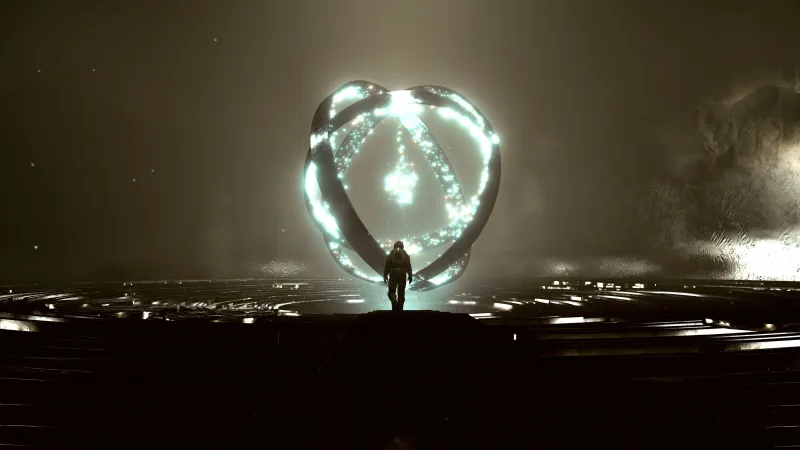
Starfield Blasts Off On PlayStation 5 Next Month

Starfield Blasts Off On PlayStation 5 Next Month

By News Room17 March 2026

Bethesda’s open-world sci-fi RPG Starfield is leaping to a new star system. And by that,…

Spotify’s Wear OS overhaul brings cleaner visuals and quicker controls to your wrist

Spotify’s Wear OS overhaul brings cleaner visuals and quicker controls to your wrist

17 March 2026
Solo training is reinvented – PONGBOT’s AI robots will get you match-ready like a 24/7 coach

Solo training is reinvented – PONGBOT’s AI robots will get you match-ready like a 24/7 coach

17 March 2026
ChatGPT’s upcoming erotic chat mode risks exposing millions of kids to adult content

ChatGPT’s upcoming erotic chat mode risks exposing millions of kids to adult content

17 March 2026
Tech Savvyed
Facebook X (Twitter) Instagram Pinterest
  • Privacy Policy
  • Terms of use
  • Advertise
  • Contact
© 2026 Tech Savvyed. All Rights Reserved.

Type above and press Enter to search. Press Esc to cancel.