




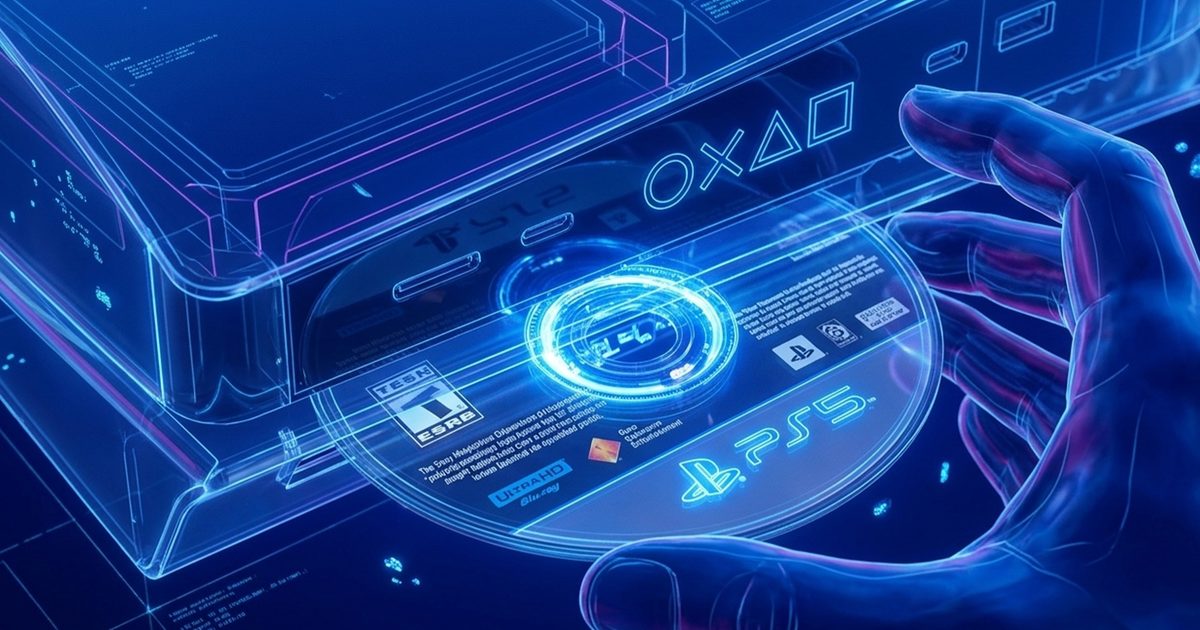
There is a rather optimistic argument doing the rounds about Sony’s decision to kill physical PlayStation game discs: maybe digital games will finally become cheaper. Former Square Enix business development director Jacob Navok argues that removing manufacturing and distribution costs, combined with greater competition between publishers, could push digital prices down and create a Steam-like environment on the PlayStation Store.
It’s an interesting theory. I just don’t buy it, at least not for PlayStation.
The Steam comparison doesn’t quite work
The biggest problem with Navok’s argument is that PlayStation isn’t Steam.
Steam exists within a much more open PC ecosystem. Consumers can buy games through Steam, the Epic Games Store, GOG, the Microsoft Store, and other legitimate retailers and key sellers. If a publisher’s game is too expensive in one place, another storefront can compete for that customer’s money.
PlayStation doesn’t work like that. There is no Epic Games Store for PS5, no GOG for PlayStation, and no authorized third-party digital marketplace selling PS5 games at a lower price. If a gamer wants to buy a digital PS5 game, Sony controls the storefront through which that transaction happens. That’s a pretty important distinction. Publisher competition is one thing; storefront competition is another. And PlayStation is missing the latter.
Digital savings don’t automatically become consumer savings
There is also a simpler problem with the argument: digital games already exist alongside physical games.
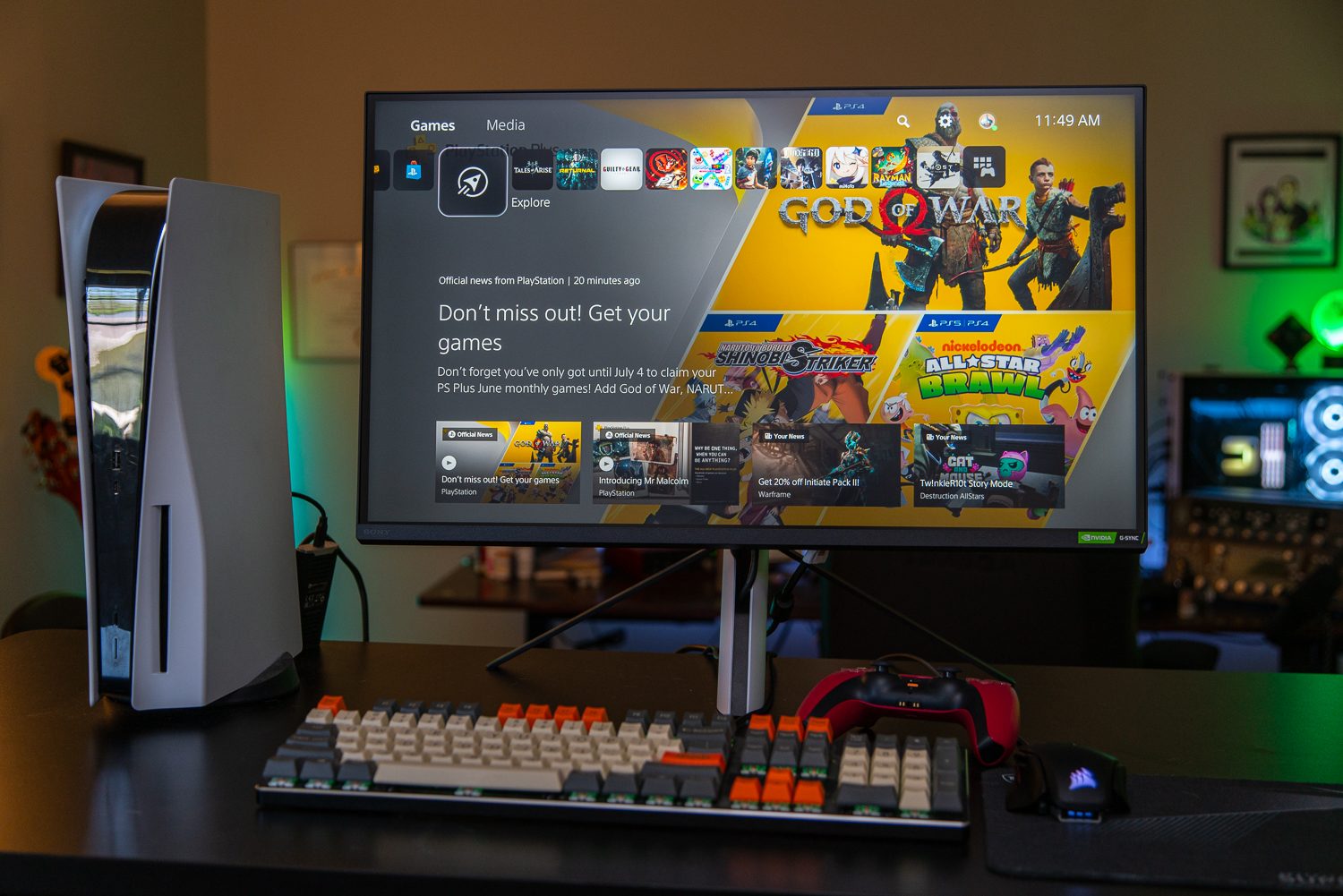
A digital copy doesn’t need a disc manufactured, packaged, shipped, or placed on a retailer’s shelf. Those costs have already been removed, yet a new digital PS5 game can still launch at the same price as its physical counterpart. So why would eliminating the physical version suddenly force that price down?
Companies don’t generally eliminate costs because they feel bad about charging customers. They eliminate them because better margins are good business.
Of course, it might. Publishers could choose to pass more of those savings to consumers. But they could just as easily use the additional margin to improve profitability, fund increasingly expensive game development, or simply keep the launch price where it is.
Physical games are doing more work than you think
This is where the death of discs becomes particularly concerning.
A physical game isn’t just another format. It is also part of a secondary market. Players can sell games, buy them used, lend them to friends, trade them in, or hunt for discounted copies at retailers. That creates a layer of price competition around the official launch price. Digital games can’t do most of that. Retailers also have a reason to discount physical games that digital storefronts don’t. A shop has limited shelf space and physical inventory that needs to move. If Spider-Man 2 has been sitting on a shelf for six months, a retailer might slash the price to clear stock.
The PlayStation Store has no such problem. Sony doesn’t need to clear digital inventory before the next shipment arrives. A digital copy can sit there forever at whatever price Sony and the publisher decide. That’s why I think physical games provide more consumer leverage than they often get credit for.
Sony’s track record doesn’t exactly inspire confidence
Then there’s Sony itself. Sony has already faced major legal challenges over its control of digital PlayStation game sales.
Dutch consumer group Stichting Massaschade & Consument alleges that Sony’s exclusive control over the PlayStation Store has resulted in consumers paying artificially inflated prices, with its campaign claiming digital games and DLC can cost up to 47% more than physical alternatives. Of course, these claims are yet to be proven in court, but the case is gaining momentum alongside similar antitrust actions — including Alex Neill’s UK class action, regulatory scrutiny in Portugal, and US litigation challenging Sony’s closed storefront practices.

Now put that against Sony’s own announcement that physical disc production for new PlayStation games will end in January 2028. Sony says the change reflects the industry’s shift toward digital media and that new games will continue to be available digitally through the PlayStation Store and at retailers.
That doesn’t exactly give me warm and fuzzy feelings about Sony suddenly deciding to pass those savings straight down to gamers.
And Sony’s recent pricing experiments make the situation even more interesting. Reports based on PlayStation price tracking found that Sony has been running A/B tests in which different users can receive different prices or discounts for the same games. The experiments have reportedly covered more than 190 games across 70-plus regions, including Sony’s own titles.
To be clear, these experiments aren’t proof that Sony plans to charge everyone more. But they demonstrate something important: a digital storefront gives Sony far more control over how games are priced and promoted. Moving entirely away from physical media doesn’t just create opportunities for cheaper games; it also creates opportunities for much more sophisticated pricing.
Then there’s the ownership problem
There is another loss unrelated to the launch price.

Physical games give players a tangible copy that can remain in their possession even if a game is later delisted from a storefront. Digital purchases are tied much more closely to the platform, account, and licensing arrangements surrounding them. That matters for preservation, too. Games can disappear from digital storefronts because of expired music, character, or other licensing agreements. Once physical distribution disappears, there are fewer ways for players to obtain those games legitimately after they’re delisted.
Now obviously this doesn’t mean every physical disc is magically a perfect, offline copy. Plenty of modern games require huge downloads or online services to function properly. But physical media still gives consumers another layer of control, and losing that option shouldn’t be dismissed as merely a manufacturing change.
Xbox might have a better way to handle the digital future
This is where Microsoft’s strategy gets interesting. Xbox has reportedly been working on Positron, a disc-to-digital system that could let players carry eligible Xbox One and Xbox Series X physical purchases into their digital libraries. Instead of treating a disc collection like yesterday’s problem, Microsoft appears to be exploring a way to make those purchases useful in an increasingly digital Xbox ecosystem.
Project Helix could make that even more interesting. Microsoft hasn’t confirmed exactly how physical media will work on its next-generation Xbox, and reports have suggested both a discless console and a possible rethink around disc support. What is confirmed is Microsoft’s broader push to keep four generations of Xbox games playable and make the ecosystem work more seamlessly across consoles and PCs. If Xbox can genuinely bridge the gap between physical collections and digital libraries, that’s a much more compelling proposition than simply telling gamers to buy everything again.
Cheaper games? Maybe. Better for gamers? That’s the real question
That’s ultimately why I think the idea that killing PlayStation discs will automatically make games cheaper is a little too optimistic. Could digital games become cheaper? Absolutely. But removing manufacturing and distribution costs doesn’t magically turn Sony into a charity. If anything, eliminating physical games also removes some of the competition, resale value, and consumer choice that currently keep digital pricing honest.

And that’s where Xbox could have a rather delicious opportunity. If Microsoft can give players a seamless way to carry their existing physical collections into the digital future while Sony locks more of its ecosystem behind the PlayStation Store, the next generation could look very different from the one we expected. Maybe Xbox finally gets its moment in the sun. Unless Sony has a few tricks up its sleeve, of course.


