




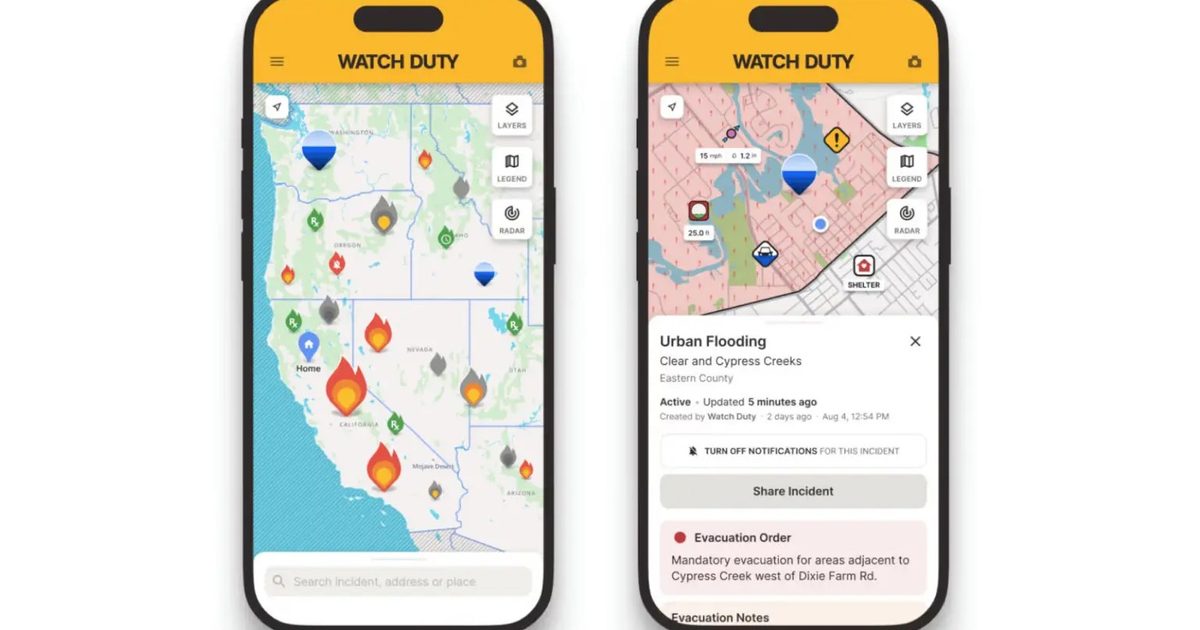
Watch Duty became one of the apps millions of Americans suddenly wanted on their phones when wildfires tore through Los Angeles in early 2025. The nonprofit now wants to continue this vision by making it useful for other natural disasters.
CEO and cofounder John Mills told Fast Company that Watch Duty’s expansion into flood monitoring is part of a plan that has been brewing for years. Nationwide flood coverage actually went live on June 8, giving anyone in the US access to flood data and mapping alongside the wildfire information already inside the app.
Flood warnings are now on Watch Duty
Watch Duty built its reputation by taking a chaotic stream of emergency information and turning it into something people can understand quickly. The flood system pulls together official warnings, precipitation data, river gauges, and mapping that would otherwise live across separate services. During dangerous events, trained reporters can add verified information and context from emergency response teams.
Mills says floods require a different rhythm from wildfires. Watch Duty has access to Doppler radar, USGS stream gauges, and precipitation sensors that can provide a longer trail of information before conditions become catastrophic. The organization also uses NOAA and National Weather Service reports, adding clearer context around what changing river levels or precipitation actually mean for nearby communities.
But apart from all of this, Watch Duty states that its reporters will monitor radio scanners, cameras, satellites, emergency dispatches, and official announcements before deciding whether an incident poses a threat to life or property. So the human element is still present before the warnings go live.
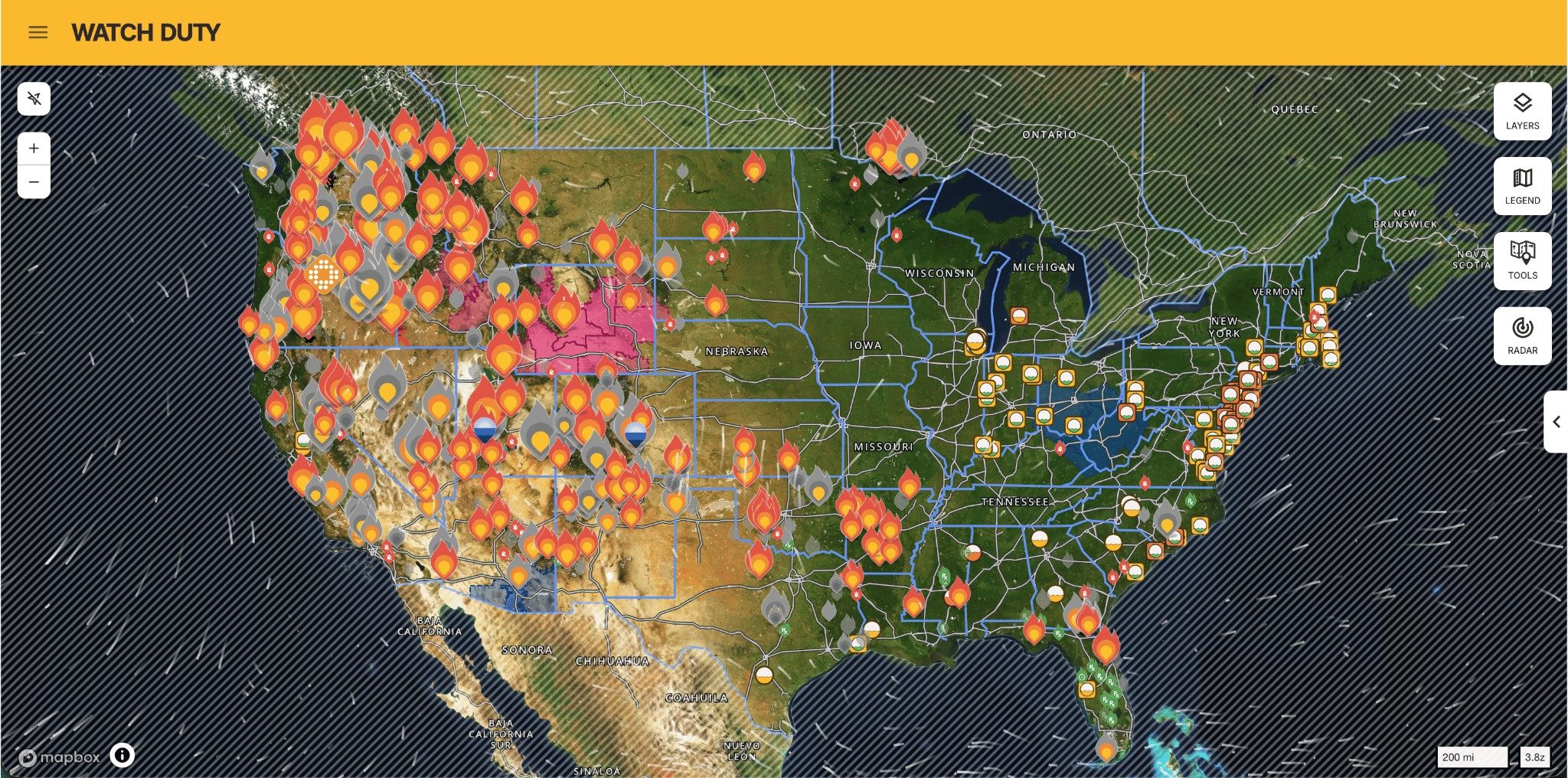
The wildfire app is becoming a disaster app
Watch Duty’s scale has been on the rise since its inception. It expanded wildfire monitoring nationwide in December 2025, while its 2025 annual report says yearly active users reached 16.8 million. During the Los Angeles fires alone, Watch Duty says it supported eight million users while maintaining full uptime.
Flood coverage remains free and ad-free, just like its wildfire alerts. Watch Duty has also made clear that the roadmap stretches beyond these two hazards, with its annual report calling for continued expansion toward an all-hazards system capable of providing trusted emergency information nationwide.