


Close Menu
Tech Savvyed
  • Home
  • News
  • Artificial Intelligence
  • Gadgets
  • Apps
  • Mobile
  • Gaming
  • Accessories
  • More
    • Web Stories
    • Spotlight
    • Press Release

Subscribe to Updates

Get the latest tech news and updates directly to your inbox.

What's On
The hottest tech trend right now is making your phone slower

The hottest tech trend right now is making your phone slower

24 August 2026
A mysterious app just appeared on millions of Android phones, and it’s actually there to help

A mysterious app just appeared on millions of Android phones, and it’s actually there to help

24 August 2026
The flagship phone chip race just got another monster

The flagship phone chip race just got another monster

24 August 2026
Facebook X (Twitter) Instagram
Tech Savvyed
SUBSCRIBE
  • Home
  • News
  • Artificial Intelligence
  • Gadgets
  • Apps
  • Mobile
  • Gaming
  • Accessories
  • More
    • Web Stories
    • Spotlight
    • Press Release
Tech Savvyed
Home»News»A 20-second 3D printer breakthrough comes with exactly the kind of catch science loves
News

A 20-second 3D printer breakthrough comes with exactly the kind of catch science loves

News RoomBy News Room8 July 20262 Mins Read
A 20-second 3D printer breakthrough comes with exactly the kind of catch science loves
Share
Facebook Twitter Reddit Telegram Pinterest Email

A 3D printer that can make a structure in about 20 seconds sounds like a lab claim wearing a cape. The clever bit is real. The catch arrives before anyone starts dreaming about instant replacement parts.

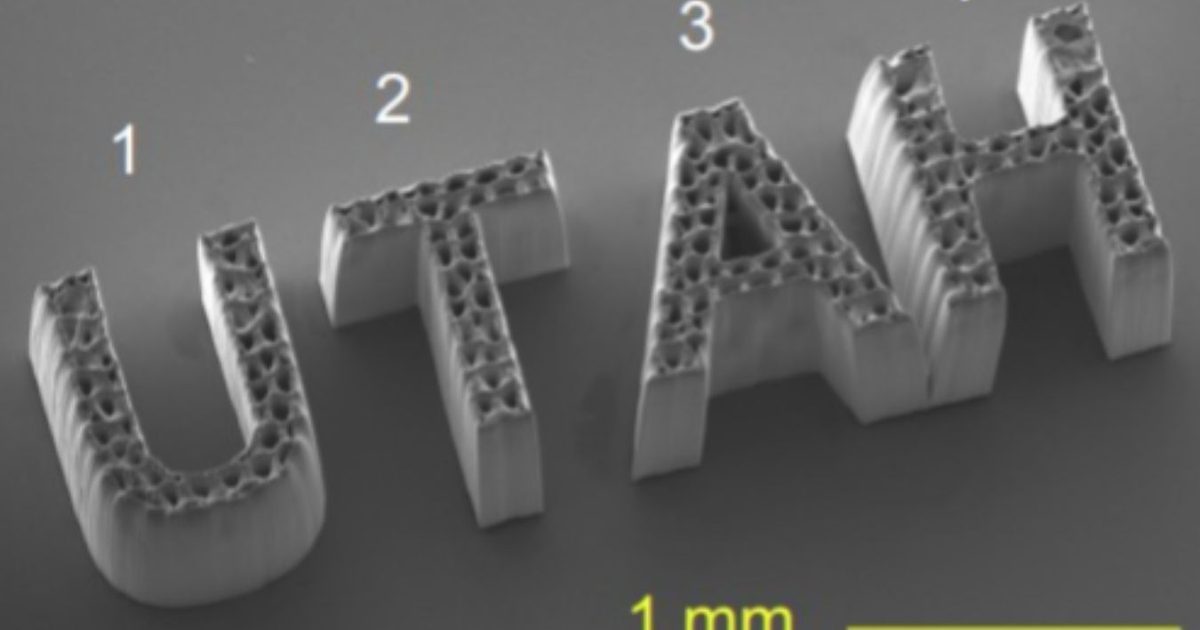
University of Utah researchers have demonstrated a holographic 3D printing technique that hardens tiny structures in one exposure instead of building them layer by layer. That one-shot approach could avoid the weak, leaky seams that stacked printing can leave behind. For now, though, this is a tool for microstructures, not a shortcut to printing whatever object pops into your head.

How one shot replaces layers

The technique borrows from photolithography, then pushes the idea into thicker material. A nanopatterned mask sits in front of the laser and shapes the light before it enters the print material.

That material is SU-8, a substrate whose polymer strands harden when exposed to laser light. After the targeted volume sets, the unexposed material can be washed away. Instead of tracing a shape through slice after slice, the system hardens the useful structure at once.

Where the catch shows up

The breakthrough is narrower than 3D printing sounds. The printer can control the length and width of a pattern, then extend that pattern through height. That makes it powerful, but still boxed in.

That limitation explains why the first demonstrations involve microtubule arrays and lattice patterns rather than tiny desktop ornaments. The approach suits intricate designs that need to run through a thick volume. Objects that require different geometry at different depths still need a more flexible version of the technology.

3D Printer

What this could print next

The useful version of this probably won’t resemble a home 3D printer. It looks more like a manufacturing tool for tiny parts where internal structure does the hard work.

The printed microtubules were tested for liquid movement through capillary action and for toughness under compression. That points toward lab-scale structures where small details have to survive real forces. The next step is clear enough. Researchers need to turn a fast extended-2D trick into true 3D control without losing the 20-second advantage.

Share. Facebook Twitter Pinterest LinkedIn Telegram Reddit Email
Previous ArticleAssassin’s Creed Black Flag Resynced Review – More Of Everything Is Permitted
Next Article AI security cameras may soon recognize your walk before they recognize your face

Related Articles

The hottest tech trend right now is making your phone slower

The hottest tech trend right now is making your phone slower

24 August 2026
A mysterious app just appeared on millions of Android phones, and it’s actually there to help

A mysterious app just appeared on millions of Android phones, and it’s actually there to help

24 August 2026
The flagship phone chip race just got another monster

The flagship phone chip race just got another monster

24 August 2026
Google’s 9 Pixel 11 can’t properly play Genshin Impact, and we’ve been here before

Google’s $899 Pixel 11 can’t properly play Genshin Impact, and we’ve been here before

24 August 2026
ASUS Zenbook A14 review: The dreamy ultraportable laptop I’ve been waiting for, almost.

ASUS Zenbook A14 review: The dreamy ultraportable laptop I’ve been waiting for, almost.

24 August 2026
Samsung thinks Exynos 2700 can beat Qualcomm’s best next-gen chip

Samsung thinks Exynos 2700 can beat Qualcomm’s best next-gen chip

24 August 2026
Demo
Stay In Touch
  • Facebook
  • Twitter
  • Pinterest
  • Instagram
  • YouTube
  • Vimeo
Don't Miss
A mysterious app just appeared on millions of Android phones, and it’s actually there to help

A mysterious app just appeared on millions of Android phones, and it’s actually there to help

By News Room24 August 2026

If Android Pulse showed up in your Play Store updates this weekend and looked a…

The flagship phone chip race just got another monster

The flagship phone chip race just got another monster

24 August 2026
Google’s 9 Pixel 11 can’t properly play Genshin Impact, and we’ve been here before

Google’s $899 Pixel 11 can’t properly play Genshin Impact, and we’ve been here before

24 August 2026
ASUS Zenbook A14 review: The dreamy ultraportable laptop I’ve been waiting for, almost.

ASUS Zenbook A14 review: The dreamy ultraportable laptop I’ve been waiting for, almost.

24 August 2026
Tech Savvyed
Facebook X (Twitter) Instagram Pinterest
  • Privacy Policy
  • Terms of use
  • Advertise
  • Contact
© 2026 Tech Savvyed. All Rights Reserved.

Type above and press Enter to search. Press Esc to cancel.