



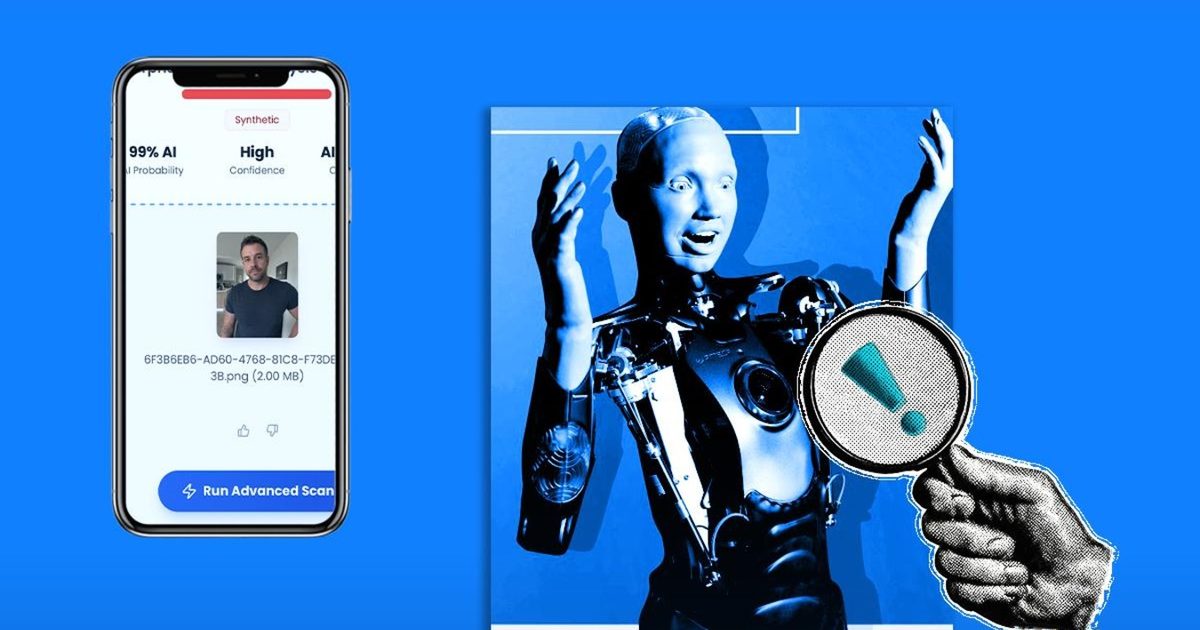
The digital world is currently witnessing an influx of synthetically created media. Art, video, even music and short-form movies are being generated by AI models. And while early AI-generated images were often easy to spot due to various (and often amusing) anatomical errors, the latest models are producing results that can more easily pass muster. This next step in AI development means that relying on one’s perception is no longer enough to separate literal fact from fiction.
Taking a Layered Verification Approach
Forensic experts generally take a strategic, multi-layered approach to getting at the truth. Instead of looking for a single “smoking gun,” someone investigating media should build a strong case either for or against an image’s authenticity by examining it from a number of different angles, starting with its history and moving to technical analysis.
The first step is context, which often offers the clearest clues: knowing where and when a photo first surfaced can better frame its claims. Tools such as reverse-image search can help determine if an image has been recycled from past media, a hallmark of AI. Additionally, technical data hidden in a file, known as metadata, can offer clues, since its complete absence is often the biggest red flag. Today, though, newer standards such as C2PA can help track a file’s history by building origin data right into its structure, making it much harder to manipulate or delete, though it’s worth remembering that no system is perfect and many images and videos can be manipulated with the right skills.
For a deeper look, manual techniques such as Y-channel analysis can expose flaws that the human eye might miss. It strips away color to focus on luminance, a method that can reveal things such as noise patterns and light transitions. AI often struggles to replicate the randomness of light, leaving behind telltale “ghosts” or unnaturally smooth patches that become more obvious when the picture is broken down.
The Use of Detection Software
Another way to approach detection is with algorithmic detection software. Specialized platforms, such as the AI image detector available at Truthscan.com, use machine learning to identify mathematical patterns associated with synthetic generation. The tool can give an investigator probability scores and heatmaps that may illustrate suspicious areas, though their results are best treated as indicators to be used in conjunction with other means rather than on their own merit.
The presence of a digital footprint is the final step in this layered approach. Investigators should look for the primary source of an image whenever possible. Searches can take one to social media threads or niche forums, where files may have been created before being swept up by mainstream outlets. In this way, an image may be traced back to an origin and then scrutinized based on the environment or the reliability of the person who posted it. Additionally, using tools such as Google Lens or TinEye can show if an image has been digitally altered from an older, existing photograph.
Algorithmic Inspections, Limitations, and Human Skepticism
One thing to keep in mind is that manual inspections, though popular, can be among the least reliable. Even though early generative models were infamous for their inability to render certain human body parts correctly, many of these “tells” have been resolved. However, light remains a difficult area for AI to synthesize correctly and can sometimes be used as a guide, since complex reflections or shadows often don’t align with primary light sources. Still, relying only on what one can see can lead to false negatives, and for cases where visual or metadata are in question, it can help use algorithmic detection, which takes a mathematical angle.
These tools can analyze the underlying pixel distribution for noise patterns typical of Generative Adversarial Networks (GANs), which are diffusion models. Many platforms that provide heatmaps of manipulated areas can offer another kind of result. A cross-platform check is also useful, as different detectors are trained to look for varying tells, and using a variety of them can offer a bigger picture of the likelihood the image is real.
Ultimately, digital forensics comes down to a game of probabilities. No single software platform, metadata tag, or expert eye can offer an investigator a 100% guarantee. The most effective tool is often having a critical mindset. Combining technical data, mathematical probability from platforms like TruthScan, and a rigorous check of the image’s publication history can all produce strong probabilities. But in the end, the investigator can only do their best through a multi-layered verification process that may either reveal the image’s inner AI secrets or leave them hidden forever within the annals of the digital world.
Digital Trends partners with external contributors. All contributor content is reviewed by the Digital Trends editorial staff.