


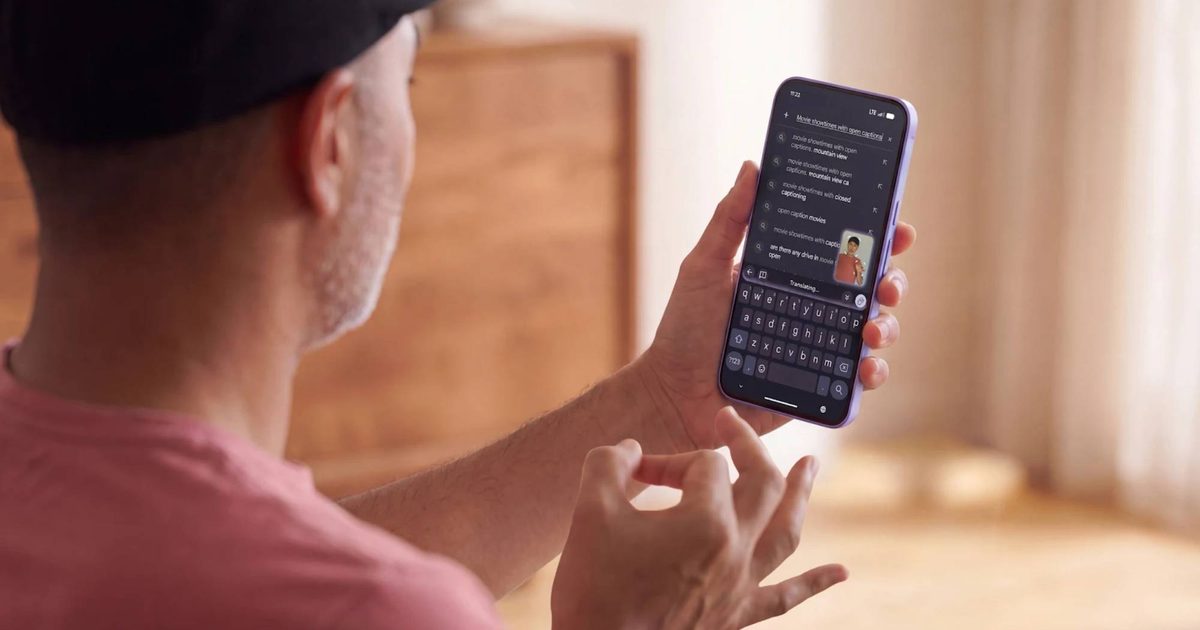
Google’s new Pixel 11 series devices bring more than just hardware upgrades. One of the lineup’s most interesting new features is designed to break down the communication barrier between deaf and hard-of-hearing users and those who don’t know sign language.
Pixel Camera can now turn sign language into text
Google has introduced a new sign-to-text accessibility feature that uses the Pixel Camera to recognize sign language and automatically convert it into text, so users can sign as they normally would instead of stopping to type a response. Google says the goal is to turn the phone from a one-way listening tool into one that supports natural, two-way conversation during spontaneous, face-to-face interactions.
The feature runs on a new AI model called sign-language-to-text (SL2T), built by Google DeepMind, which the company says marks a breakthrough in translating sign language at scale. Once the Pixel Camera captures a user signing, the model translates it, and Gboard converts it into text anywhere someone would normally type, including web searches, messages, documents, and Gemini queries.
At launch, the feature supports American Sign Language to English translations on the Pixel 11 series, with Google saying more languages and support for additional devices will follow.
Built with privacy and real-world signing in mind
To protect privacy, the system tracks the location points on a signer’s body on-device instead of analyzing raw video, sending only those coordinates to Google’s servers for translation before discarding the original camera feed. Google DeepMind says the model was trained on more than 100,000 hours of data across more than 50 sign languages, and that it specifically tested performance for left-handed signers, who make up about 10 percent of users, and for one-handed signing, common when someone is holding the phone in their other hand.
The company says the model scored higher on a standard sign language translation benchmark than any previous system, though it hasn’t published data on how it performs in less controlled settings, poor lighting, or fast, casual conversation.
Translating sign language is a fundamentally different problem than translating speech, since sign languages have their own independent grammar and vocabulary instead of word-for-word mapping. An estimated 70 million deaf and hard-of-hearing people worldwide use sign language, and Google DeepMind says this marks the first time sign language AI at this scale has reached a consumer product. Whether SL2T holds up in fast, everyday signing, rather than the benchmark conditions Google has published so far, will determine if it becomes a genuine communication tool or another AI feature that undersells its own demo.