


EcoFlow DELTA 3 Ultra Plus
MSRP $2,899.00
Released January 2026
“The EcoFlow DELTA 3 Ultra Plus provides piece of mind and ultimate compatibility”
Pros
- Solid build quality with rubber wheels and telescoping handle
- Quiet operation
- Backward-compatible battery ecosystem
Cons
- Most settings require the mobile app
- No 240V support
Quick Review
The EcoFlow DELTA 3 Ultra Plus is a powerful portable power station built for homeowners who want reliable emergency backup without committing to a permanent whole-home battery installation. With a 3,072Wh LFP battery, 3,600W continuous inverter output, and the ability to expand up to 11kWh with additional battery packs, it occupies a sweet spot between the compact camping units most people think of and the heavy-duty home battery systems that require professional installation and panel wiring.
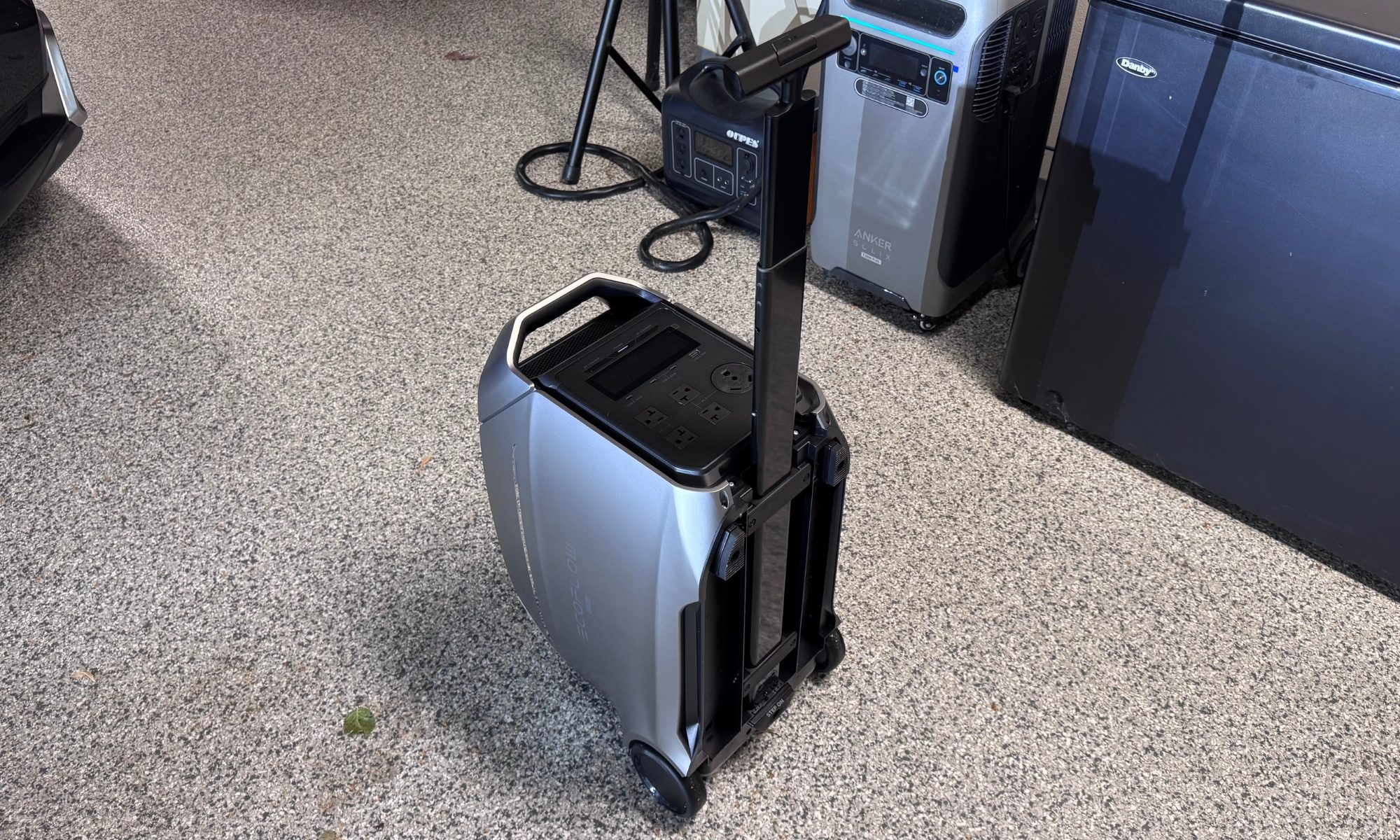
Where it excels is in the combination of raw capacity, whisper-quiet operation, and an ecosystem of expansion options that few competitors can match. EcoFlow’s companion app adds genuinely useful features like Storm Guard, which automatically charges the unit when severe weather is detected, and Smart Output Priority, which lets you designate which circuits stay powered longest. The suitcase-style handle and rubber wheels are welcome on a 74-pound unit that would otherwise be a two-person lift, however. Thankfully, there is a built-in telescoping handle hidden at the bottom of the front that helps with easy moving.
Where it falls short is in price justification at its $2,899 MSRP. That number puts it in direct competition with EcoFlow’s own DELTA Pro, which offers a larger 3,600Wh battery, 240V pairing capability, and expansion up to 25kWh, often for less money. At the heavily discounted street price of around $1,499–$1,599, the value equation shifts dramatically in the Ultra Plus’s favor, making it one of the strongest 120V backup options on the market. If you can catch it on sale, it’s an easy recommendation for anyone building out a home resilience strategy. Note: As of the time of my review, the price listed on their website is $1499 and looks to be the new permanent price.
EcoFlow DELTA 3 Ultra specifications: What’s inside this power package?
| Battery Capacity | 3,072Wh (51.2V / 60Ah) |
| Battery Chemistry | LFP (LiFePO4) |
| Rated Cycle Life | 10 years of reliable use (EV-grade full-tab LFP cells) |
| Expandable Capacity | 3–11kWh (via expansion battery packs) |
| AC Output (Continuous) | 3,600W (120V, 60Hz) — pure sine wave |
| Surge Output | 7,200W |
| X-Boost Output | Up to 4,600W |
| AC Output Ports | 4× NEMA 5-20R (120V/20A) + 1× NEMA TT-30R (120V/30A) |
| USB-C Ports | 1× 140W + 2× 45W (shared 45W total) |
| USB-A Port | 1× 18W |
| 12V DC Output | 12.6V/30A, 378W (Anderson port shared) |
| AC Input (Wall Charging) | 1,800W max — 0–80% in ~89 minutes |
| Solar Input | 1,600W max (2× 800W XT60 inputs) |
| Generator Input | Up to 3,200W via EcoFlow Smart Generator |
| UPS Switchover Time | <10ms (tested at 8.25ms) |
| Weight | 74.3 lbs (33.7 kg) |
| Dimensions | 24.1× 12.9× 15.5 in (613× 328× 395 mm) |
| Operating Noise | ≤25 dB |
| Connectivity | Wi-Fi + Bluetooth (EcoFlow app) |
| Operating Temperature | 68–86°F (20–30°C) |
| Discharge Temperature | 14–113°F (-10–45°C) |
| Warranty | 5 years (3+2) |
| Price (MSRP) | $2,899 (street price ~$1,499–$1,599) |
Design and Portability
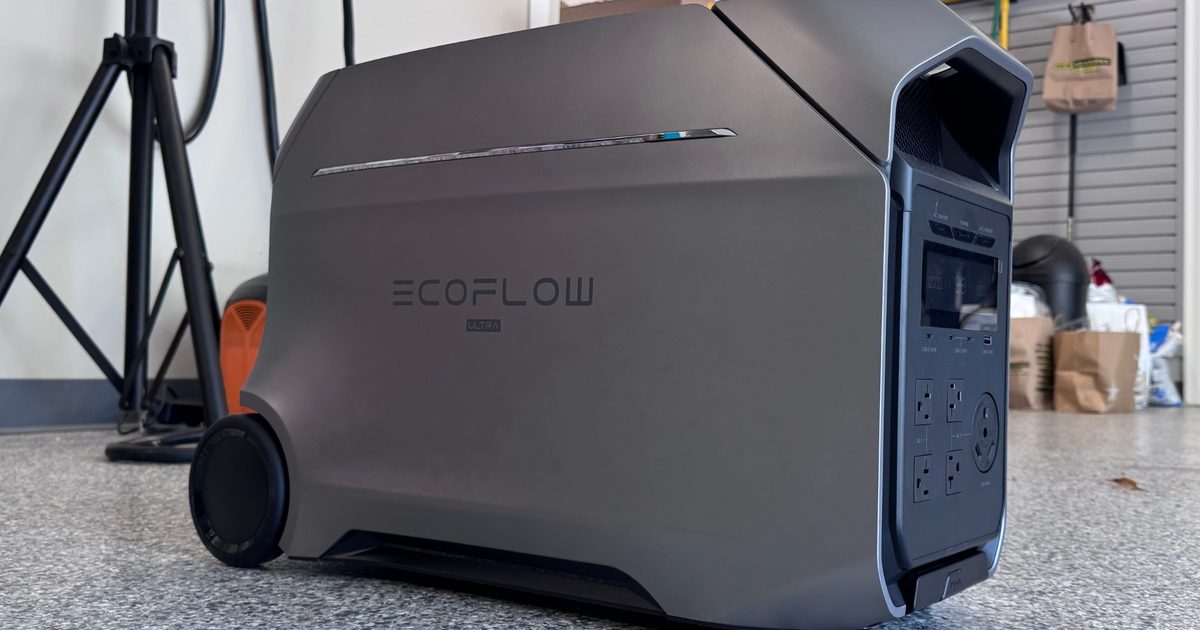
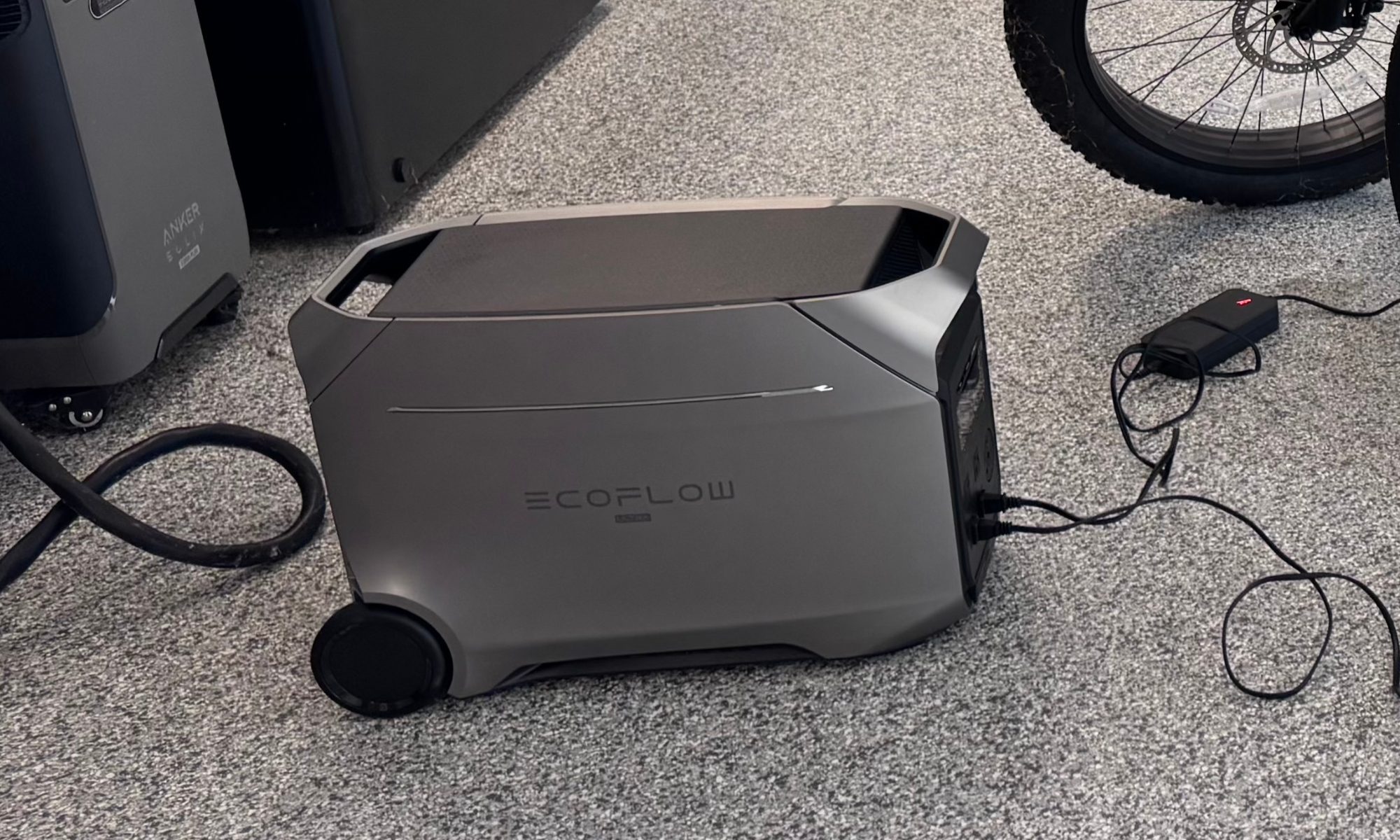
The DELTA 3 Ultra Plus borrows its visual language from EcoFlow’s DELTA Pro line, arriving in a matte gray housing with chrome accents and a clean industrial aesthetic. It looks purpose-built rather than technical, the kind of unit that blends into a garage, utility closet, or living room corner without drawing attention to itself, which is a little confusing to me because the actual design looks great, but the bland color choice makes it blend in with other garage appliances. I would have liked to have seen some bold colors as an option.
At 74 pounds, calling this a “portable” power station requires some qualification. You’re not tossing it in the back of a sedan for a weekend camping trip (although you could). What you can do is roll it. EcoFlow fitted the Ultra Plus with rubber wheels on the rear and a handle on the front, both of which are substantial and well-engineered. The rubber wheels roll quietly across indoor surfaces and absorb bumps on rougher terrain. My major beef with the handle is that it does not telescope like a suitcase, so you are forced to hunch over while moving it with the wheels.
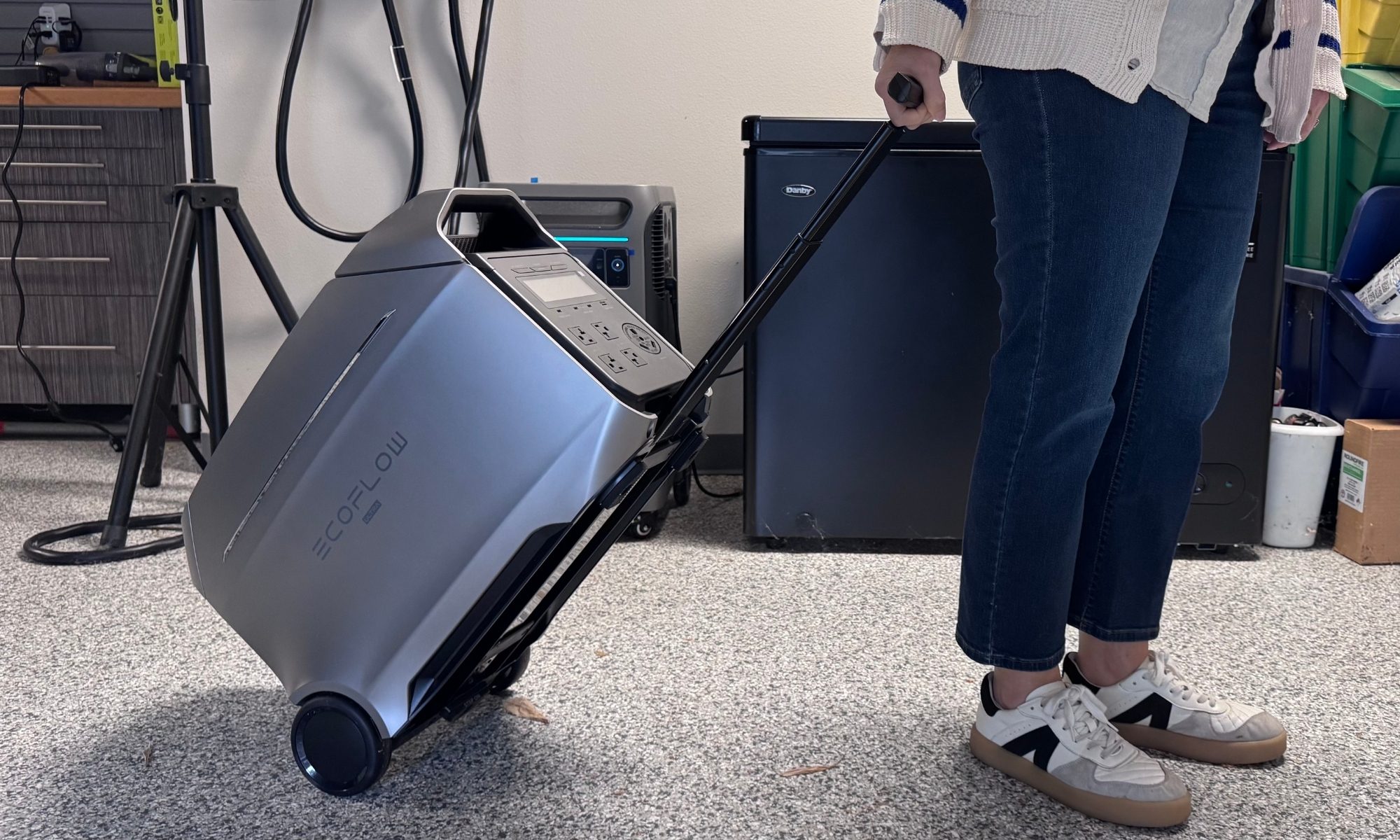
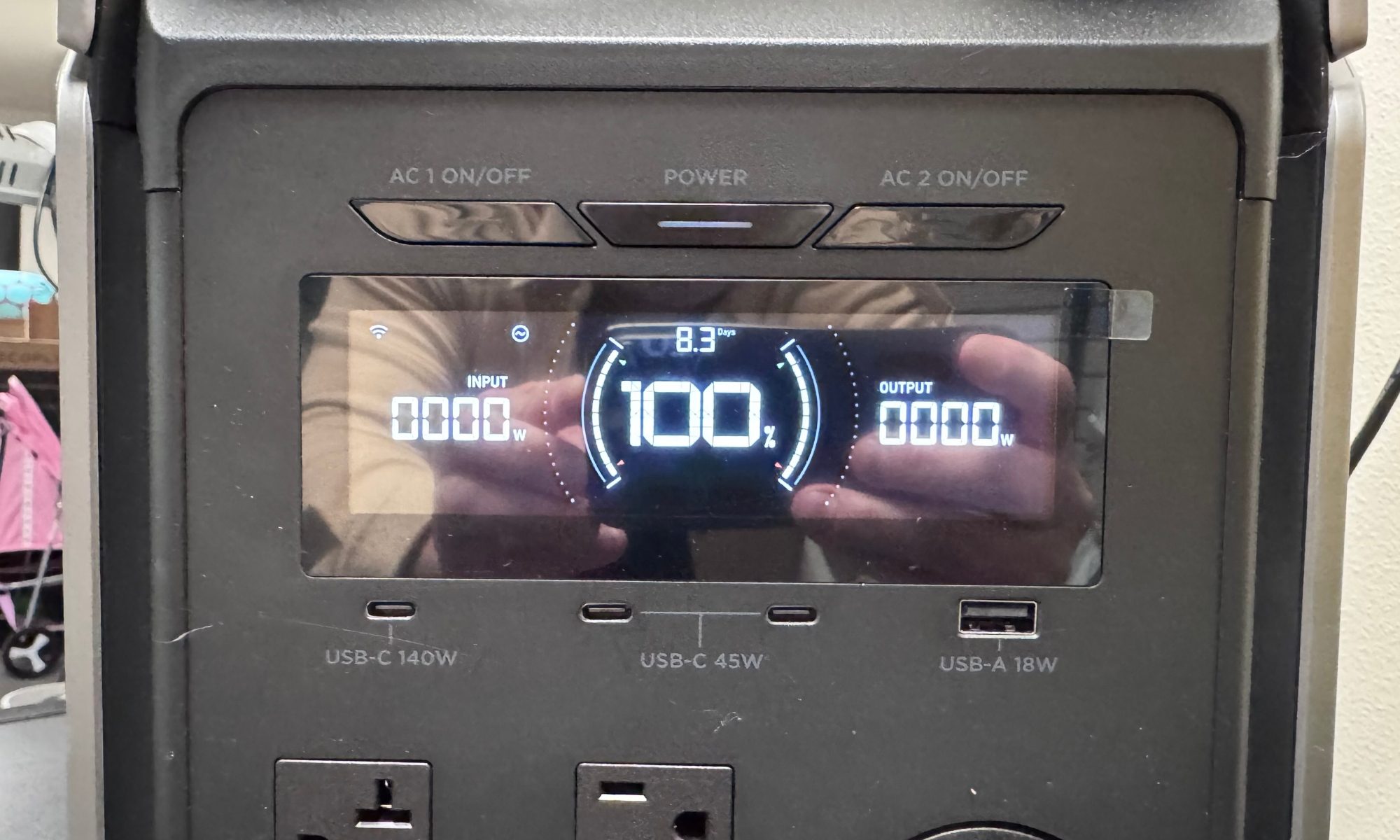
The front panel houses the display and all user-facing ports. Four 20A NEMA 5-20R outlets line the left and right sides, controlled by separate AC1 and AC2 buttons, plus a dedicated 30A NEMA TT-30R three-prong outlet for RVs or high-draw appliances like dryers. Three USB-C ports (one at 140W, two sharing 45W) and a single USB-A port round out the front.
The display itself provides useful at-a-glance information like input and output wattage, battery percentage, active ports, fan status, and estimated runtime. However, it struggles in direct sunlight, and up close you can see the segments for inactive display elements, giving it a less polished look than some competitors’ screens.
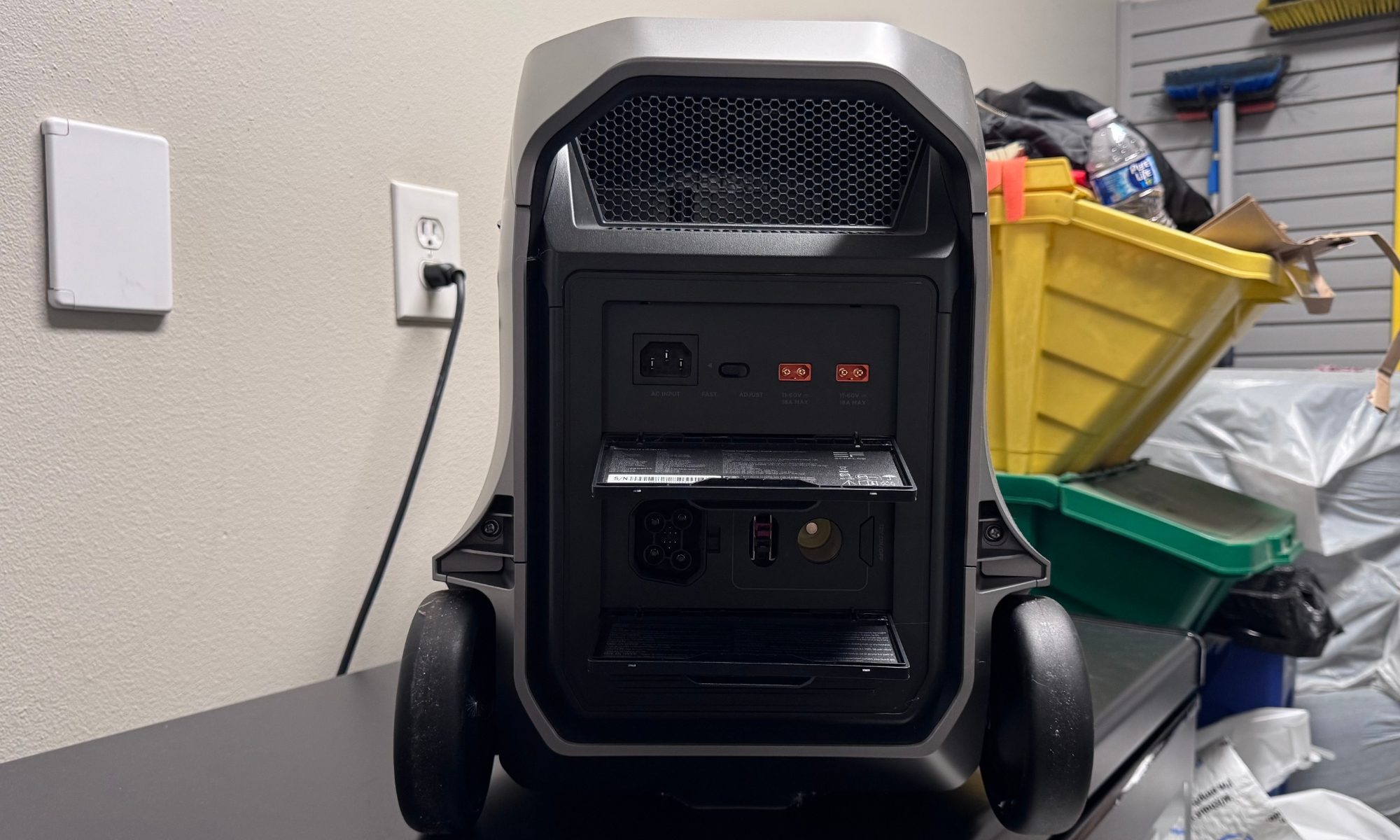
Around back, hinged flap covers protect the AC input, dual XT60 solar inputs, expansion battery port, 12V DC cigarette lighter output, and Anderson port. These covers fold flush into the chassis rather than dangling loose, which is a small design touch that matters more than you’d expect after repeated use. I would question the durability of these cover hinges since they are plastic and could break after a lot of use, so something to consider.
Battery and Capacity
The Ultra Plus uses EV-grade LiFePO4 (LFP) cells rated for 10 years of regular use. LFP chemistry is the gold standard for power stations in this class: it offers superior thermal stability compared to NMC lithium-ion, doesn’t degrade as aggressively through charge cycles, and carries lower fire risk – all critical factors for a unit that will live inside your home.
The rated capacity is 3,072Wh, but real-world usable capacity is lower once you account for inverter losses and the battery management system’s depth-of-discharge limits. Independent testing measured approximately 2,610Wh of delivered energy during a full discharge cycle, which works out to roughly 85% discharge efficiency. That’s an excellent number for a unit with a 3,600W inverter and earns top marks among power stations in this output class.
Recharging efficiency is measured at approximately 87%, meaning the unit draws about 3,540Wh from the wall to fill its 3,072Wh battery. This is within the normal range for inverter-based portable power stations and reflects acceptable conversion losses based on research I did.
The biggest upgrade over the original DELTA 3 Ultra is expandability. The prior model was a closed system for the most part. The Ultra Plus adds a rear expansion port that supports daisy-chaining additional battery packs, scaling total capacity from 3kWh up to 11kWh. Even better, it’s backwards-compatible with older EcoFlow expansion batteries, including DELTA Pro 3, DELTA Pro Smart, and DELTA 3 Max Plus packs. That cross-generational compatibility is unusual in this industry and means existing EcoFlow owners can upgrade their base unit without rendering older gear obsolete. This is a huge plus for me as I am very much against planned obsolescence.
Charging Speed
EcoFlow offers five distinct charging methods for the Ultra Plus, which provides excellent flexibility.
Wall charging at the full 1,800W rate fills the battery from 0–80% in approximately 89 minutes and reaches 100% in roughly an hour and forty minutes. A rear toggle switch controls charging speed: the default 200W “Silent” mode trickle-charges slowly (useful for overnight top-offs), while the full-speed position pulls the maximum 1,800W. Granular speed control between those extremes is available only through the app, where you can set custom wattage levels. A 1,000W setting strikes a balance between speed and circuit loading.
Solar charging accepts up to 1,600W across two XT60 inputs (800W each), a meaningful upgrade from the original Ultra’s solar capacity. Under ideal conditions with high-wattage panels, 0–80% takes about 101 minutes. Dual-input charging (solar plus EcoFlow’s alternator charger) combines to deliver up to 2,600W, cutting the same charge window to approximately 60 minutes. Ecoflow did not send me a solar charger to test this claim, so I would recommend reading message boards to see what people are experiencing. From what I can gather from research on the web, Ecoflow’s claims are pretty accurate based on what people are reporting.
Generator charging via EcoFlow’s Smart Generator supports up to 3,200W input, dropping the 0–80% time to 53 minutes. The fastest option pairs solar and generator simultaneously for a combined 3,960W input, achieving 0–80% in just 48 minutes. I do not have a generator, so I was not able to test the recharging of this claim.
Solar Compatibility
The Ultra Plus uses an MPPT (Maximum Power Point Tracking) solar charge controller across its dual 800W inputs, supporting a combined maximum of 1,600W. This is double the original DELTA 3 Ultra’s solar input and among the highest in this class of portable power stations.
The unit accepts panels with an 11–60V input range via XT60 connectors. Third-party panels are compatible as long as they fall within this voltage and amperage window, though EcoFlow sells its own lineup ranging from 60W folding panels for camping to 500W rigid panels for semi-permanent installations.
Solar panels are not included with the base unit—a common industry practice, but a frustrating one at this price point. EcoFlow’s 220W bifacial panels run approximately $279 each, and the 800W alternator charger adds another $289. Bundle pricing is available and typically represents the best value for buyers planning a solar setup from the start.
Real-World Use Scenarios
The DELTA 3 Ultra Plus shines in home backup scenarios where reliable, quiet, medium-duration power is the priority.
Home Office and Remote Work
Running a full workstation like a desktop computer, external monitor, drawing tablet, router, and phone charger, the unit sustained power for over 10 hours with capacity to spare. For remote workers in outage-prone areas, this is enough to power through a full workday without interruption, particularly given the sub-10ms UPS switchover that prevents any power loss to connected equipment. My recommendation is to have a Starlink backup for internet usage, if you absolutely need it. I feel like most computers these days are pretty useless without an internet connection, and the Windows OS almost requires it at this point.
Kitchen Appliances
My Danby garage freezer ran for nearly three days on a single charge, even in an unconditioned space. Higher-draw appliances like coffee makers, microwaves, and pressure cookers run without issue but consume battery significantly faster due to their heating elements. The 7,200W surge handles compressor startup loads without tripping.
RV and Off-Grid Use
The 30A TT-30R outlet is purpose-built for RV hookups, and the 3,600W continuous output handles most RV electrical systems. For off-grid cabin use, pairing the unit with solar panels and expansion batteries creates a self-contained power system that can sustain moderate loads indefinitely during daylight hours. I do not own an RV, so these are based on EcoFlows claims.
Home Backup Features
The Ultra Plus supports connection to a manual transfer switch, allowing it to feed power directly to selected circuits in your home’s breaker panel. This is the most practical way to use the unit during extended outages, as it eliminates the need to run extension cords to individual appliances. Installation of a transfer switch should be performed by a licensed electrician to ensure compliance with local electrical codes and NEC requirements. One of the big issues with my home is that I have multiple breaker panels, and each panel was poorly laid out in that I have rooms not even remotely next to each other on each panel, versus having the panel broken up by sections of the house.
For example, on one of my panels, I have my bedroom, which is on one side of the house, and the dining room, which is on the other side, all on the same panel. And I have three panels set up this way. This makes a whole-home battery backup extremely difficult to set up without redoing all of the panels.UPS mode activates automatically when the unit detects a loss of grid power, switching over in under 10 milliseconds.
It’s important to note that the Ultra Plus is a 120V-only system. It does not support 240V output or split-phase pairing, which means it cannot power 240V appliances like central air conditioners, electric ranges, or heat pump water heaters. For whole-home backup including 240V loads, EcoFlow’s DELTA Pro 3 or a dedicated home battery system like the Tesla Powerwall would be more appropriate.
App and Smart Features
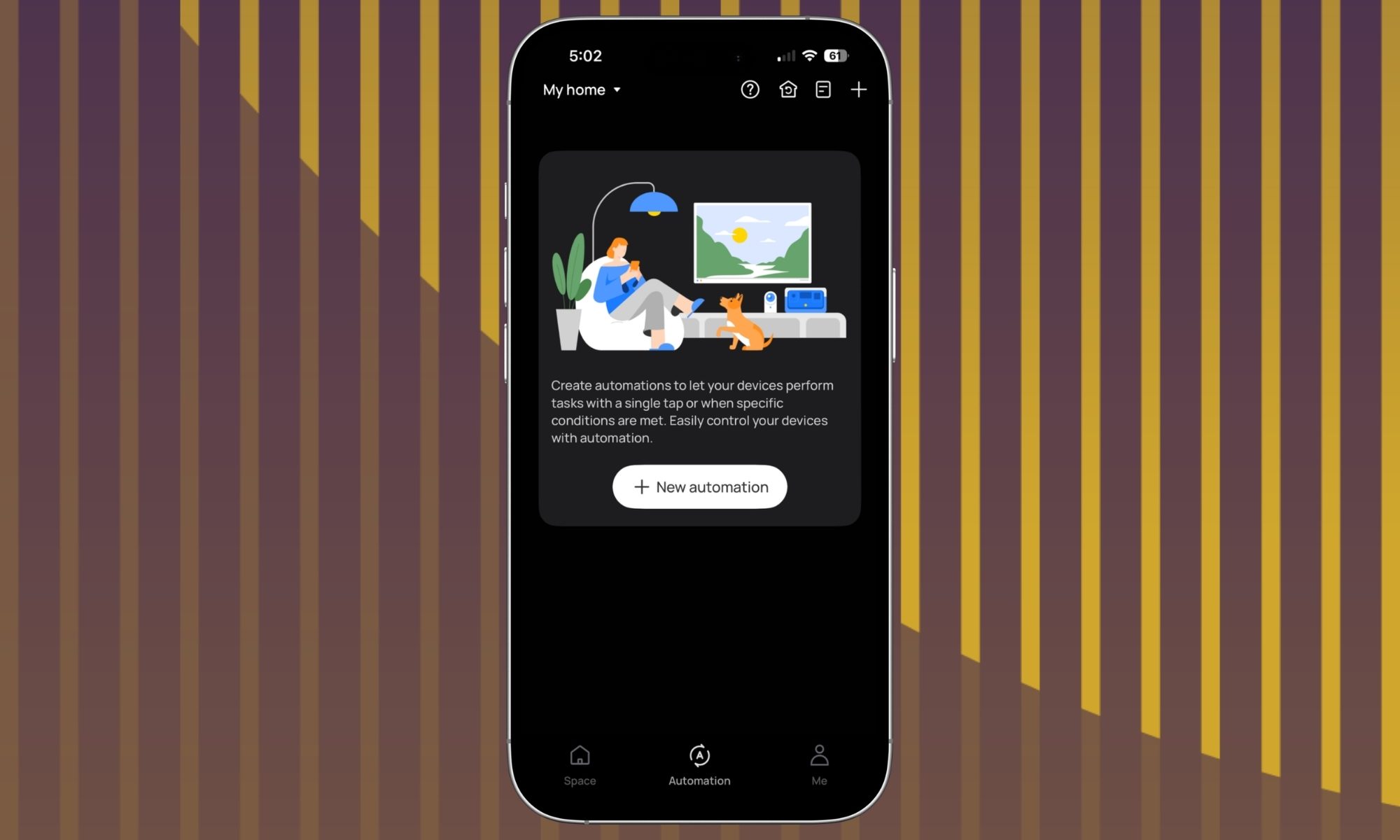
The EcoFlow companion app (iOS and Android) connects via Bluetooth for local control and Wi-Fi for remote monitoring and cloud features. The app is well-designed, responsive, and offers utility beyond what the physical controls provide. During my testing, there did not appear to be any app updates. What I have noticed while reviewing the Anker Solix F3800, for example, is that often when there are app updates, it can reset my settings
Storm Guard
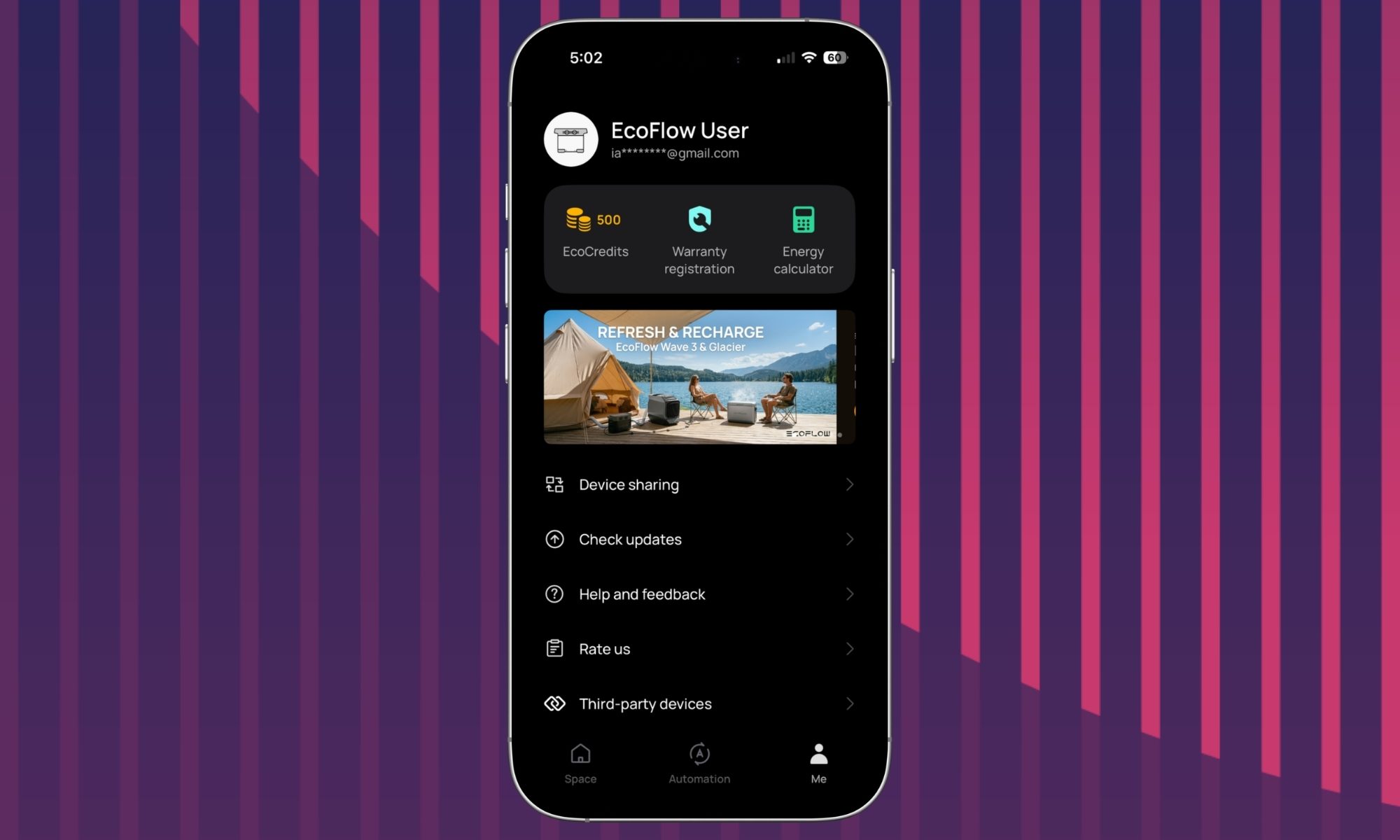
This standout feature monitors weather alerts via the internet and automatically triggers fast charging when severe weather is detected in your area. For homeowners in hurricane, tornado, or severe storm regions, this means the unit can prepare itself without any manual intervention—as long as it’s plugged into a wall outlet and connected to Wi-Fi.
Smart Output Priority
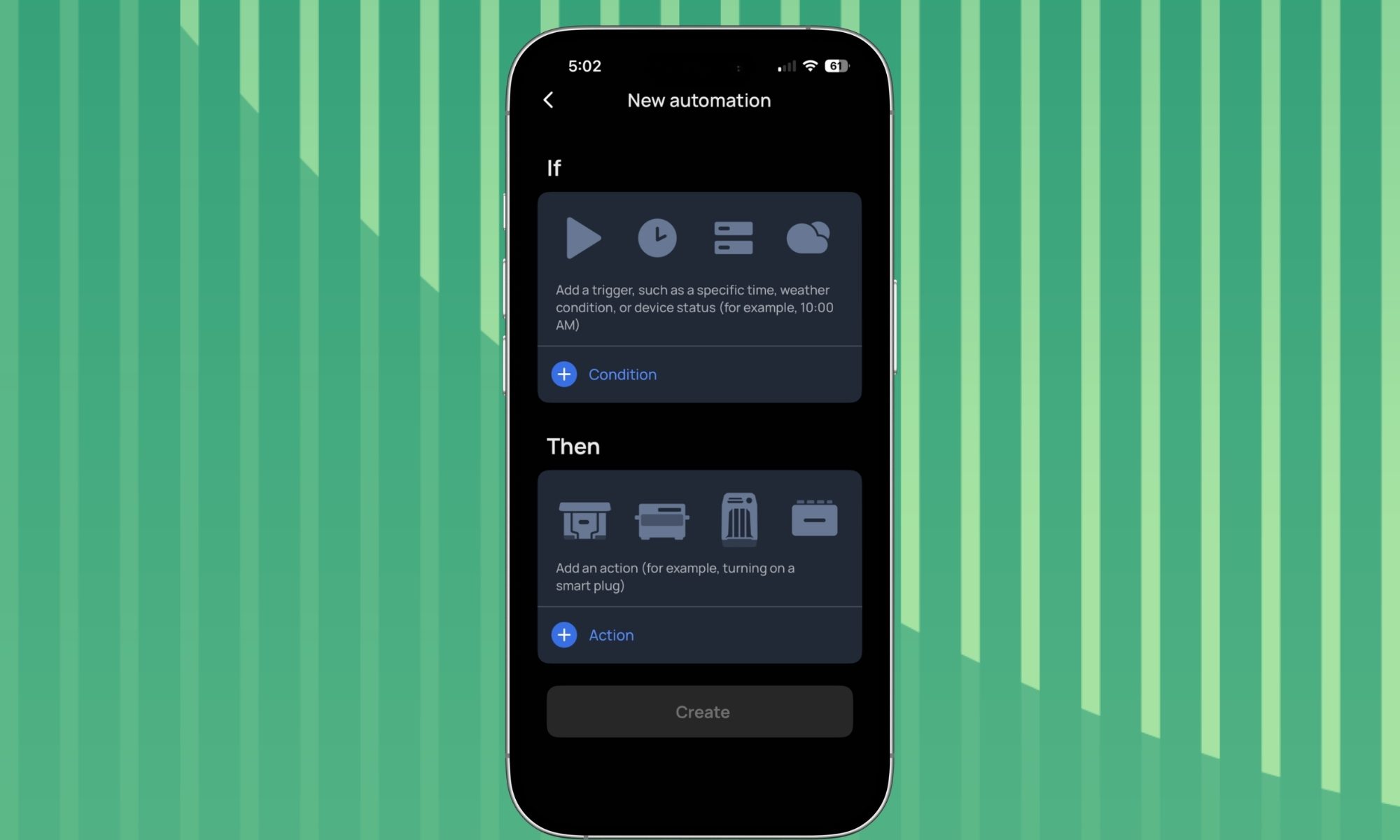
This lets you designate which AC circuits receive power first and which get cut when the battery runs low, extending runtime for essential devices like medical equipment, refrigerators, or communication gear.
Charging Controls
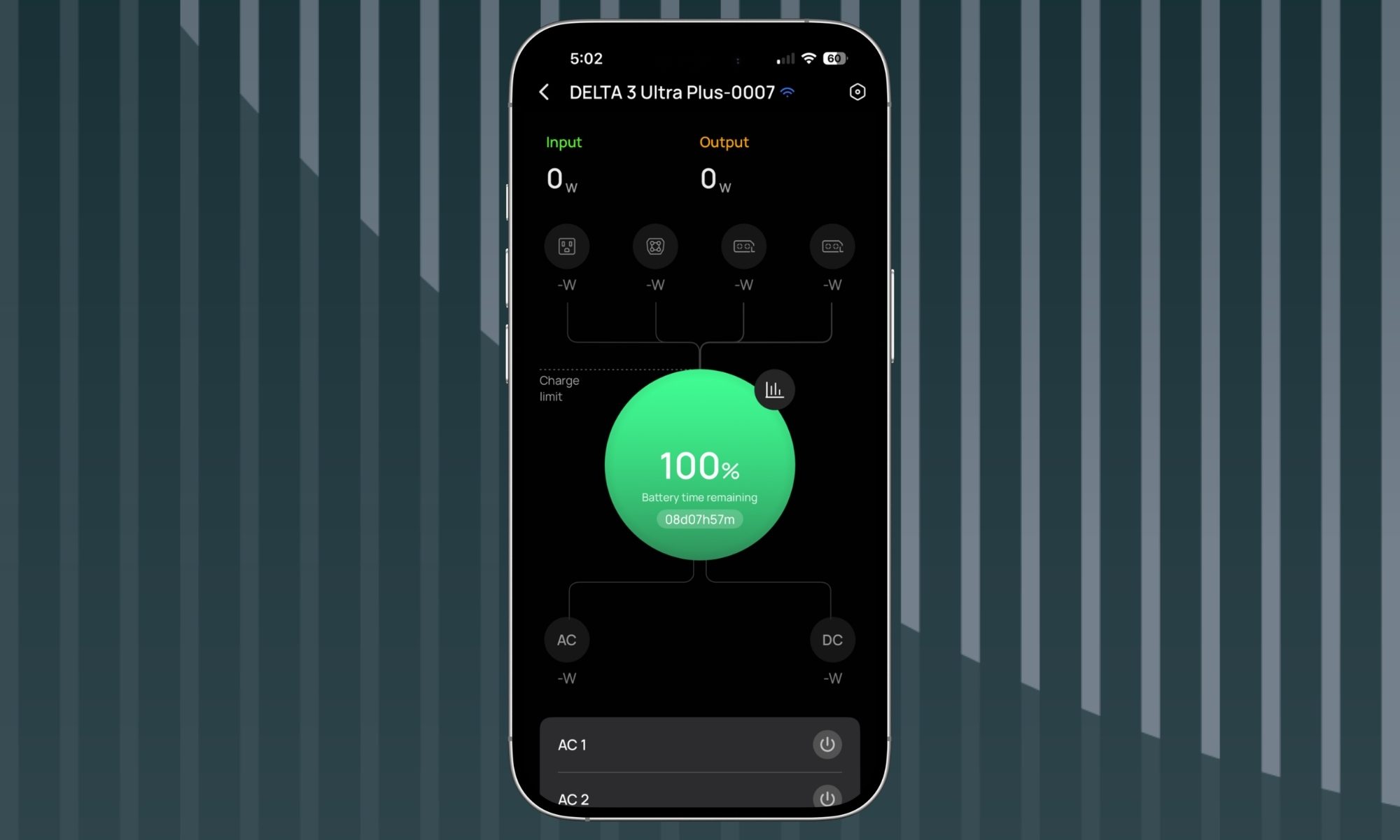
The app provides granular control over charge speed (anywhere between 200W and 1,800W), charge and discharge limits to optimize long-term battery health, and scheduled charging to take advantage of off-peak electricity rates. Output Port Memory remembers which ports were last active, and X-Boost can be toggled to extend the effective output range.
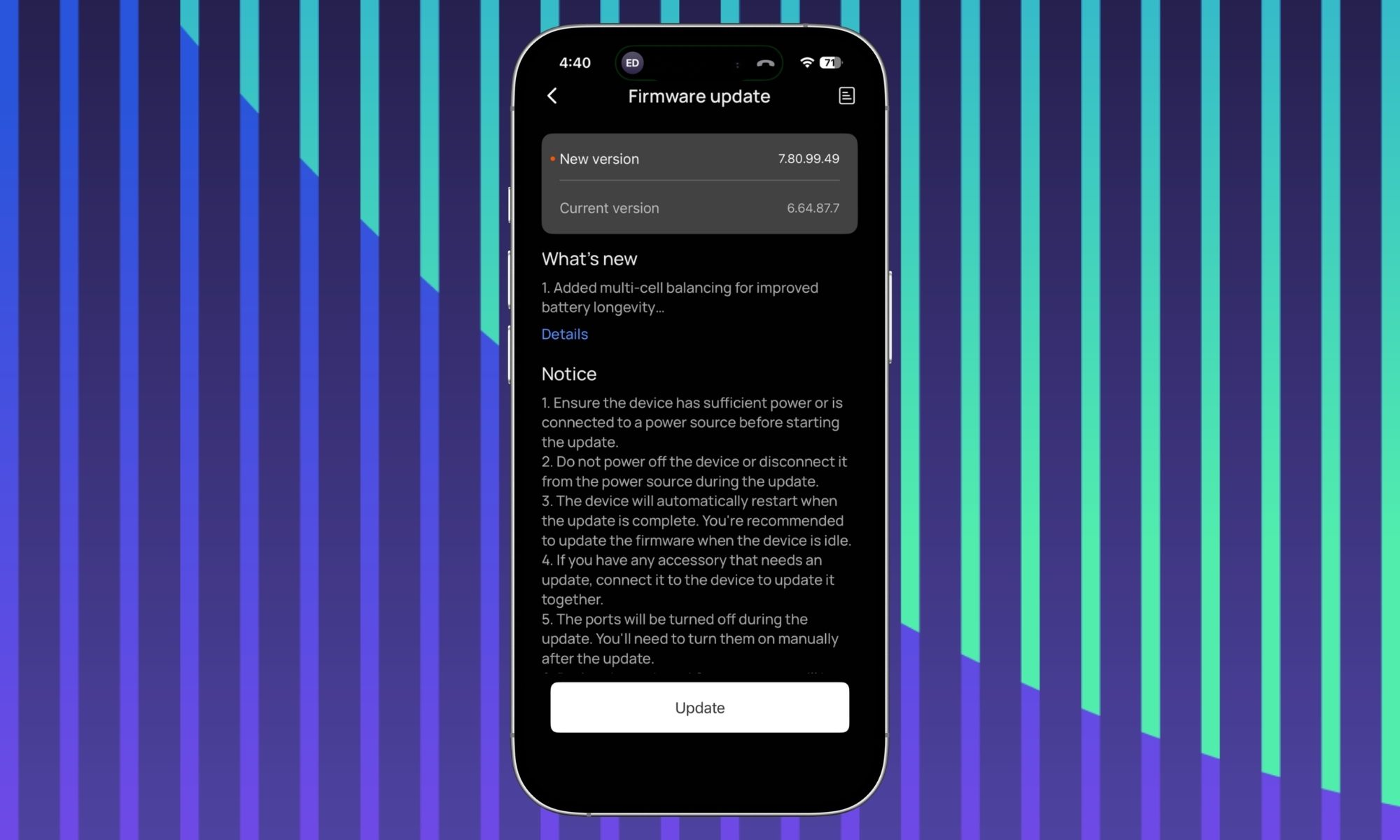
The primary downside is that many of these features are app-exclusive. The physical unit offers only three buttons (power, AC1, AC2) and a rear charging-speed toggle. If your phone dies or you prefer not to use the app, you’re limited to basic on/off control. That could mean that if you are away from your home during a power outage, there is no way to control the unit with the app since your home internet connection will likely not be working, either.
Safety and Certifications
The Ultra Plus features a comprehensive battery management system (BMS) with overcharge, over-discharge, overcurrent, short-circuit, and thermal protection. The LFP cell chemistry inherently reduces thermal runaway risk compared to NMC alternatives.
The unit is rated for indoor use and operates at 25 dB or below, making it suitable for bedrooms, home offices, and living spaces. Even under full load, fan noise remains non-noticeable, quieter than the smaller Dabbson I recently reviewed.
Moisture resistance is built-in to handle condensation from overnight outdoor use or damp garage storage. The housing withstands drops up to 0.2 meters, though the lack of rubber bumpers on the vertical standing surfaces means you’ll want to be careful if storing it upright. The doors on the rear compartment, again, worry me because they do not have a waterproof seal on them, so if you leave this unit outside while camping, there is a chance water would get into those ports.
How I Tested
I tested the Ultra Plus like I have assessed previous power stations in the past:
• Full discharge cycle testing (100% to shutoff) to measure usable capacity versus rated capacity.
• AC wall charging from 0–100% with wattage measurement from the wall.
• UPS switchover timing measured with power analysis equipment (Quarch QTLS2843).
• Idle power draw measurement with single and dual inverter sections active.
• Real-world appliance runtime testing: Danby garage freezer (48 hours), home office workstation (10+ hours), kitchen appliances, and simultaneous multi-device loads from two ebikes connected at once and my garage freezer.
• Fan noise assessment at idle, partial load, and full output.
• Pass-through charging tested while powering ~3,000W load from outputs.
Comparison and Alternatives
The portable power station market in this capacity class has several strong contenders. Here’s how the DELTA 3 Ultra Plus stacks up:
- EcoFlow DELTA Pro (Original)
- The elephant in EcoFlow’s own room. The original DELTA Pro offers a larger 3,600Wh battery, the same 3,600W inverter, 240V pairing for split-phase loads, and expansion up to 25kWh, and it often sells for less than the Ultra Plus. The DELTA Pro is heavier (99 lbs vs. 74 lbs), uses an older design language, and lacks features like Storm Guard. But on pure capacity-per-dollar, it’s hard to beat.
- Anker SOLIX C2000 / F3000
- Anker’s competing units offer faster wall-charging speeds (the C2000 Gen 2 reaches 80% in about 43 minutes) and polished build quality. However, they lack the Ultra Plus’s 30A RV output, have more limited expansion ecosystems, and don’t match EcoFlow’s backward compatibility with older battery packs.
- Bluetti AC200L
- Bluetti’s 2,048Wh LFP unit is a solid, proven performer at a lower price point, with broad solar panel compatibility and reliable LFP longevity. It falls short on raw capacity (2,048Wh vs. 3,072Wh), maximum output (2,400W vs. 3,600W), and charging speed.
What I Like
• Solid build quality with rubber wheels and a handle that makes 74 lbs manageable
• Quiet operation (≤25 dB) – among the quietest power stations I have tested
- Telescoping handle for easy transport
• Expandable from 3kWh to 11kWh with backward-compatible battery ecosystem
• Storm Guard weather-aware auto-charging is a feature I think people will use
• Five charging methods with up to 3,960W combined input
What I Don’t Like
• MSRP of $2,899 is hard to justify when EcoFlow’s own DELTA Pro often costs less
• No built-in LED light – baffling on a unit designed for power outages (need to confirm)
• Display washes out in direct sunlight
• 120V only. No 240V output for central AC, ranges, or other high-voltage appliances
• Most settings require the mobile app; physical controls are minimal
• Solar panels sold separately at $279+ each
Who Should Buy It
The DELTA 3 Ultra Plus is best suited for homeowners who want a large-capacity, roll-anywhere backup power source without the complexity and cost of a permanent battery installation. It’s ideal for powering essential home circuits during outages, supporting remote work setups, and providing RV or off-grid cabin power. Existing EcoFlow owners benefit most from the backward-compatible expansion ecosystem.
Who Should Look Elsewhere
If you need 240V output for central air or an electric range, step up to the EcoFlow DELTA Pro 3 or a dedicated home battery system. If budget is the primary concern and you don’t need expandability, the Bluetti AC200L delivers solid LFP performance at a lower price. And if you want the absolute fastest wall charging, Anker’s SOLIX line has an edge.
Frequently Asked Questions
How long will the DELTA 3 Ultra Plus power my refrigerator?
A standard refrigerator drawing 100–200W (with compressor cycling) can run for approximately 15–30 hours on a full charge. A garage freezer was tested running for nearly three full days. Actual runtime depends on the refrigerator’s efficiency, temperature, and how often the door is opened.
Can I connect this to my home’s breaker panel?
Yes, via a manual transfer switch. This allows you to power selected circuits directly from the Ultra Plus during an outage. A licensed electrician should install the transfer switch to ensure safe, code-compliant wiring. The unit does not support automatic transfer switches or 240V circuits.
Is LFP battery chemistry safer than regular lithium-ion?
LFP (lithium iron phosphate) cells offer better thermal stability than NMC (nickel manganese cobalt) lithium-ion. They are more resistant to thermal runaway, have a lower fire risk, and degrade more slowly over charge cycles. The tradeoff is slightly lower energy density per pound, which is why the unit weighs 74 lbs.
What solar panels work with the DELTA 3 Ultra Plus?
Any solar panel or array within the 11–60V input range can connect via the XT60 ports, up to 1,600W combined. EcoFlow’s own panels (60W–500W) are optimized for compatibility, but third-party panels from Renogy, BougeRV, and others work as long as they meet the voltage and amperage specifications.
How does the DELTA 3 Ultra Plus compare to a whole-home generator?
A portable power station like the Ultra Plus is silent, produces no emissions, requires no fuel, and can operate indoors. However, it has finite stored energy (3,072Wh expandable to 11kWh) and only outputs 120V. A whole-home standby generator provides unlimited runtime (as long as fuel is available), supports 240V circuits, and can power an entire house. The Ultra Plus is best thought of as a complement to (not a replacement for) a whole-home generator in areas with extended outage risk.