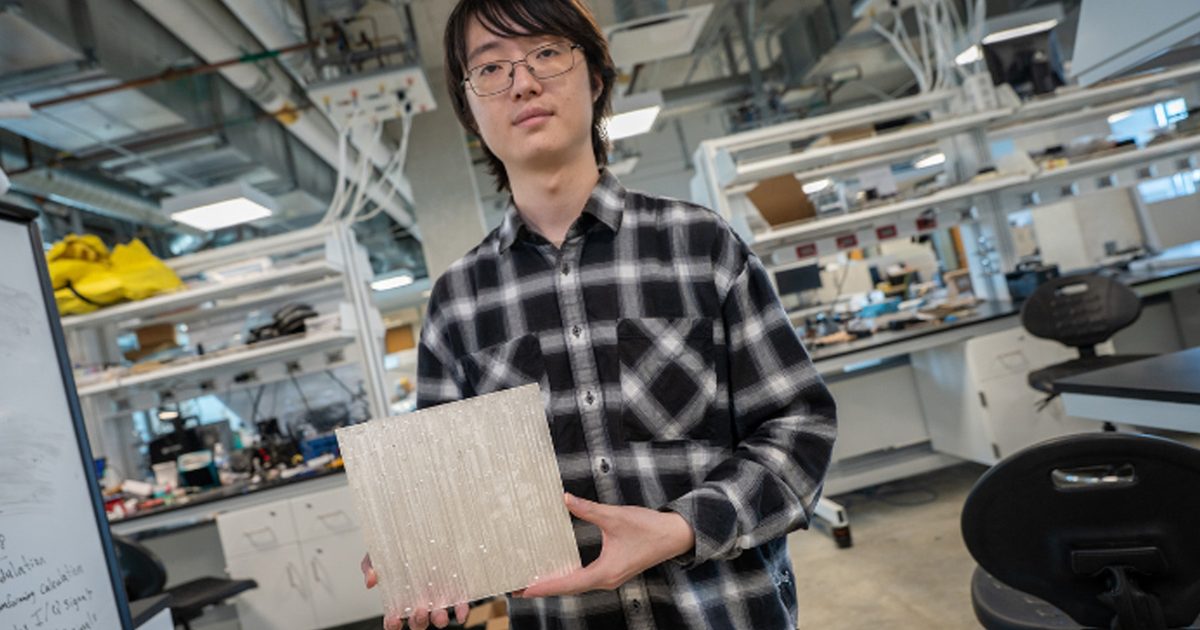




UC Berkeley researchers have built an electric nose that can detect gases tied to spoiled food and common allergens more consistently than a human sniff test. The device uses a 16-sensor gas sensor chip that turns reactions with food-related gases into electrical signals.
Kitchen judgment can get messy because food doesn’t always look or smell risky before it becomes a problem. Milk, eggs, chicken, fruit, and nuts release different chemical signatures, and people usually have to decide with whatever their nose catches in the moment.
The work is still in the lab, but the destination is obvious enough. Smart fridges won’t feel truly smart while they mostly track shelves, settings, and inventory instead of the changing chemistry inside.
How does the electric nose work
Each sensor on the chip uses a different sensing film, so gases from food produce a response across the array rather than a single yes-or-no signal. A machine learning model compares that response pattern and classifies the scent profile.
The researchers trained the system on strawberries, blueberries, bananas, walnuts, hazelnuts, cashews, peanuts, raw chicken, milk, and eggs. For chicken, milk, and eggs, the model also used samples tested fresh and after 24 and 48 hours at room temperature.
UC Berkeley’s illustration of the chip shows why the approach is more layered than a basic detector. Multiple sensing materials react to gas molecules, then software links those reactions to a food or scent.
Why would smart fridges need smell
Food safety depends on chemistry, storage, and time, which makes printed dates and quick smell checks limited guides. A fridge with gas sensing would have a direct way to spot spoilage signals before users are left guessing.
UC Berkeley’s team used carbon nanotubes instead of a hotter metal oxide design, letting the sensor operate at room temperature. That choice opens the door to more sensing materials, including polymers, and supports a simpler drop-casting fabrication process.

For connected appliances, the appeal is practical. A fridge that can flag aging chicken or allergen traces would give smart home hardware a clearer job than another app dashboard.
When could kitchens actually get it
Real kitchens are the next stress test. The device detected 0.05 grams of isolated walnut, around one hundredth of an average shelled walnut, but the team hasn’t yet shown how well it performs when smells overlap in salads, cakes, or packed refrigerators.
A portable version that works with an iPhone app already exists, though it wasn’t included in the published study. The next useful milestone will be broader testing for sensitivity and reliability in messy, mixed-food environments, because that’s where a future fridge sensor will either prove itself or stall.