


Close Menu
Tech Savvyed
  • Home
  • News
  • Artificial Intelligence
  • Gadgets
  • Apps
  • Mobile
  • Gaming
  • Accessories
  • More
    • Web Stories
    • Spotlight
    • Press Release

Subscribe to Updates

Get the latest tech news and updates directly to your inbox.

What's On
A boring tile wants to fix the worst problem of ultra-fast mmWave 5G connections for you

A boring tile wants to fix the worst problem of ultra-fast mmWave 5G connections for you

20 August 2026
My Mac never tells me where my internet goes, so I found an app that does

My Mac never tells me where my internet goes, so I found an app that does

20 August 2026
Motorola’s slick new charging puck joins Android’s tiny magnetic club

Motorola’s slick new charging puck joins Android’s tiny magnetic club

20 August 2026
Facebook X (Twitter) Instagram
Tech Savvyed
SUBSCRIBE
  • Home
  • News
  • Artificial Intelligence
  • Gadgets
  • Apps
  • Mobile
  • Gaming
  • Accessories
  • More
    • Web Stories
    • Spotlight
    • Press Release
Tech Savvyed
Home»News»MIT experts just made a special memory. When humans forget, robots will just fetch the lost item
News

MIT experts just made a special memory. When humans forget, robots will just fetch the lost item

News RoomBy News Room18 June 20262 Mins Read
MIT experts just made a special memory. When humans forget, robots will just fetch the lost item
Share
Facebook Twitter Reddit Telegram Pinterest Email

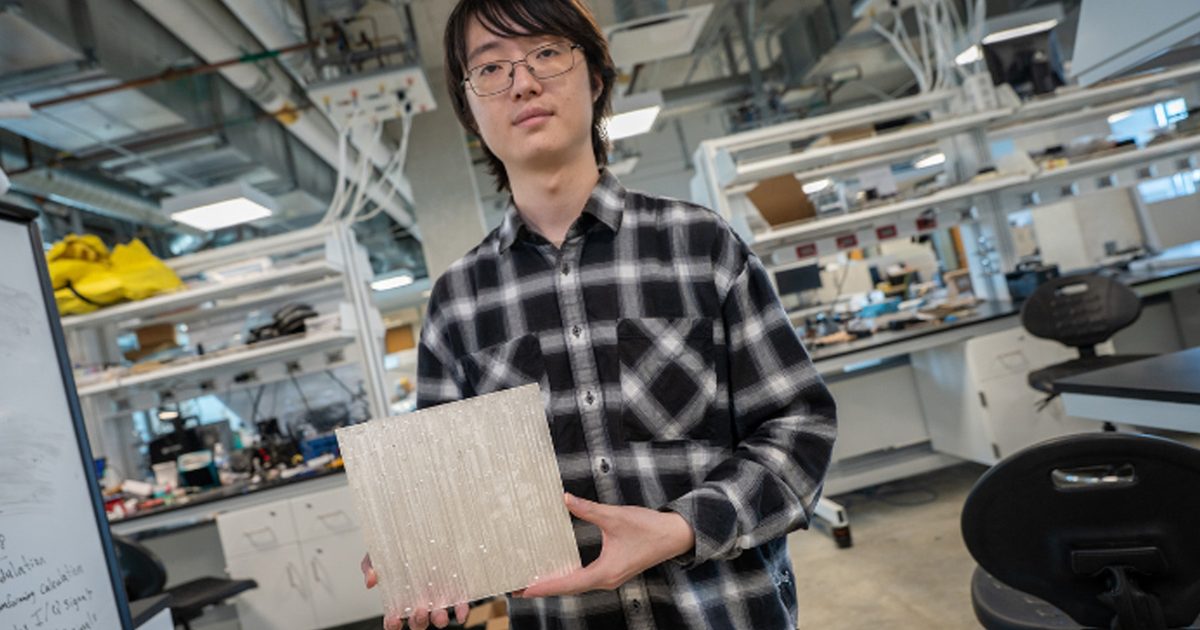
Robots may be the new best friend for forgetful humans. MIT researchers have developed a long-term memory framework for robots that can help them build a detailed mental model of large, complicated spaces. The system is called DAAAM, short for Describe Anything, Anywhere, Anytime, at Any Moment, and the goal is to let robots remember objects, locations, and details over time.

This might not sound headline-grabbing, though robots are still surprisingly bad at something humans do casually. You may remember that your keys were on the kitchen counter last night, or that a half-finished part was left in a factory bin. However, a robot working beside you would struggle to connect that object and location in a useful way.

A map robots can actually interpret

DAAAM tries to fix this by combining two things robots already use, namely computer vision and 3D mapping. As a robot moves through an environment, it attaches detailed language descriptions to objects it sees and stores them in a spatial map. So rather than just knowing there is an object at a coordinate, the robot may remember that there is a red bicycle with a flat tire near a specific building, or that a certain tool was seen in a particular work area.

A person could then ask something like, “Where did I leave my wallet?” or “Go grab the component we started assembling last night,” and the robot could search its memory for the right object and location.

Person, Outdoors, Airport

It’s not ready for your home… yet

MIT’s DAAAM can run fast enough for a mobile robot to use in real time. The researchers also found that it answered questions more accurately than current methods, depending on the type of query. Still, this is not a feature coming to your robot vacuum next week. The work was presented at the Conference on Computer Vision and Pattern Recognition, and the paper is available as a preprint.

Researchers are still working on improvements, including giving the system better confidence levels and helping it remember significant events in an environment. For now, the idea is pretty interesting. AI is the buzzword now, but intelligence that’s useful in a more real-world way does sound more appealing.


Share. Facebook Twitter Pinterest LinkedIn Telegram Reddit Email
Previous ArticleA harmless-looking ChatGPT prompt opened the door to gruesome AI images
Next Article AI vision is getting too hungry, and this method puts it on a diet

Related Articles

A boring tile wants to fix the worst problem of ultra-fast mmWave 5G connections for you

A boring tile wants to fix the worst problem of ultra-fast mmWave 5G connections for you

20 August 2026
My Mac never tells me where my internet goes, so I found an app that does

My Mac never tells me where my internet goes, so I found an app that does

20 August 2026
Motorola’s slick new charging puck joins Android’s tiny magnetic club

Motorola’s slick new charging puck joins Android’s tiny magnetic club

20 August 2026
A face-search tool left more than 9 million photos sitting unprotected

A face-search tool left more than 9 million photos sitting unprotected

20 August 2026
Samsung locks in August 27 for its next Galaxy S phone, and all signs point to the S26 FE

Samsung locks in August 27 for its next Galaxy S phone, and all signs point to the S26 FE

20 August 2026
YouTube is using a carrot-and-stick approach to keep top creators from cozying up to Netflix

YouTube is using a carrot-and-stick approach to keep top creators from cozying up to Netflix

20 August 2026
Demo
Stay In Touch
  • Facebook
  • Twitter
  • Pinterest
  • Instagram
  • YouTube
  • Vimeo
Don't Miss
My Mac never tells me where my internet goes, so I found an app that does

My Mac never tells me where my internet goes, so I found an app that does

By News Room20 August 2026

I’ve been using a Mac for a long time, and over the years, I’ve gotten…

Motorola’s slick new charging puck joins Android’s tiny magnetic club

Motorola’s slick new charging puck joins Android’s tiny magnetic club

20 August 2026
A face-search tool left more than 9 million photos sitting unprotected

A face-search tool left more than 9 million photos sitting unprotected

20 August 2026
Samsung locks in August 27 for its next Galaxy S phone, and all signs point to the S26 FE

Samsung locks in August 27 for its next Galaxy S phone, and all signs point to the S26 FE

20 August 2026
Tech Savvyed
Facebook X (Twitter) Instagram Pinterest
  • Privacy Policy
  • Terms of use
  • Advertise
  • Contact
© 2026 Tech Savvyed. All Rights Reserved.

Type above and press Enter to search. Press Esc to cancel.