





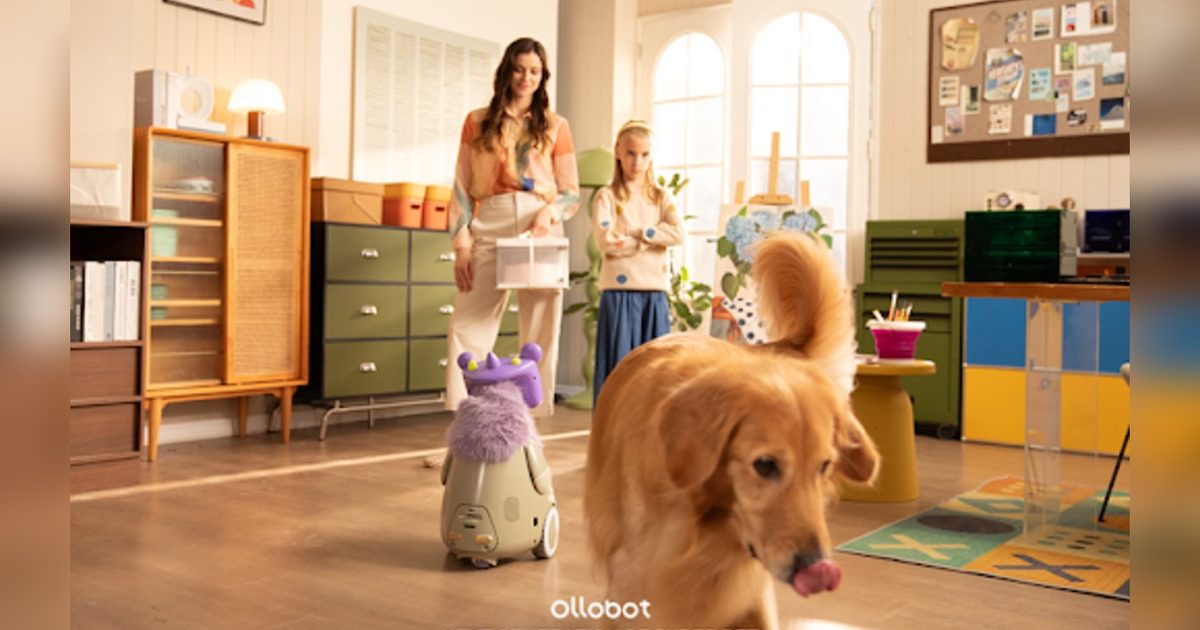
For the past decade, interacting with home artificial intelligence has followed a predictable, rigid pattern. A person says a wake word, asks for the weather or to turn off the lights, the speaker replies, and then the exchange ends right there. While functional, this keeps smart devices strictly transactional. They remain tools activated for a specific chore rather than systems that naturally fit into a living space.
OlloBot is charting a fundamentally different path with the OlloNi SS1, an embodied AI companion, which refers to artificial intelligence built into a physical, mobile body rather than trapped inside a screen.
Introduced under a new category called the Cyber Pet, the SS1 does not stay tethered to a countertop. It is built to roam, recognize individual household members and pets, pick up on subtle emotional shifts, and build familiarity over time. The ambition is not to replace human relationships or biological pets, but to create technology that feels expressive, present, and genuinely connected.
Redefining the Cyber Pet
Early companion robots often struggled to feel engaging because they relied on scripted voice prompts and mechanical gimmicks. OlloBot takes a more nuanced approach by combining autonomous mobility, multi-sensor environmental awareness, and multimodal AI. Broadly, multimodal AI means the robot does not rely only on voice commands. It can see through its cameras, listen through its microphones, and process multiple visual and audio cues at once.
Because of this, the Cyber Pet factors in tone of voice, body language, facial expressions, and ambient surroundings. Imagine walking quietly through the front door after an exhausting day. Rather than idling until someone triggers a wake word, the companion can register the shift in mood, gently roll over to greet the returning resident, and initiate a low-key interaction. Using animated expressions, voice modulation, and subtle physical movements, it brings an emotional texture to technology that a phone screen or stationary smart speaker simply cannot replicate.
Natural and Expressive Presence
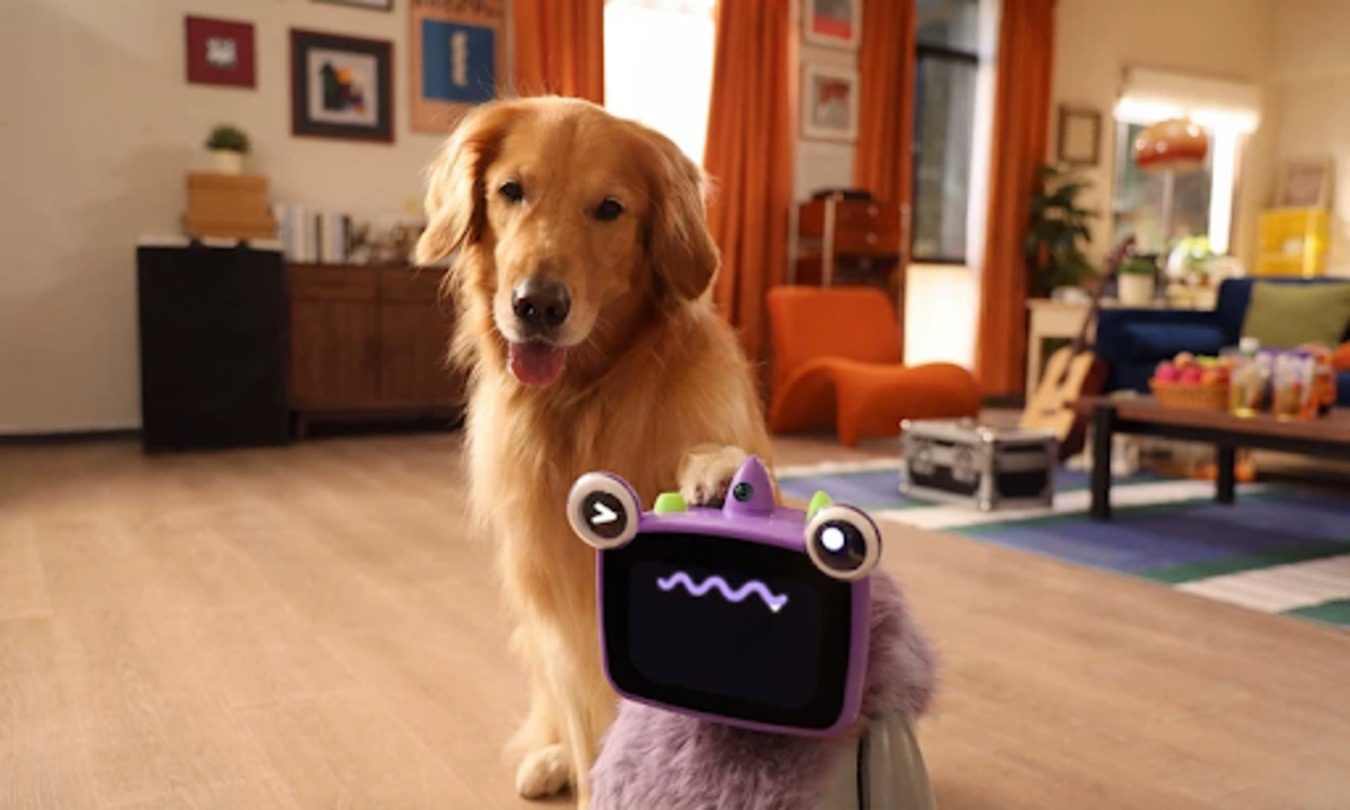
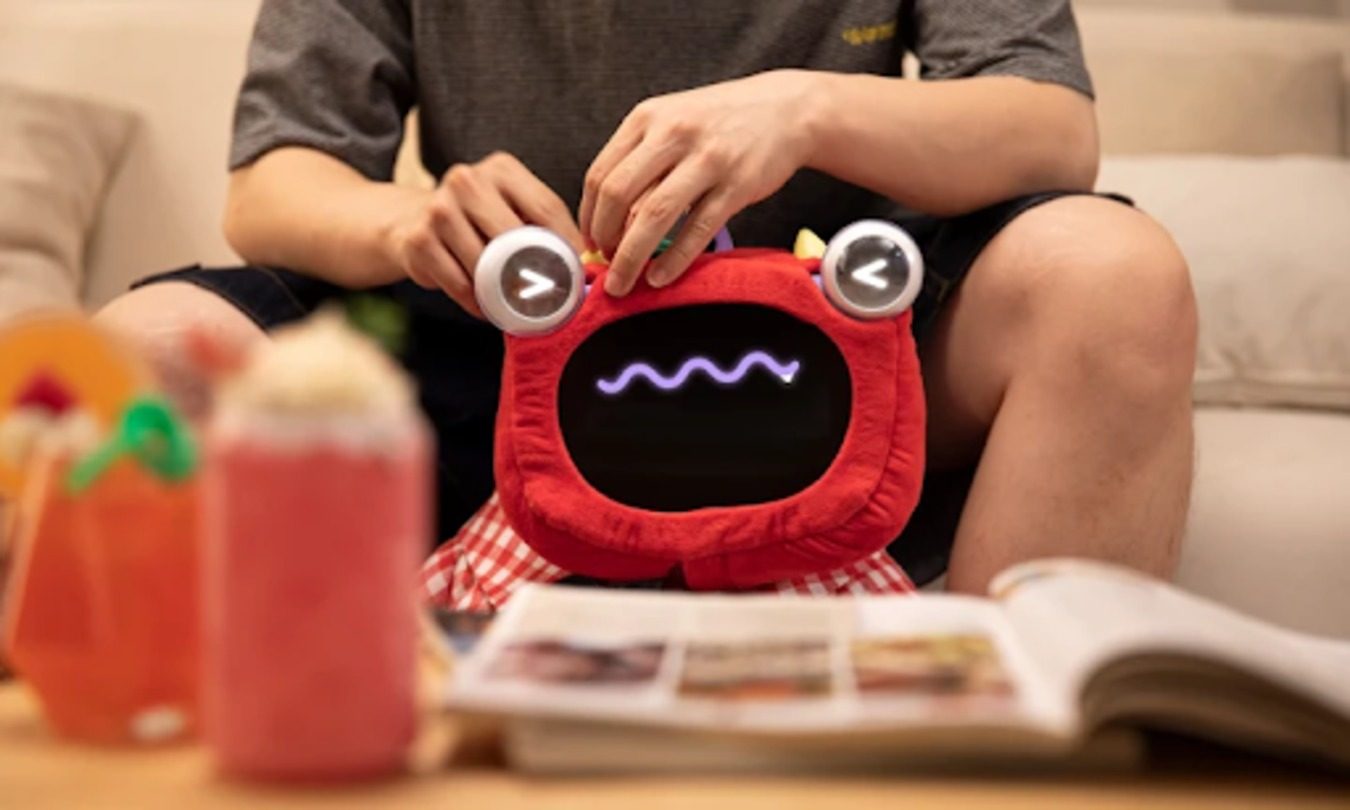
To make these interactions feel more intuitive, the device incorporates a proprietary 2+1 screen setup. Two smaller displays act as expressive digital eyes, while a primary central screen handles standard tasks, conversation readouts, and video calls.
Throughout the day, the SS1 quietly fits into household routines. It can efficiently recognize different family members in the morning, track indoor ambient conditions such as lighting and temperature, and provide proactive assistance without demanding constant attention.

Memory Built Around an Emotional Center
What truly differentiates this robotic companion is continuity. Most digital assistants treat every exchange as if they were meeting the user for the first time. OlloBot addresses this with the Heart Memory Module, a removable heart-shaped local storage unit that physically grounds the memories and familiarity the AI builds over time.
With user permission, the OlloNi SS1 passively detects genuine milestone moments such as family celebrations, shared laughter, or spontaneous hugs, and archives short video highlights using built-in AI editing tools. During a birthday party, for instance, family members do not have to step away to play camera operator because the SS1 captures authentic, unprompted moments. More importantly, this localized history informs how the robot interacts with the household tomorrow, establishing a sense of shared lived experience.
Video Calls That Follow the Flow
This same fluidity extends to how the Cyber Pet rethinks remote communication. Standard video calls lock participants in front of a stationary lens, breaking the natural flow of conversation. Because the SS1 can navigate independently, it physically follows the speaker from the kitchen to the living room. A traveling parent can stay actively connected during breakfast routines, or distant relatives can participate in dinner prep without forcing everyone to crowd around a counter.
Hardware-Level Privacy
An autonomous device navigating private rooms demands rigorous data protection. To keep privacy clear and transparent, the unit features a physical camera shutter, which is a manual lens cover that completely blocks the camera when not in use. Moreover, it pairs this with local encrypted processing, meaning all personal moments, video clips, and facial recognition data are securely scrambled and stored directly on the device rather than being sent to a remote cloud server.
With foundational privacy and mobility in place, the broader question turns to where this technology heads next. The next chapter of home technology will not simply be about faster processors or longer feature lists. It will be about whether AI can feel intuitive without being invasive, and proactive without being overbearing.
Set to make its official public debut at IFA, the OlloNi SS1 offers a compelling glimpse into a future where smart technology does not just listen for commands, but learns how to share a home.