





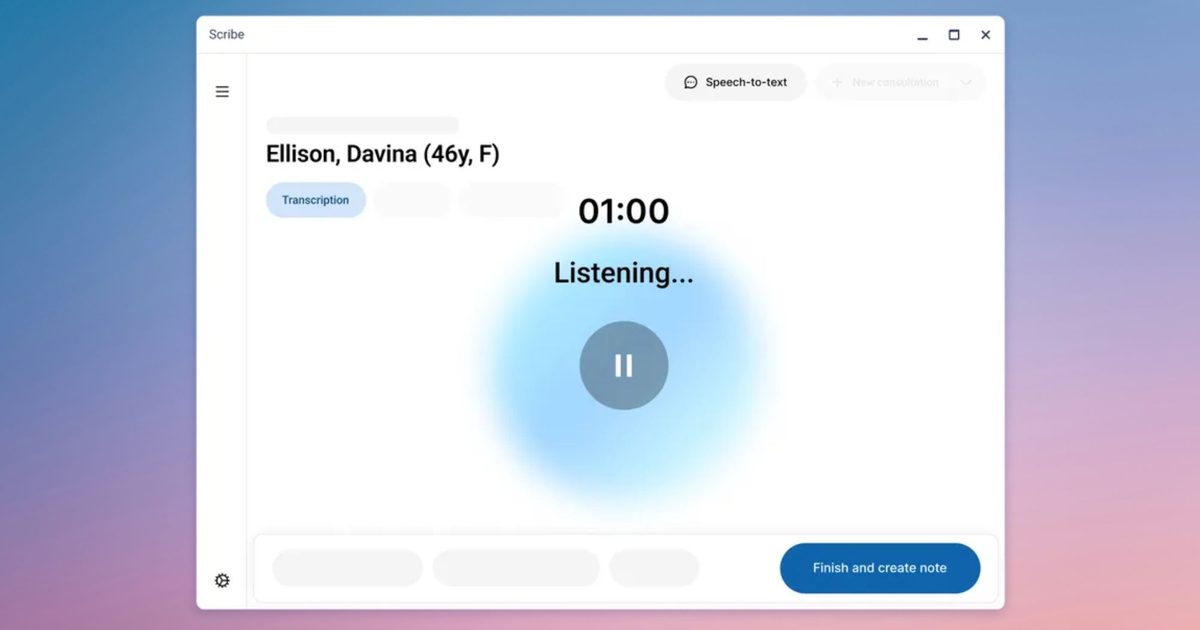
AI scribes are rapidly making their way into doctors’ offices, promising to cut down on tedious paperwork and free up time for patient care. However, growing evidence suggests these tools are introducing a new set of risks for patients and clinicians alike.
AI scribes are mangling diagnoses and prescriptions
A new report by The Guardian highlights how automated transcription tools are routinely botching medical records in the UK. Findings from Healthwatch England, an independent consumer advocacy group for patients in the UK public health system, reveal that patients are catching severe transcription errors that jeopardize their health if left uncorrected.
In one alarming instance, an AI tool reviewed an MRI summary and documented that a patient had demyelination, a serious nerve condition linked to multiple sclerosis. The scan actually revealed “null demyelination”, meaning the issue was not present. In other reported cases, AI tools confused similar drug names or omitted critical instructions for repeat prescriptions. Patient advocates caution that these errors threaten to permanently distort medical records, especially when overworked clinicians sign off on generated transcripts without carefully reviewing every line.
A global pattern with zero safety guardrails
This issue extends far beyond the incidents reported in the UK. Just last month, Australian health authorities issued a similar warning, advising doctors against over-relying on unvetted AI transcription software, citing severe privacy gaps alongside clinical safety hazards. In both regions, doctors are juggling dozens of unregulated AI tools that occasionally hallucinate entire conversations, going so far as to add unmentioned psychiatric medications like Prozac into patient charts.
The problem in the US is further compounded by regulators choosing not to classify AI scribes as medical devices. That leaves health systems without any central oversight to verify that a tool is actually accurate before it goes live. Instead of saving time, these buggy AI assistants are forcing clinicians to double-check every transcript for fabrications, effectively defeating the purpose of adopting them in the first place.