







Google is finally rolling out the advanced sideloading flow it first teased back in March, giving power users a way to install apps from unverified developers on certified devices without touching ADB.
Back then, Google started asking developers to verify their identity before their apps could land on certified Android devices, no matter if you download them from the Play Store, a third-party store, or sideload them directly. The idea is to tie every app to a real developer ID so scammers can’t easily sneak malware onto your phone.
What do you have to do to use the advanced flow?
Not every developer will want to verify themselves, so Google built this advanced flow for people who still want that freedom. You’ll need to enable it from the hidden Developer options menu, authenticate yourself, restart your phone, and then wait a full 24 hours before you can sideload anything from an unverified source.
Even after clearing all that, Android will still show a warning every time you install or update an app from an unverified developer. You can brush past it by tapping Install anyway, but the extra friction is very much intentional. Google doesn’t want regular users getting tricked into installing something shady.

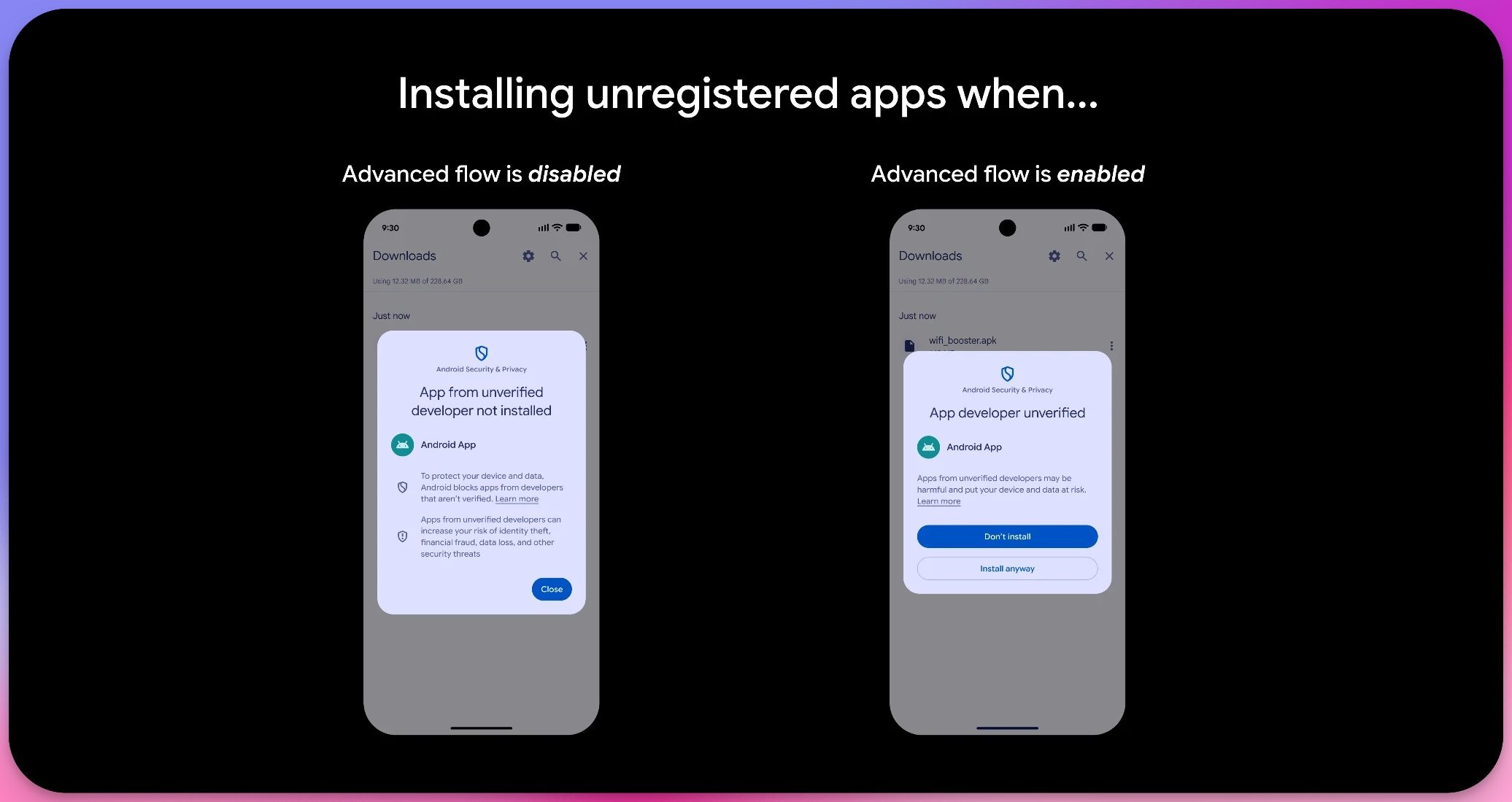
The good news is you only need to enable this once. Google will remember your choice across all your devices, so you won’t need to repeat the process every time. And if you skip the advanced flow entirely, ADB sideloading still works like before.
When is this actually rolling out?
Don’t expect this to show up on your phone right away. Google needs a new Android Developer Verifier system service running in the background first, and you can grab it manually from the Play Store to boost your odds of getting early access.
As per Mishaal Rahmans’ Reddit post, Google will verify installs from Google Play, Honor App Market, Oppo App Market, Galaxy Store, Palm Store, V-Appstore, and GetApps starting September 30, 2026. This year, enforcement is limited to Brazil, Indonesia, Singapore, and Thailand, with a full global rollout planned for 2027.
