





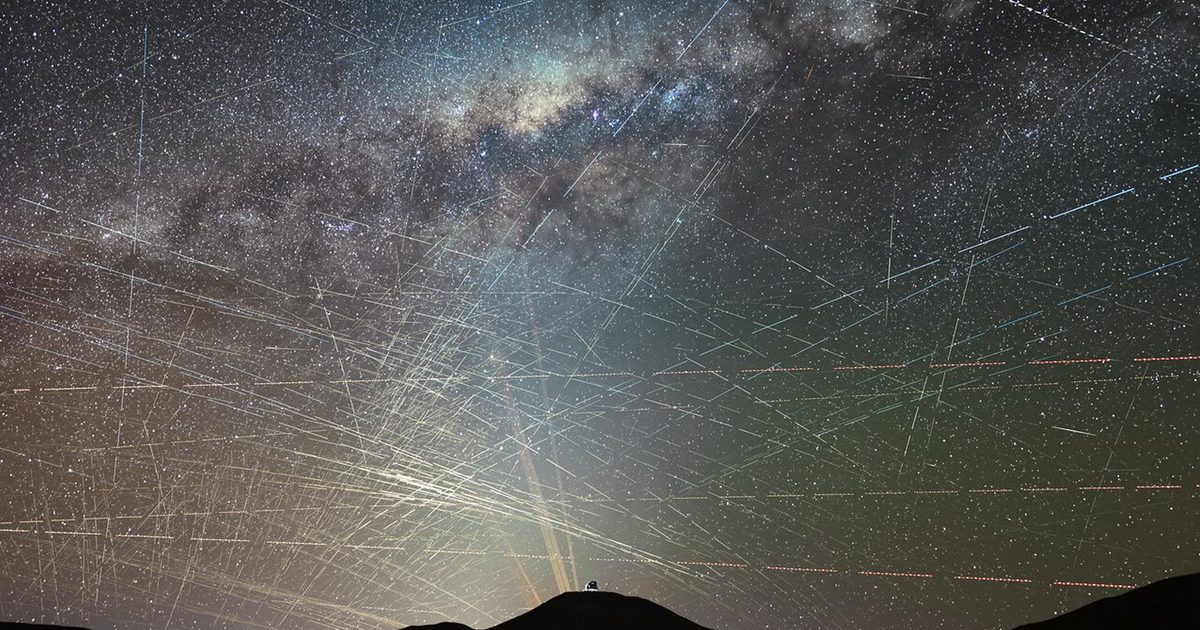
The race to blanket Earth with satellite internet has unlocked faster connectivity for millions. But according to the European Southern Observatory (ESO), it could also make one of humanity’s oldest hobbies, and one of its most important sciences, a whole lot harder. The organization warns that the rapid growth of satellite mega-constellations could severely disrupt observations made by some of the world’s most powerful telescopes.
Astronomers say the night sky is reaching its limit
According to the ESO, the number of satellites orbiting Earth has exploded in recent years. Starlink alone now accounts for roughly 10,400 satellites, while before 2022, humanity had launched only around 14,450 satellites into space in total. With companies planning even larger constellations, including SpaceX founder Elon Musk’s long-term vision of up to one million orbital “data center” satellites, astronomers fear the problem is only beginning.
To understand the impact, ESO researchers simulated what increasingly crowded skies would mean for ground-based observatories. Their findings weren’t encouraging. Even if future satellites are dim enough to remain invisible to the naked eye, Europe’s Very Large Telescope (VLT) in Chile could lose 28% of its observable field of view. Slightly brighter satellites could have an even greater impact on the Vera C. Rubin Observatory, potentially rendering many of its images unusable for several hours every night.
The solution isn’t fewer launches, though
Importantly, the ESO isn’t calling for an end to satellite internet. Instead, it’s proposing an international cap of 100,000 faint satellites in low Earth orbit, arguing that such a limit would help balance global connectivity with the long-term needs of astronomy. Researchers also stress that satellite brightness matters just as much as the number of spacecraft, since brighter satellites scatter more sunlight and interfere with telescope images.

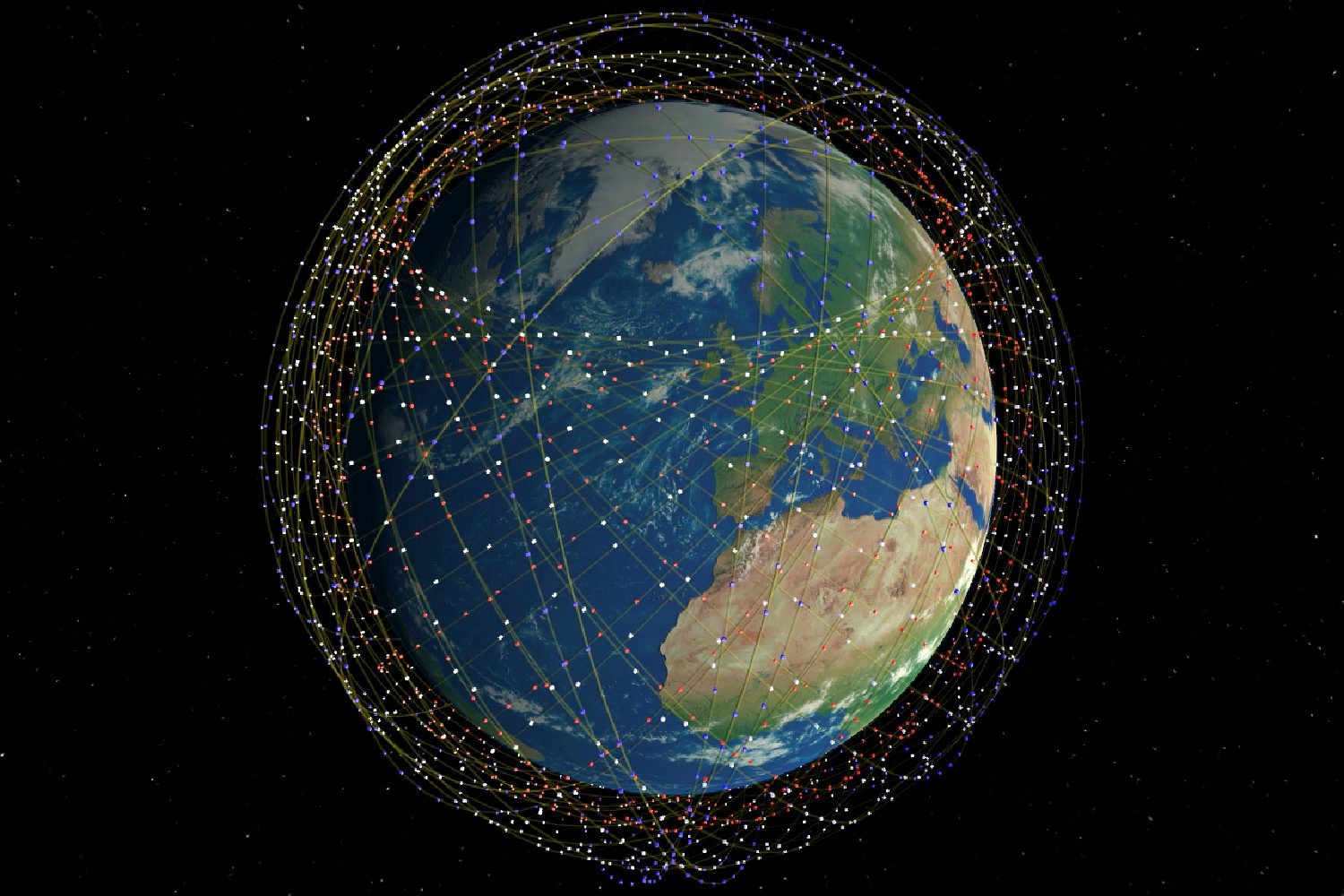
The bigger takeaway is that this debate extends well beyond any one company. Starlink simply happens to be the largest constellation today, making it the easiest example. There’s also Amazon Leo, which is expected to launch later this year. As more companies pursue massive satellite networks, the challenge will be finding a way to expand internet access without turning Earth’s night sky into one giant obstacle course for astronomers.