








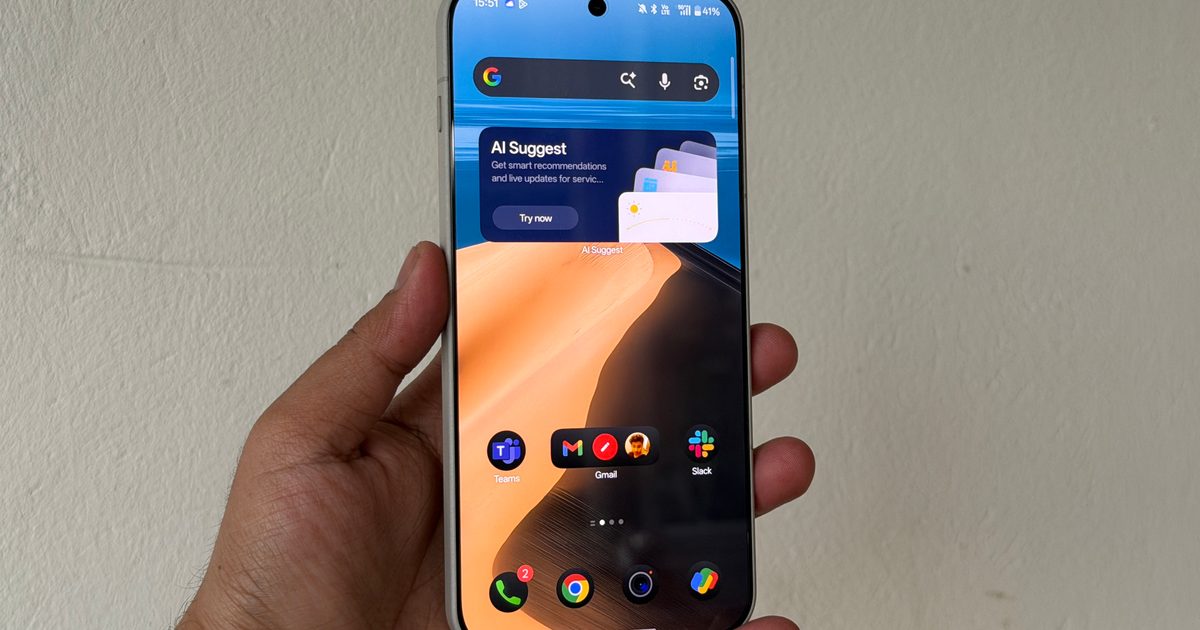
OnePlus is gearing up for the launch of the OnePlus 16, and if the latest leak holds up, the phone’s display could be its biggest talking point. The screen is tipped to sip less power, last twice as long, and pack thinner bezels all around, a solid trio of upgrades for something you’ll be staring at all day.
Does this display actually beat Samsung’s screens?
As reported by Notebookcheck, tipster Digital Chat Station wrote on Weibo that OnePlus and BOE have jointly developed a new X4 light-emitting material for the OnePlus 16’s screen. The material is said to sip far less power while lasting twice as long as the X3 panel used on the OnePlus 15. Bezels are also expected to shrink on all four sides, and the display should stick to a flat design rather than curving at the edges.
The leak goes a step further, claiming the new X4 panel beats Samsung‘s M-series screens on nearly every major metric. That’s a big claim to make, especially since we still don’t have numbers for resolution, peak brightness, or the final refresh rate.
What we do know comes straight from OnePlus China president Li Jie, who confirmed the display will retain its 185Hz refresh rate. The phone is also expected to carry over two gaming features from the OnePlus 15: the Fengchi gaming engine and e-sports triple core technology.
What else is coming with the OnePlus 16?
Beyond the display talk, the OnePlus 16 has recently picked up SRRC certification in China under the model number PYB110. Digital Chat Station believes this certification belongs to the OnePlus 16, and phones typically launch soon after clearing this step.
Rumored specs include a 6.78-inch display, the same size as the OnePlus 15, a massive 9,000mAh battery, a Snapdragon 8 Elite Gen 6 Pro chip, LPDDR6 RAM, and a huge camera bump, jumping from 50MP on the OnePlus 15 to 200MP this time around.


As for pricing, expect the 12GB RAM and 256GB storage model to start above $800. Sadly, none of this is coming to the West anytime soon, since OnePlus already exited the North American and European markets, and a global launch still looks unlikely.

