






A majority of US adults now support banning social media for anyone under 16, according to a new Pew Research Center survey. The finding puts American public opinion roughly in line with countries that have already acted on the idea, including Australia, which has enforced a ban, and the UK, which is currently considering one.
Support holds steady across party lines and age groups
Pew surveyed 9,750 US adults between May 26 and June 1, 2026, and found that 56 percent of respondents supported a ban on social media use for anyone under 16. Only 21 percent opposed it, and 23 percent said they were unsure.
Both Republicans and Democrats favored a ban by similar margins, and support stayed above 50 percent in every age bracket. Adults aged 30 to 49 were the most likely to back a ban, alongside parents with children under 18. Those without kids in that age range also favored a ban, though not as strongly.
Smaller guardrails polled higher than an outright ban
The survey also found that support was higher for restrictions than for an outright ban. Around 85 percent of adults favored requiring parental consent before a minor could open a social media account, up from 81 percent when Pew last asked in 2023.

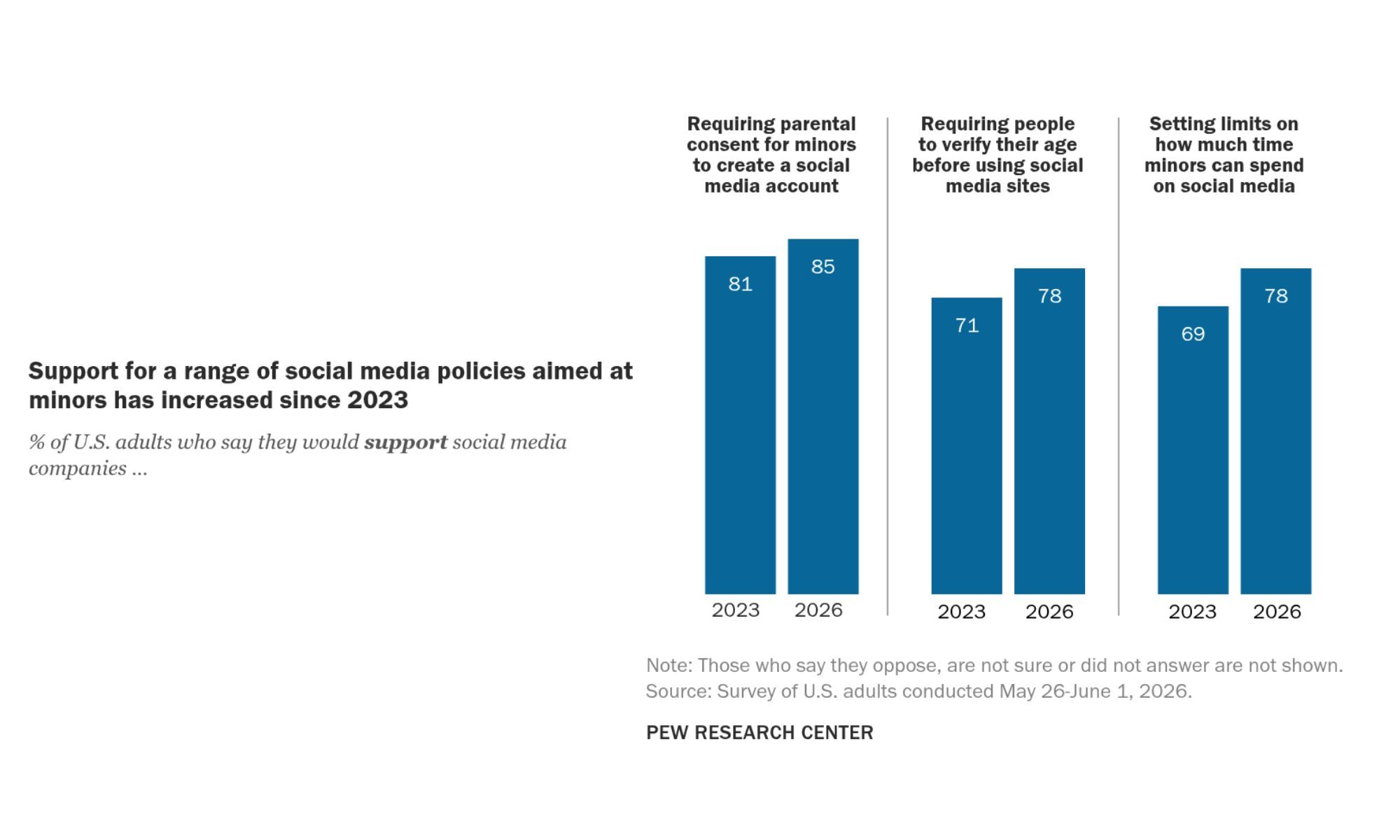
Age verification and daily time limits for minors both polled in the high 70s, with support for age verification rising from 71 percent to 78 percent over the same period. However, that support wasn’t even across age groups. Adults under 30 backed age verification at a lower rate than older adults, around two in three compared to roughly eight in ten among people 30 and older.
Whether a ban is enough to curb social media use among children under 16 remains an open question. Australia’s under-16 ban has faced enforcement problems since it took effect, with testing showing many teens still find ways around the restrictions. In the US, no federal ban exists so far, though a handful of states, including California, have proposed similar legislation. With public support this strong, it’s likely just a matter of time before US lawmakers put it to the test.