








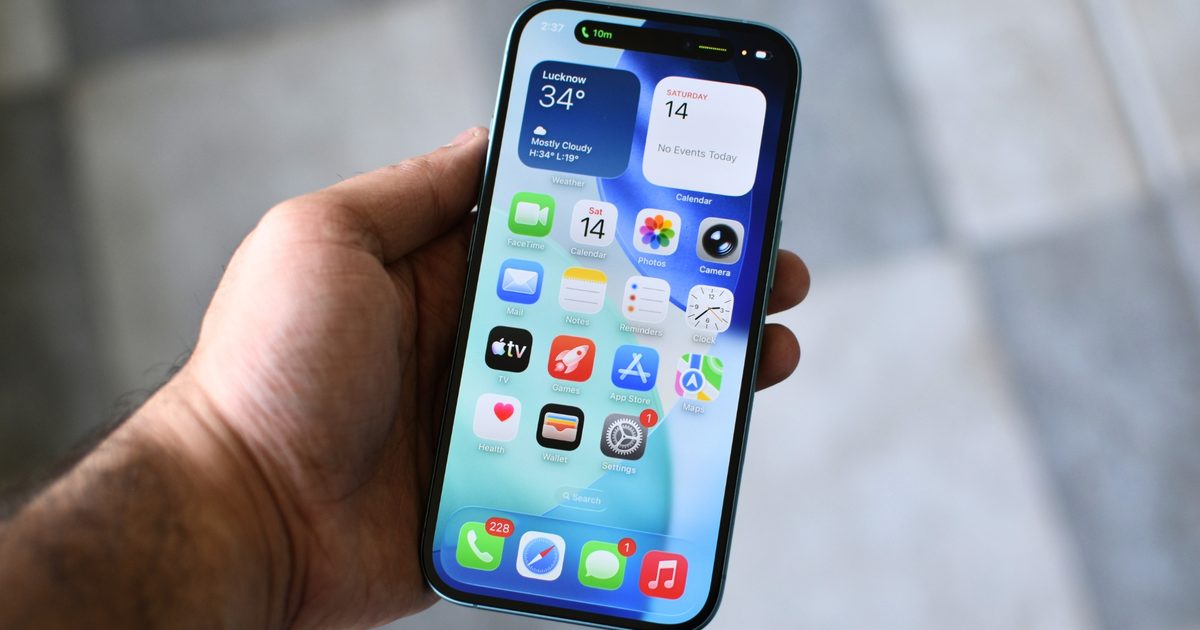
Today, Apple seeded the first beta of iOS 26.6 to developers, and so far, it contains exactly one known feature. It’s an alert that tells you when you’ve run out of space on your blocked contacts list. That’s right, and that’s it.
The fact that Apple had to ship this new alert at all says something uncomfortable about how the company has handled the spam call problem, along with carriers and regulators.
What is the blocked contacts limit and why does it matter?
Apple never told us, but iOS has always had a cap on how many numbers you can block. Based on discussions on Apple’s support forums, some users have hit that limit at around 20,000 blocked contacts, while others around 8,000.
While the exact reason behind different limits for different users isn’t exactly clear, it might have something to do with carriers imposing their own caps. Some users also report hitting the limit with even fewer contacts.
When the blocked contacts limit was reached, iOS simply stopped blocking new numbers, without any explanation, meaning any subsequent spam calls, from new numbers, will go through.
And instead of solving that problem and increasing the limit in the new iOS version (either at the carrier or the device level), iOS 26.6 focuses on fixing the communication gap.
The developer beta of iOS 26.6 contains a new “Blocked Contacts Limit Reached” alert that reads: “You’ve reached the maximum number of blocked contacts.” To block additional callers, you’ll need to remove an existing entry from your blocked contacts list in Settings.


Why is this still a problem in 2026?
Yes, that’s much better than leaving users in the dark, but I wouldn’t call it a solution to a problem that shows up differently for different users. Apple could have either increased the limit for all users or introduced a bulk unblocking tool.
However, it’s not all Apple. A comment in the MacRumors forum thread, from the user KENESS, with 17 upvotes, points out the issue very well. It’s the carriers and regulators who have the ability to address spam calls at the network level, and yet somehow, it’s users like you and me who have to do things manually on our end.
Spam calls are profitable for some carriers and wholesale providers, as the termination fees apply to every call that completes, regardless of legitimacy. The financial incentive to kill spam at the network level is weaker than it should be, which is why the problem persists.
On the positive side, iOS 26 offers features like Ask Reason for Calling and Silence Unknown Callers, which are more practical than building a block list with thousands of entries over the years. The new alert sure is a quality-of-life improvement, but it doesn’t address the core issue.
A public release of iOS 26.6 is likely several weeks away.
