




OpenAI seems to have a new AI model waiting in the wings every few months, and today is no different. The company has officially unveiled the GPT-5.6 family, bringing three new models to ChatGPT, Codex, and its API. The big star of the show is GPT-5.6 Sol, but it’s joined by Terra and Luna, which are designed to deliver strong performance at a lower cost.
The days of endless follow-up prompts may be numbered
If you’ve ever felt like ChatGPT needs too many follow-up prompts to finish a job, OpenAI thinks this update can help. Instead of simply answering one question at a time, GPT-5.6 is designed to handle bigger, multi-step tasks with less hand-holding. For example, imagine you’re planning a weekend trip. Rather than asking ChatGPT where to go, then where to stay, then what to do, and finally asking it to put everything together, GPT-5.6 is supposed to handle much more of that work on its own. The same idea applies to coding projects, research, spreadsheets, or even comparing dozens of products before recommending the best option.
The flagship GPT-5.6 Sol model is built for those heavier workloads, and OpenAI says it delivers better performance while using fewer tokens than previous models. That means it can accomplish more work without driving up computing costs, which is good news for developers and businesses that rely on OpenAI’s models every day. One of the biggest additions is a new Ultra mode. Instead of relying on a single AI process, Ultra can split a complicated task across multiple AI agents working in parallel. You can think of it like assigning research, writing, editing, and fact-checking to four people instead of asking one person to juggle everything. According to OpenAI, this helps solve difficult problems faster while improving the final results.
There’s a GPT-5.6 for every kind of job
For users who don’t need that much power, OpenAI is also introducing GPT-5.6 Terra and GPT-5.6 Luna. These models are designed to be more affordable while still handling common AI tasks well. The company says both outperform competing models in their respective categories while costing significantly less to run, making them attractive options for developers building AI-powered apps. The models are also becoming more independent. Instead of stopping after every instruction, GPT-5.6 can write small programs, use tools, process information, check its own progress, and decide what to do next with fewer prompts from the user. That could make tasks like debugging code, organizing research, or pulling together reports feel much smoother.

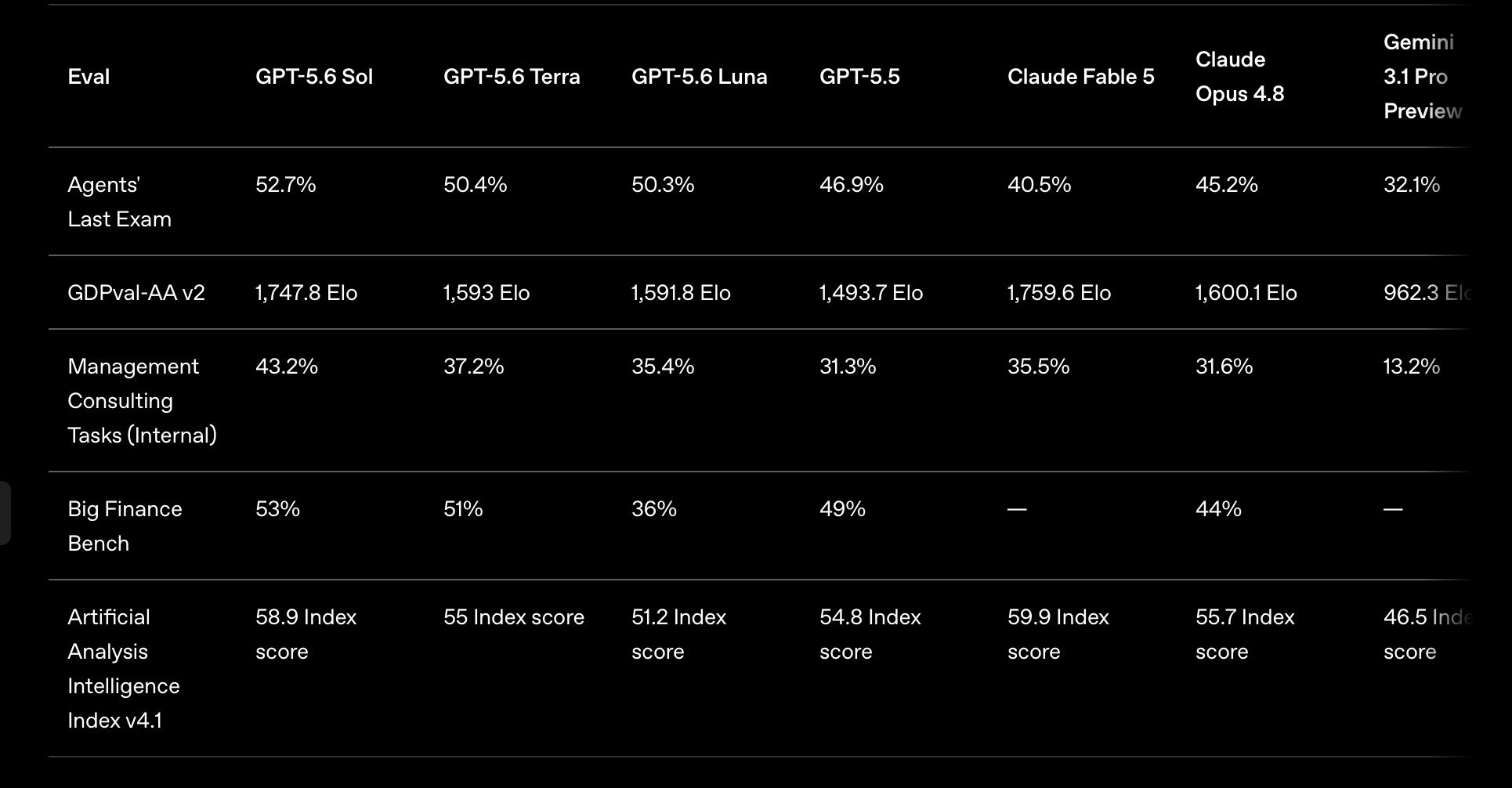
If accuracy matters more than speed, OpenAI is also adding a Max mode. It gives GPT-5.6 extra time to think through difficult questions, test different approaches, and double-check its work before responding. Ultra goes even further by using multiple AI agents simultaneously, trading extra computational power for better results on more demanding jobs. OpenAI also says it put GPT-5.6 through its most extensive safety testing yet, combining human red-team exercises with automated evaluations to make the models more resistant to misuse without impeding legitimate use.
The GPT-5.6 family is rolling out starting today across ChatGPT, Codex, and the OpenAI API, with global availability expected to expand over the next 24 hours. For most ChatGPT users, the benchmark numbers probably won’t mean much. What will matter is whether GPT-5.6 can actually save you time by needing fewer prompts, handling larger tasks on its own, and delivering answers that require less back-and-forth. If OpenAI’s claims hold up, that could be the biggest upgrade of all.