






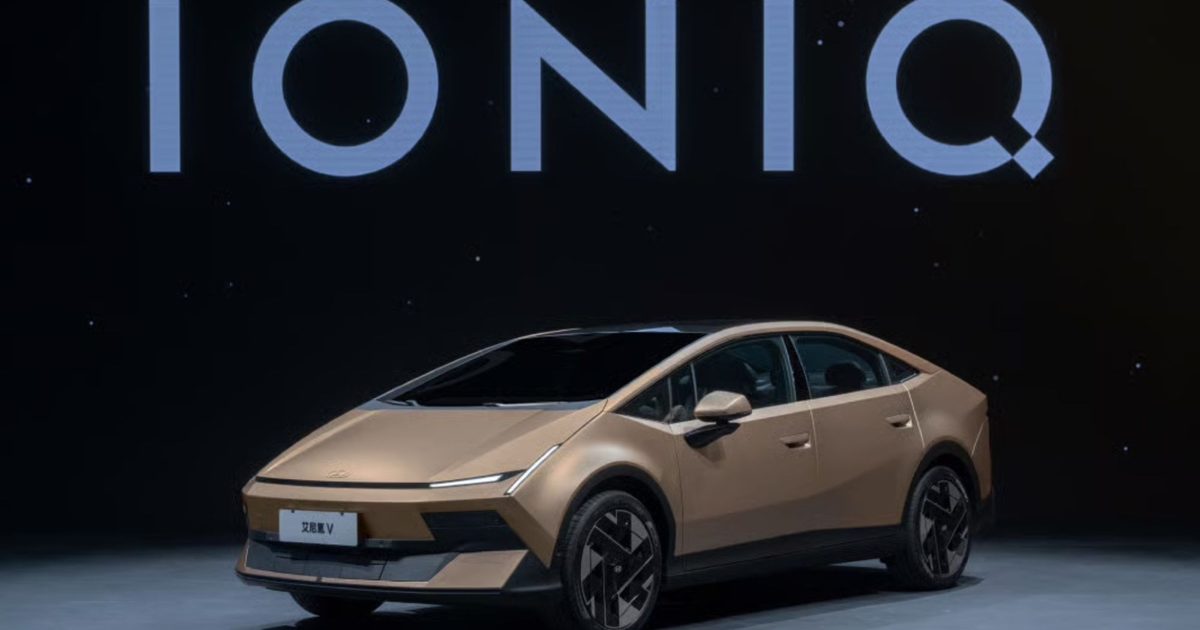
Beijing Hyundai just opened pre-sales for the Ioniq V, a sleek mid-size sedan and the very first production model under Hyundai‘s new China-only Ioniq sub-brand. Pricing starts at 119,900 yuan, or roughly $17,600, and tops out at 139,900 yuan ($20,600) for the fully loaded trim.
For context, America’s cheapest EV, the 2027 Chevrolet Bolt, starts at $28,995, making the Ioniq V’s top trim still over $8,000 cheaper than the least expensive EV sold in the US today.
Hyundai Ioniq V specs, price, and range across all three trims
According to CarNewsChina, the lineup includes three variants: the 540 Max, 540 Max+, and 650 Max+, with pricing scaling up based on range and features. All three are pure electric, using CATL’s lithium iron phosphate batteries in either 53.5 kWh or 66.8 kWh capacities, giving you a CLTC estimated range between 520 and 650 kilometers depending on trim.
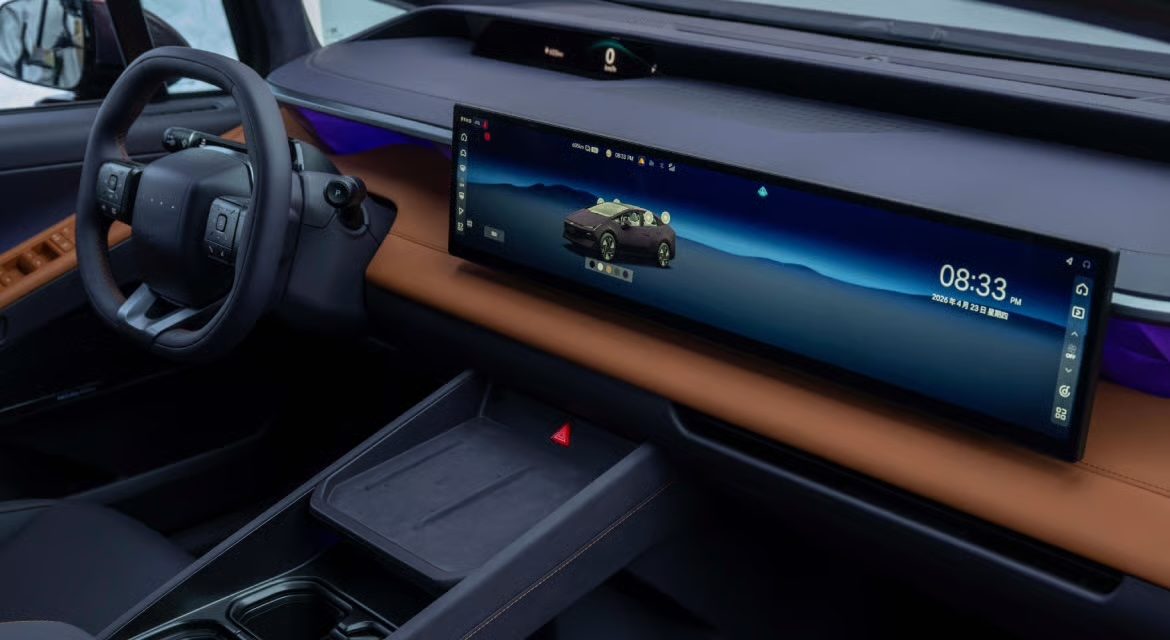
Every version supports 800-volt fast charging, which is a premium feature at this price point. Inside, the cabin centers around a massive 27 inch 4K display running on Qualcomm’s Snapdragon 8295 chip, paired with a head-up display and driver assistance tech co-developed with Momenta for highway level automation.
The infotainment system even integrates two separate Chinese AI models, Baidu’s Ernie Bot and ByteDance’s Doubao, letting you interact with either assistant built right into the car. It reflects a growing trend among Chinese automakers packing multiple AI systems into their vehicles.

Why did Hyundai build this EV specifically for China?
The entire vehicle was designed from scratch by Hyundai’s China Design Centre, based on the Venus Concept first shown back in April, specifically to compete in China’s brutally competitive EV market. Hyundai plans to launch 20 new electrified models in China over the next five years, aiming to hit 500,000 units sold annually by 2030.
The Ioniq V officially goes on sale in September, and Hyundai has already indicated plans to eventually bring this design language to markets outside China too. Whether American buyers will ever see anything close to this pricing remains an open question the industry keeps asking, especially as Chinese automakers keep pushing EV prices lower than US manufacturers have managed to match.
