






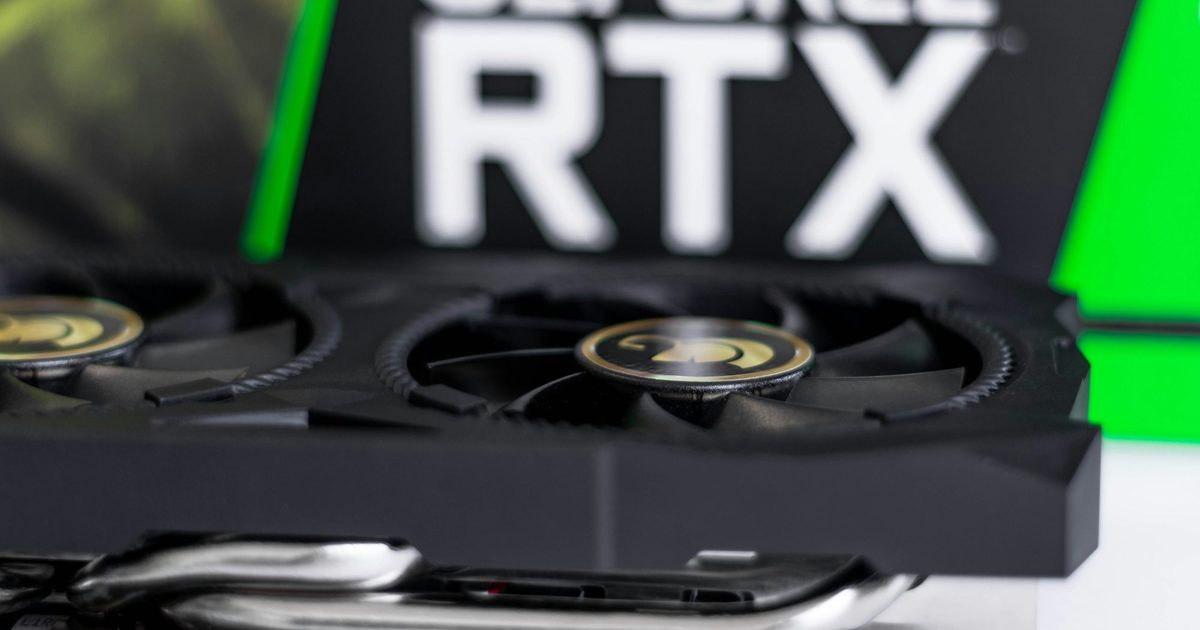
Nvidia could be preparing to bring back an older graphics card – the GeForce RTX 3060 – as the gaming industry faces growing pressure from a global memory (VRAM) shortage. According to recent leaks and supply chain reports, production of the RTX 3060 12GB may restart as early as June 2026, with a potential retail return in July.
Old GPU, New Relevance
The RTX 3060 was originally launched in 2021 and discontinued in 2024. However, new reports suggest Nvidia may reintroduce it to fill a gap in its current lineup. Board partners like Asus, MSI, and others are expected to receive fresh chip allocations soon, indicating that manufacturing could ramp up quickly.
The key reason behind this move appears to be the ongoing VRAM shortage. Newer GPUs rely on advanced memory types like GDDR7, which are currently in limited supply. By contrast, the RTX 3060 uses older GDDR6 memory and Samsung’s 8nm process, making it easier and cheaper to produce without competing for newer manufacturing capacity.
Why VRAM Is Suddenly a Big Deal
Modern games are increasingly demanding when it comes to memory. Many newer mid-range GPUs still ship with 8GB VRAM, which is starting to show limitations in newer titles, especially at higher settings.
The RTX 3060, despite being older, comes with 12GB of VRAM. That gives it an advantage over some newer entry-level cards, making it more capable for modern gaming workloads.
At the same time, Nvidia is reportedly prioritizing production of high-margin AI GPUs, which further limits the availability of gaming hardware. This has contributed to rising prices and reduced supply across the market.
What This Means for Gamers
For gamers, the return of the RTX 3060 could be a mixed bag. On one hand, it may help stabilize supply and offer a GPU with higher VRAM at a relatively accessible price point. This is especially relevant for budget gamers who are struggling to find capable hardware amid rising costs.


On the other hand, the card is still based on older architecture. It lacks newer features found in recent GPUs, such as improved ray tracing and advanced AI-based rendering technologies. Performance-wise, it may not match newer options, even if it holds up better in memory-heavy scenarios.
What Happens Next
Nvidia has not officially confirmed the relaunch yet, and current information is based on leaks and industry reports. However, if production does resume in June, retail availability could follow shortly after.
The move could also signal a broader shift in the GPU market. Instead of focusing solely on new launches, companies may increasingly revisit older hardware to address supply constraints.
For now, the RTX 3060’s potential comeback highlights a larger issue: in 2026, having more VRAM might matter more than having the latest GPU.
